Institute of Cell Biology and Genetics, College of Life Sciences, Zhejiang University, Hangzhou, China ; The Laboratory of Avian Disease Surveillance, China Animal Health and Epidemiology Center, Qingdao, China.
PLoS One. 2013 Aug 30;8(8):e72918. doi: 10.1371/journal.pone.0072918. eCollection 2013.
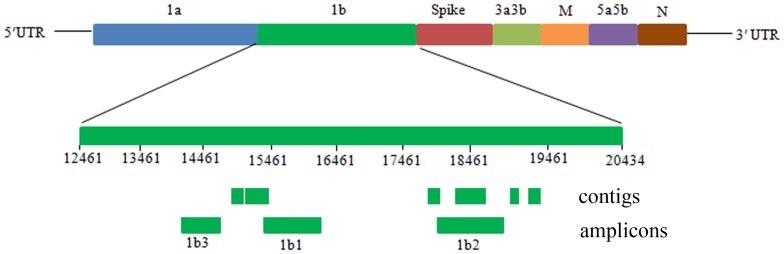
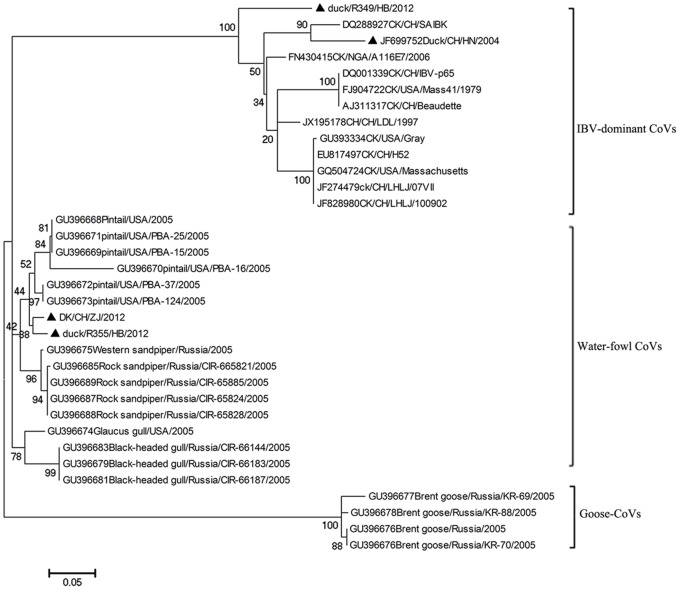
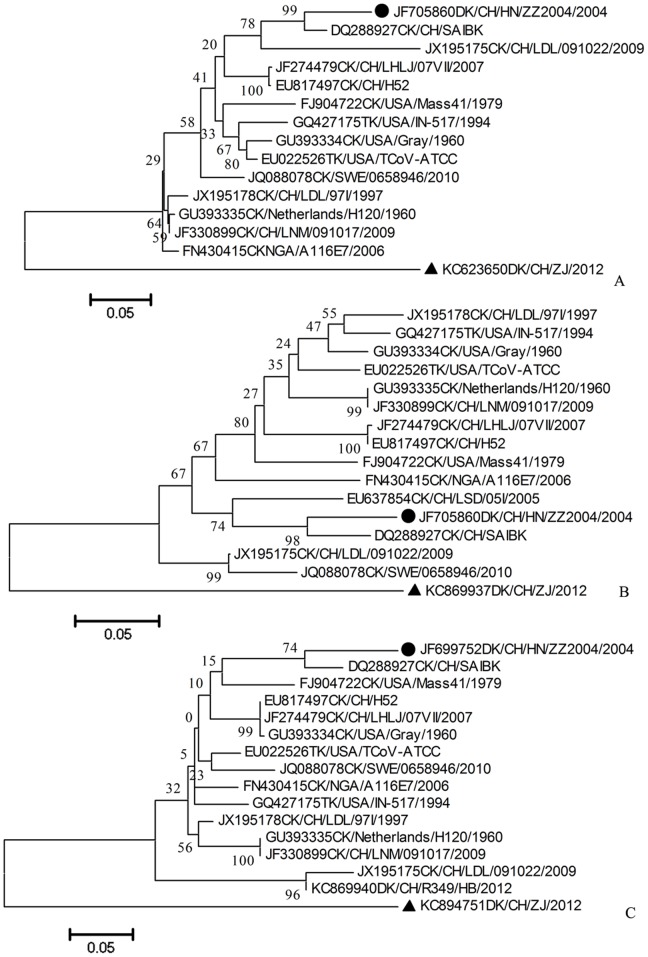
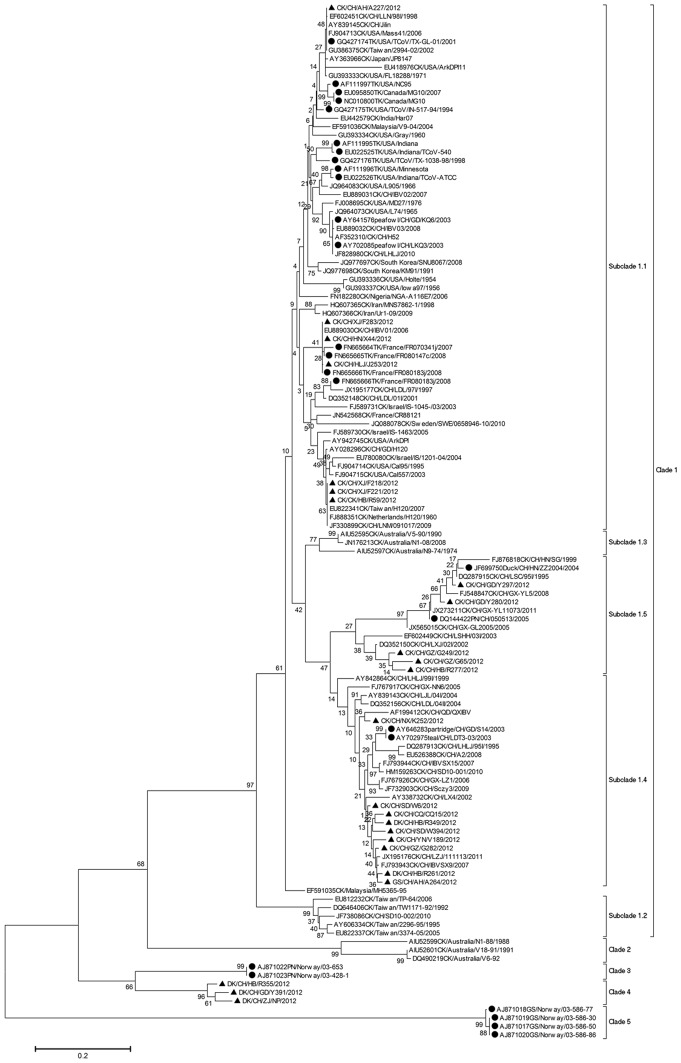
The rapid discovery of novel viruses using next generation sequencing (NGS) technologies including DNA-Seq and RNA-Seq, has greatly expanded our understanding of viral diversity in recent years. The timely identification of novel viruses using NGS technologies is also important for us to control emerging infectious diseases caused by novel viruses. In this study, we identified a novel duck coronavirus (CoV), distinct with chicken infectious bronchitis virus (IBV), using RNA-Seq. The novel duck-specific CoV was a potential novel species within the genus Gammacoronavirus, as indicated by sequences of three regions in the viral 1b gene. We also performed a survey of CoVs in domestic fowls in China using reverse-transcription polymerase chain reaction (RT-PCR), targeting the viral nucleocapsid (N) gene. A total of 102 CoV positives were identified through the survey. Phylogenetic analysis of the viral N sequences suggested that CoVs in domestic fowls have diverged into several region-specific or host-specific clades or subclades in the world, and IBVs can infect ducks, geese and pigeons, although they mainly circulate in chickens. Moreover, this study provided novel data supporting the notion that some host-specific CoVs other than IBVs circulate in ducks, geese and pigeons, and indicated that the novel duck-specific CoV identified through RNA-Seq in this study is genetically closer to some CoVs circulating in wild water fowls. Taken together, this study shed new insight into the diversity, distribution, evolution and control of avian CoVs.
使用下一代测序(NGS)技术(包括 DNA-Seq 和 RNA-Seq)快速发现新型病毒,近年来极大地扩展了我们对病毒多样性的认识。使用 NGS 技术及时鉴定新型病毒对于我们控制新型病毒引起的新发传染病也很重要。在这项研究中,我们使用 RNA-Seq 鉴定了一种新型鸭冠状病毒(CoV),与鸡传染性支气管炎病毒(IBV)不同。新型鸭特异性 CoV 是冠状病毒属中的一个潜在新型种,这表明病毒 1b 基因的三个区域的序列。我们还使用针对病毒核衣壳(N)基因的逆转录聚合酶链反应(RT-PCR)在中国对家禽中的 CoVs 进行了调查。通过该调查共鉴定出 102 种 CoV 阳性。病毒 N 序列的系统发育分析表明,家禽中的 CoVs 在世界范围内已经分化成几个区域特异性或宿主特异性分支或亚分支,IBV 可以感染鸭、鹅和鸽子,尽管它们主要在鸡中传播。此外,本研究提供了支持除 IBV 以外的一些宿主特异性 CoV 在鸭、鹅和鸽子中流行的新数据,并表明本研究通过 RNA-Seq 鉴定的新型鸭特异性 CoV 在遗传上与一些在野生水禽中流行的 CoV 更为接近。综上所述,本研究为禽 CoV 的多样性、分布、进化和控制提供了新的见解。