Department of Laboratory Medicine, Hirosaki University Graduate School of Medicine, Hirosaki, Japan ; Diabetes Center, Ohta Nishinouchi Hospital, Koriyama, Japan.
PLoS One. 2013 Aug 30;8(8):e74247. doi: 10.1371/journal.pone.0074247. eCollection 2013.
The precise mechanisms of the neuroprotective effects of insulin in streptozotocin (STZ)-induced diabetic animals remain unknown, but altered peripheral nerve insulin receptor signaling due to insulin deficiency might be one cause.
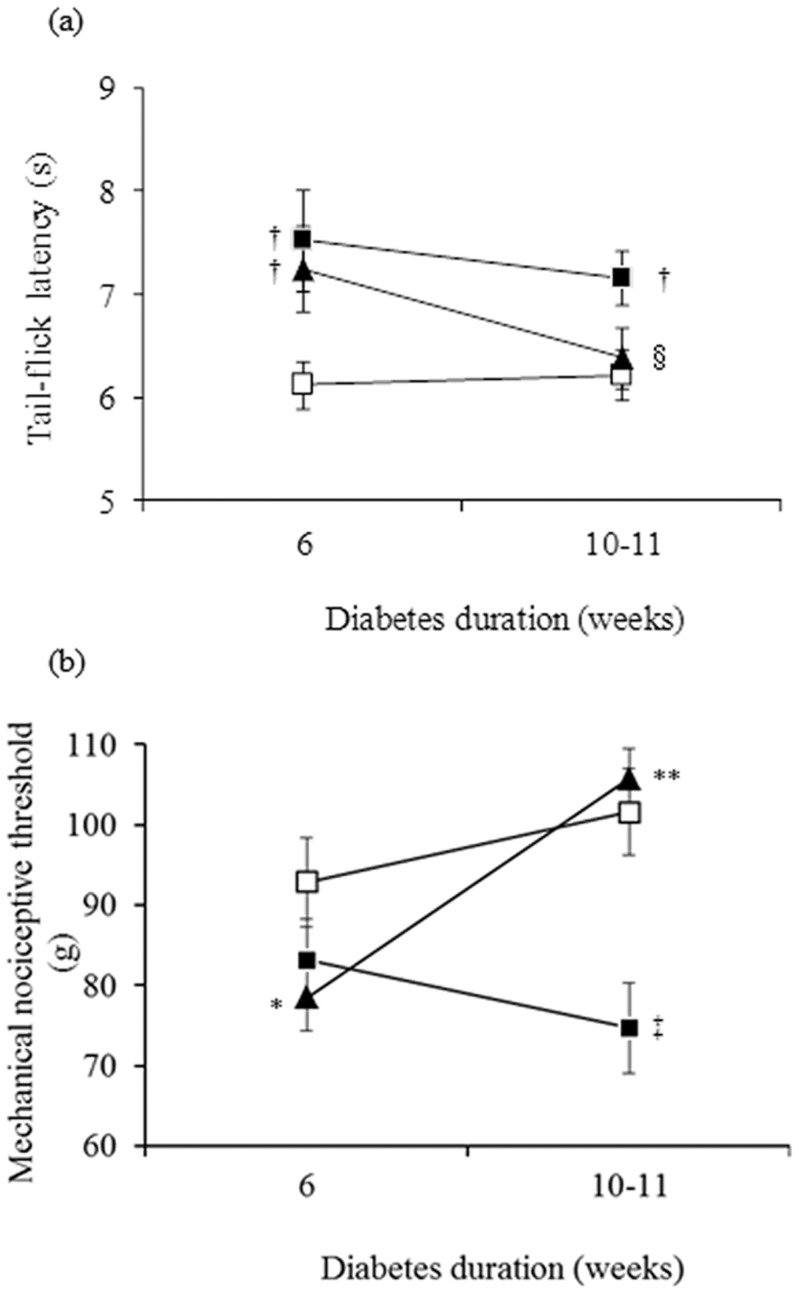
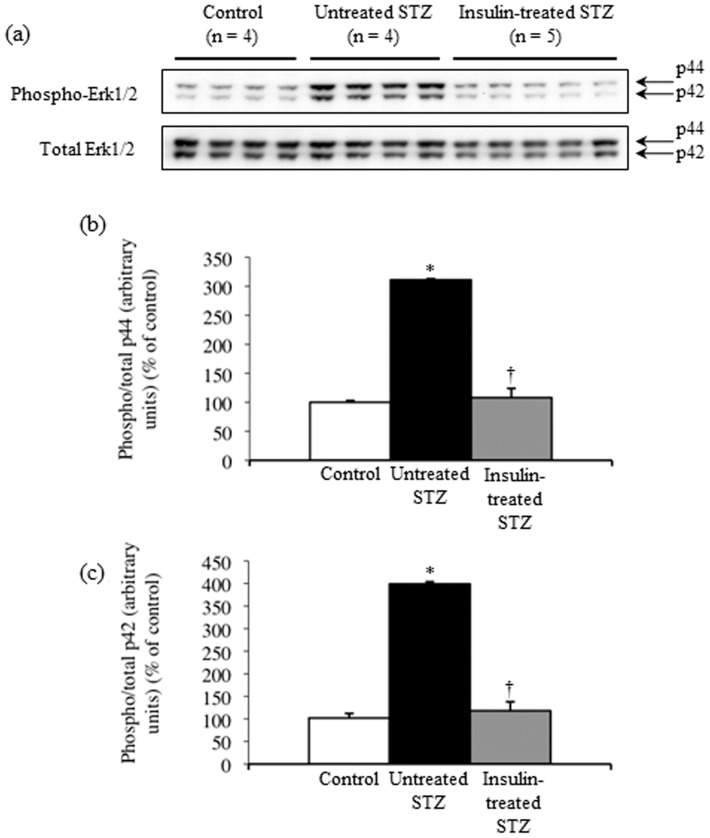
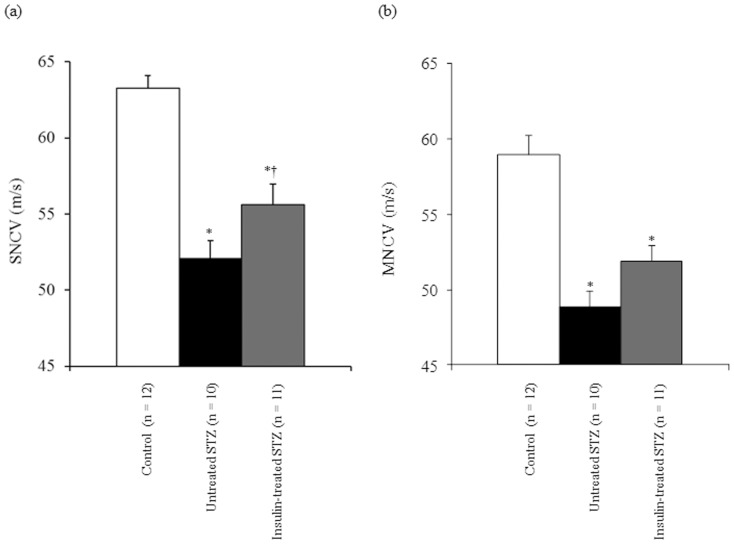
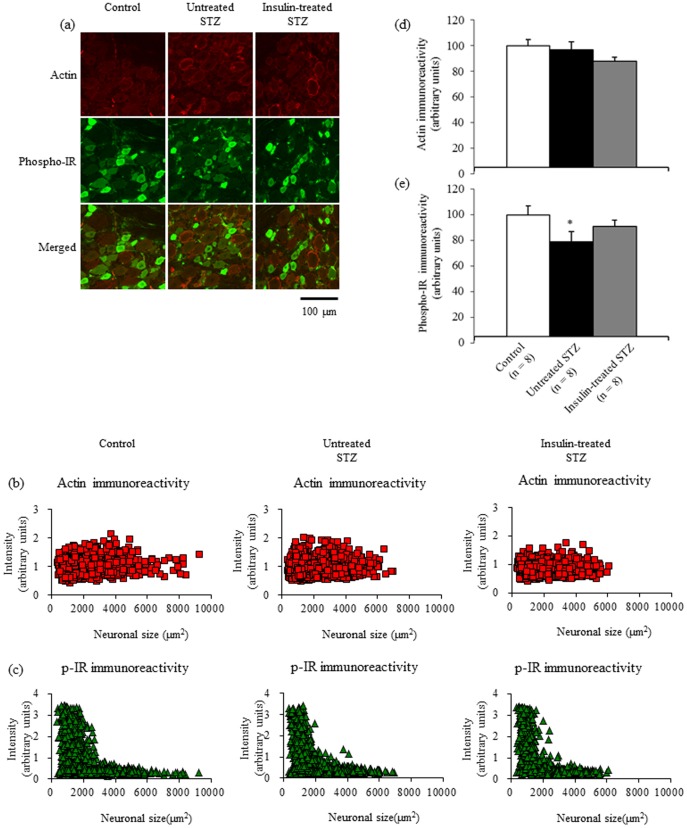
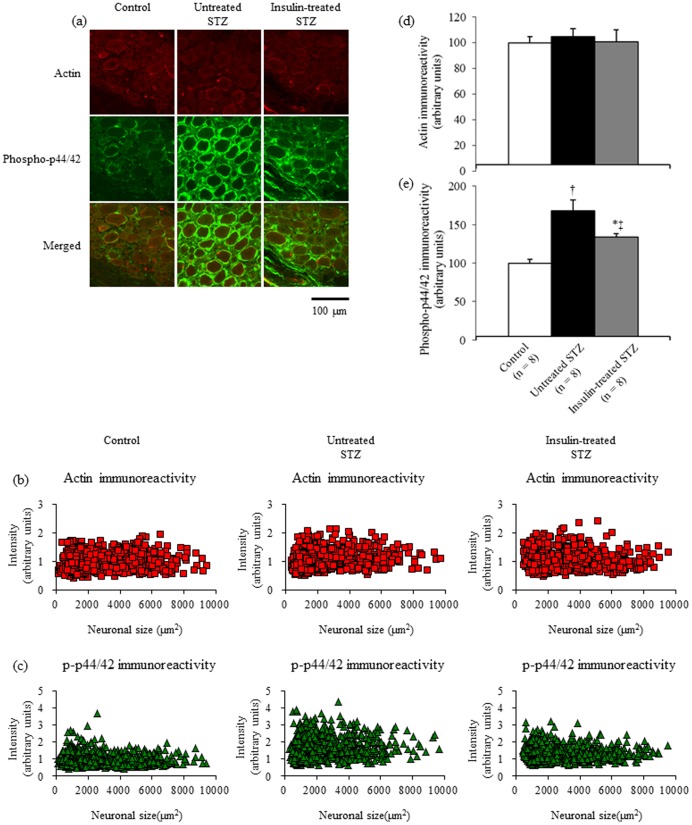
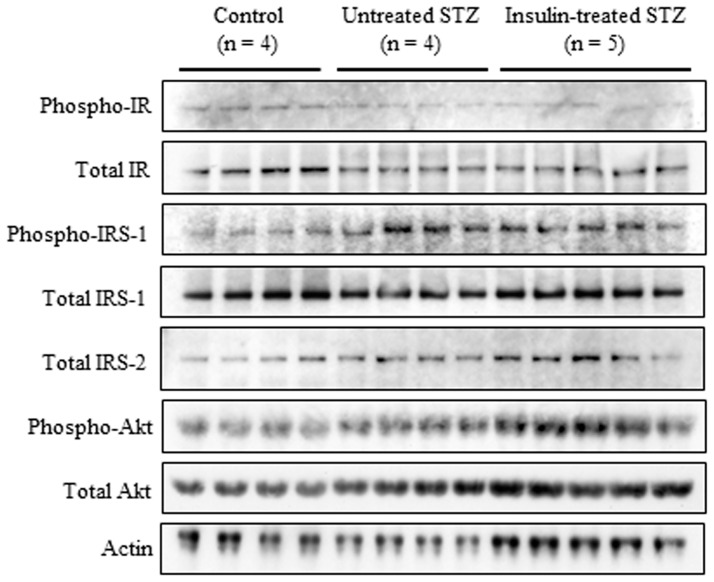
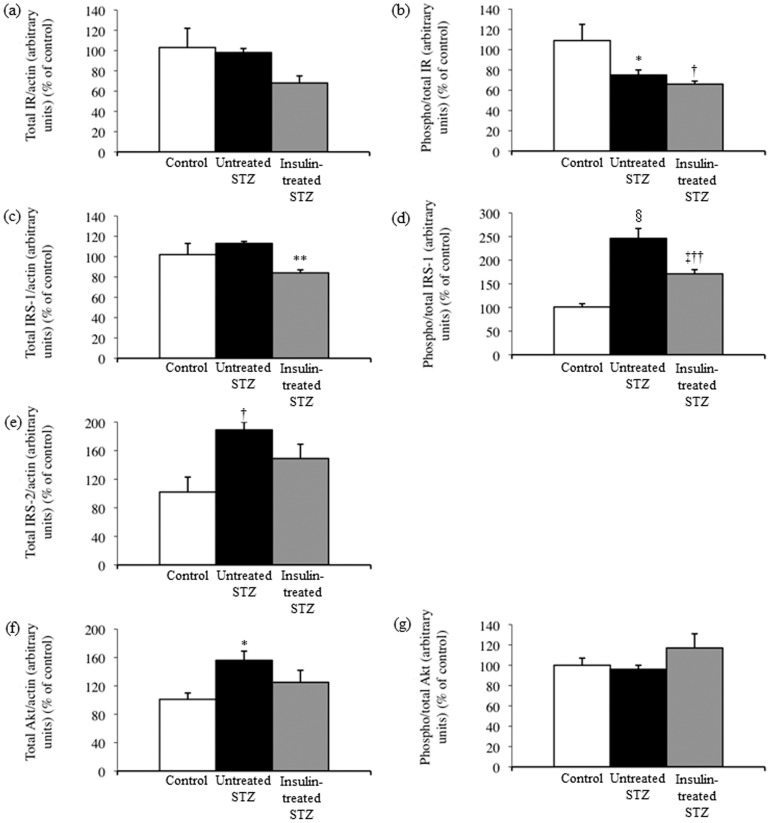
Diabetes was induced in 10-week-old, male Wistar rats by injecting them with STZ (45 mg/kg). They were assigned to one group that received half of an insulin implant (∼1 U/day; I-group, n = 11) or another that remained untreated (U-group, n = 10) for 6 weeks. The controls were age- and sex-matched, non-diabetic Wistar rats (C-group, n = 12). Low-dose insulin did not change haemoglobin A1c, which increased by 136% in the U-group compared with the C-group. Thermal hypoalgesia and mechanical hyperalgesia developed in the U-group, but not in the I-group. Sensory and motor nerve conduction velocities decreased in the U-group, whereas sensory nerve conduction velocity increased by 7% (p = 0.0351) in the I-group compared with the U-group. Western blots showed unaltered total insulin receptor (IR), but a 31% decrease and 3.1- and 4.0-fold increases in phosphorylated IR, p44, and p42 MAPK protein levels, respectively, in sciatic nerves from the U-group compared with the C-group. Phosphorylated p44/42 MAPK protein decreased to control levels in the I-group (p<0.0001).
Low-dose insulin deactivated p44/42 MAPK and ameliorated peripheral sensory nerve dysfunction in rats with STZ-induced diabetes. These findings support the notion that insulin deficiency per se introduces impaired insulin receptor signaling in type 1 diabetic neuropathy.
胰岛素对链脲佐菌素(STZ)诱导的糖尿病动物的神经保护作用的确切机制尚不清楚,但由于胰岛素缺乏导致周围神经胰岛素受体信号改变可能是一个原因。
10 周龄雄性 Wistar 大鼠经 STZ(45mg/kg)注射诱导糖尿病。他们被分为一组接受半胰岛素植入物(约 1U/天;I 组,n=11)或另一组未接受治疗(U 组,n=10)6 周。对照组为年龄和性别匹配的非糖尿病 Wistar 大鼠(C 组,n=12)。低剂量胰岛素并未改变血红蛋白 A1c,与 C 组相比,U 组增加了 136%。U 组出现热痛觉减退和机械性痛觉过敏,但 I 组没有。U 组感觉和运动神经传导速度下降,而 I 组感觉神经传导速度比 U 组增加 7%(p=0.0351)。Western blot 显示总胰岛素受体(IR)不变,但 U 组坐骨神经中磷酸化 IR、p44 和 p42 MAPK 蛋白水平分别下降 31%,分别增加 3.1 倍和 4.0 倍。与 C 组相比,U 组磷酸化 p44/42 MAPK 蛋白水平降低至对照水平(p<0.0001)。
低剂量胰岛素使 p44/42 MAPK 失活,并改善了 STZ 诱导糖尿病大鼠的周围感觉神经功能障碍。这些发现支持这样的观点,即胰岛素缺乏本身会导致 1 型糖尿病神经病变中胰岛素受体信号受损。