Environmental Technologies, Cawthron Institute, Nelson, New Zealand.
PLoS One. 2013 Sep 4;8(9):e73935. doi: 10.1371/journal.pone.0073935. eCollection 2013.
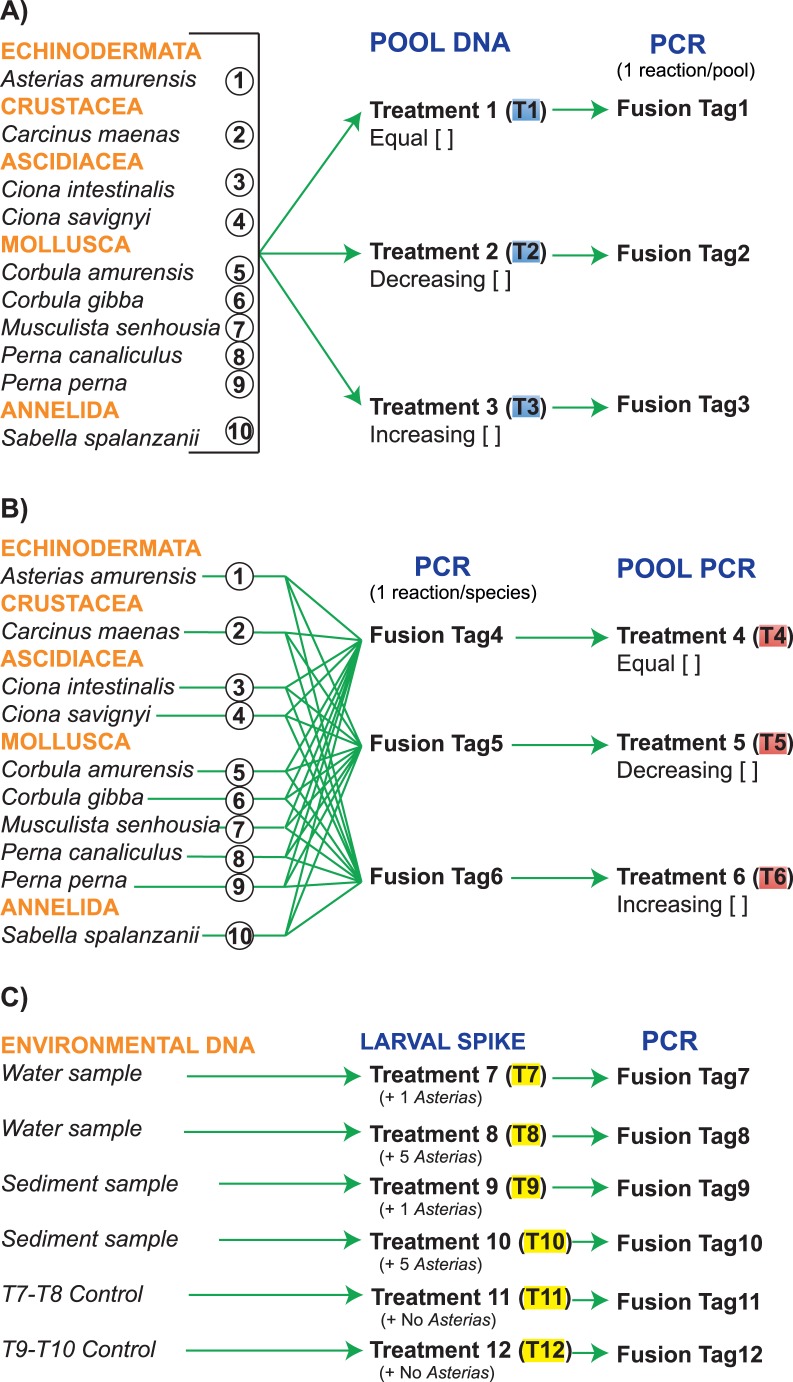
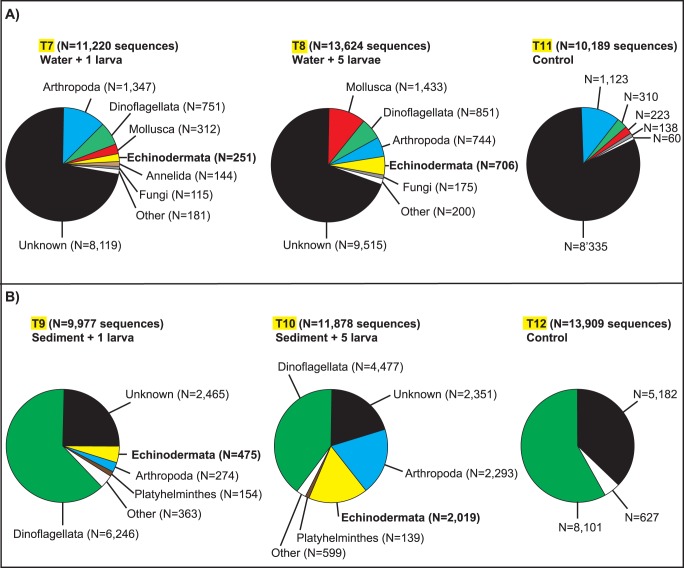
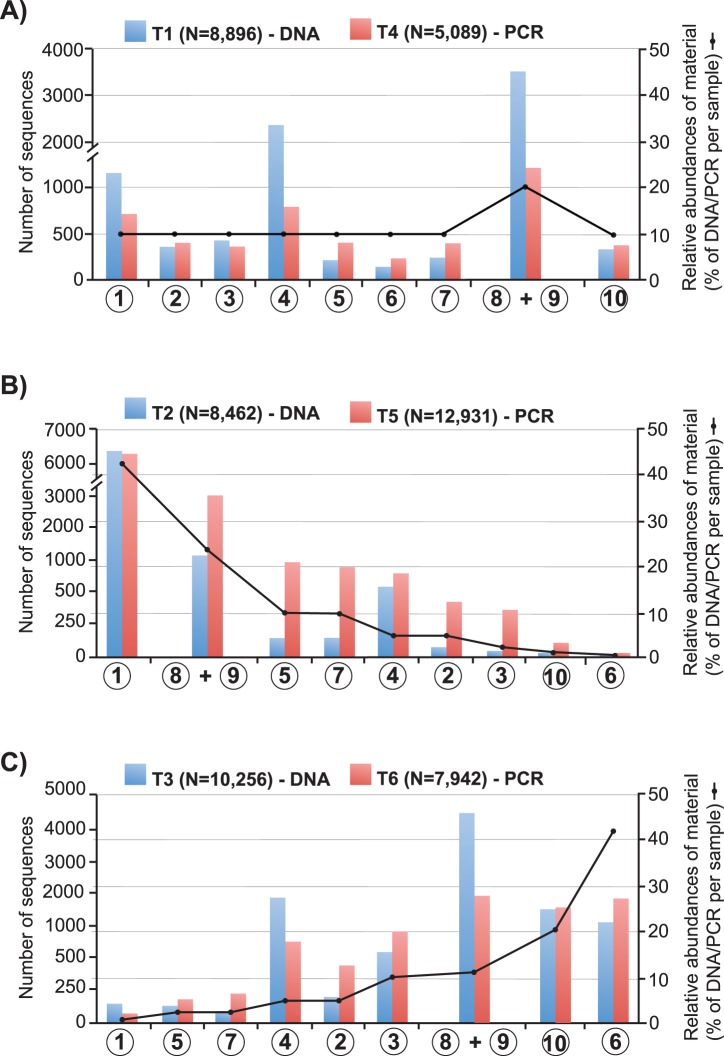
Most surveillance programmes for marine invasive species (MIS) require considerable taxonomic expertise, are laborious, and are unable to identify species at larval or juvenile stages. Therefore, marine pests may go undetected at the initial stages of incursions when population densities are low. In this study, we evaluated the ability of the benchtop GS Junior™ 454 pyrosequencing system to detect the presence of MIS in complex sample matrices. An initial in-silico evaluation of the mitochondrial cytochrome c oxidase subunit I (COI) and the nuclear small subunit ribosomal DNA (SSU) genes, found that multiple primer sets (targeting a ca. 400 base pair region) would be required to obtain species level identification within the COI gene. In contrast a single universal primer set was designed to target the V1-V3 region of SSU, allowing simultaneous PCR amplification of a wide taxonomic range of MIS. To evaluate the limits of detection of this method, artificial contrived communities (10 species from 5 taxonomic groups) were created using varying concentrations of known DNA samples and PCR products. Environmental samples (water and sediment) spiked with one or five 160 hr old Asterias amurensis larvae were also examined. Pyrosequencing was able to recover DNA/PCR products of individual species present at greater than 0.64% abundance from all tested contrived communities. Additionally, single A. amurensis larvae were detected from both water and sediment samples despite the co-occurrence of a large array of environmental eukaryotes, indicating an equivalent sensitivity to quantitative PCR. NGS technology has tremendous potential for the early detection of marine invasive species worldwide.
大多数海洋入侵物种 (MIS) 的监测计划都需要相当的分类学专业知识,既费力又无法识别幼虫或幼体阶段的物种。因此,在入侵的初始阶段,当种群密度较低时,海洋害虫可能会被忽视。在这项研究中,我们评估了台式 GS Junior™ 454 焦磷酸测序系统在复杂样本矩阵中检测 MIS 存在的能力。对线粒体细胞色素 c 氧化酶亚基 I (COI) 和核小亚基核糖体 DNA (SSU) 基因的初步计算机模拟评估发现,需要使用多个引物组(针对约 400 个碱基对区域)才能在 COI 基因中获得物种水平的鉴定。相比之下,设计了一个单一的通用引物组来靶向 SSU 的 V1-V3 区域,允许同时对 MIS 的广泛分类范围进行 PCR 扩增。为了评估该方法的检测极限,使用不同浓度的已知 DNA 样本和 PCR 产物创建了人工组合群落(来自 5 个分类群的 10 个物种)。还检查了用一个或五个 160 小时大的 Asterias amurensis 幼虫污染的环境样本(水和沉积物)。焦磷酸测序能够从所有测试的组合群落中恢复存在于大于 0.64%丰度的单个物种的 DNA/PCR 产物。此外,尽管存在大量的环境真核生物,仍然从水和沉积物样本中检测到单个 A. amurensis 幼虫,表明与定量 PCR 具有同等的灵敏度。NGS 技术具有在全球范围内早期检测海洋入侵物种的巨大潜力。