Leibniz Institute for Zoo and Wildlife Research, Berlin, Germany.
PLoS One. 2013 Sep 4;8(9):e74105. doi: 10.1371/journal.pone.0074105. eCollection 2013.
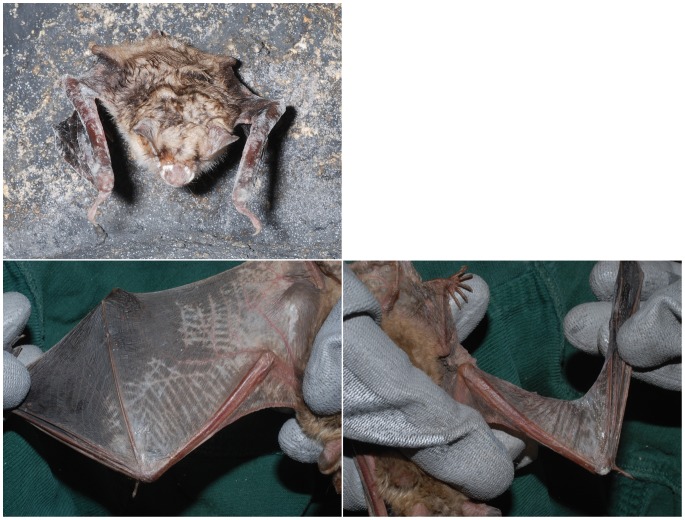
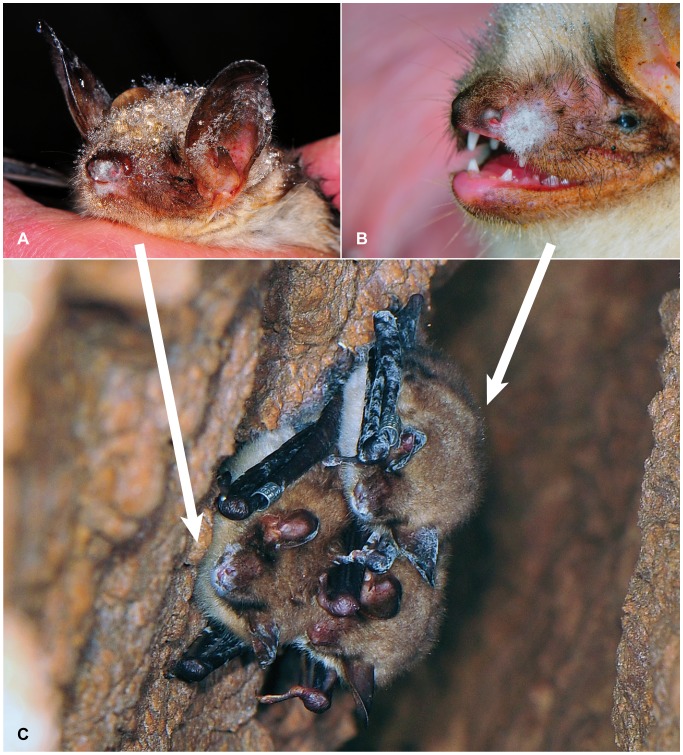
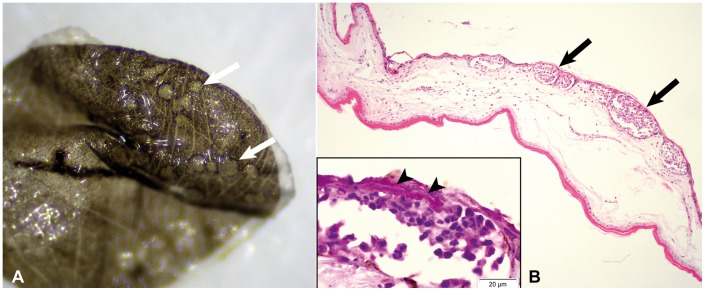
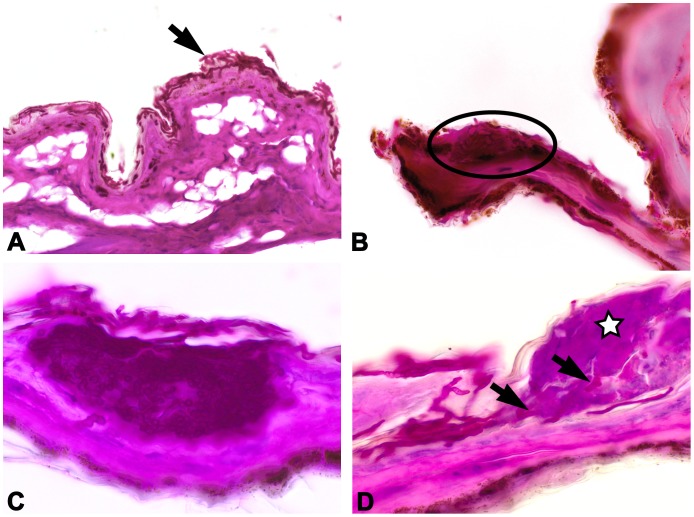
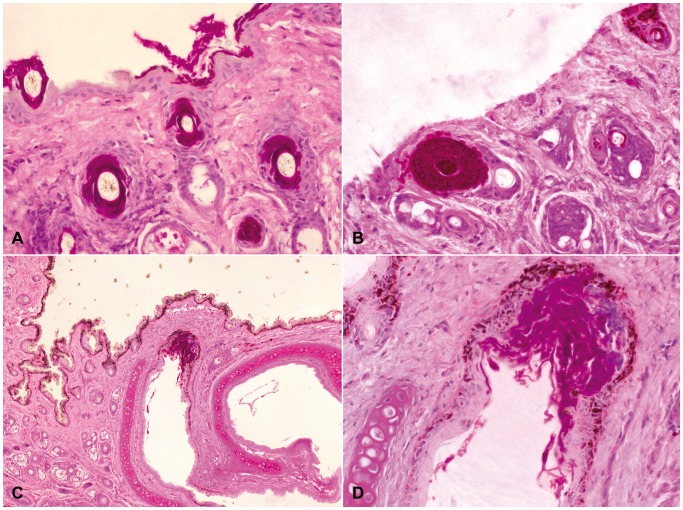
White-nose syndrome (WNS) has claimed the lives of millions of hibernating insectivorous bats in North America. Its etiologic agent, the psychrophilic fungus Geomyces destructans, causes skin lesions that are the hallmark of the disease. The fungal infection is characterized by a white powdery growth on muzzle, ears and wing membranes. While WNS may threaten some species of North American bats with regional extinction, infection in hibernating bats in Europe seems not to be associated with significant mortality. We performed histopathological investigations on biopsy samples of 11 hibernating European bats, originating from 4 different countries, colonized by G. destructans. One additional bat was euthanized to allow thorough examination of multiple strips of its wing membranes. Molecular analyses of touch imprints, swabs and skin samples confirmed that fungal structures were G. destructans. Additionally, archived field notes on hibernacula monitoring data in the Harz Mountains, Germany, over an 11-year period (2000-2011) revealed multiple capture-recapture events of 8 banded bats repeatedly displaying characteristic fungal colonization. Skin lesions of G. destructans-affected hibernating European bats are intriguingly similar to the epidermal lesions described in North American bats. Nevertheless, deep invasion of fungal hyphae into the dermal connective tissue with resulting ulceration like in North American bats was not observed in the biopsy samples of European bats; all lesions found were restricted to the layers of the epidermis and its adnexae. Two bats had mild epidermal cupping erosions as described for North American bats. The possible mechanisms for any difference in outcomes of G. destructans infection in European and North American bats still need to be elucidated.
白鼻综合征(WNS)已经导致北美的数百万种冬眠昆虫蝙蝠死亡。其病原体是嗜冷真菌 Geomyces destructans,会导致皮肤病变,这是该疾病的标志。真菌感染的特征是在口鼻部、耳朵和翅膀膜上出现白色粉状生长物。虽然 WNS 可能会威胁到北美的一些蝙蝠物种使其区域性灭绝,但在欧洲冬眠的蝙蝠中,感染似乎与显著的死亡率无关。我们对来自 4 个不同国家的 11 只被 G. destructans 定植的冬眠欧洲蝙蝠的活检样本进行了组织病理学研究。为了彻底检查其翅膀膜的多条-strip,另外一只蝙蝠被安乐死。触印、拭子和皮肤样本的分子分析证实真菌结构为 G. destructans。此外,德国哈尔茨山脉(Harz Mountains)的冬眠监测数据存档的现场记录显示,在 11 年的时间里(2000-2011 年),8 只带条纹的蝙蝠多次被捕获-重新捕获,这些蝙蝠反复表现出特征性的真菌定植。受 G. destructans 影响的冬眠欧洲蝙蝠的皮肤病变与北美的蝙蝠描述的表皮病变惊人地相似。然而,在欧洲蝙蝠的活检样本中没有观察到真菌菌丝深入真皮结缔组织导致溃疡的情况,所有发现的病变都局限于表皮及其附属物的层。两只蝙蝠的表皮有轻微的杯状侵蚀,如北美蝙蝠所述。在欧洲和北美的蝙蝠中,G. destructans 感染的结果存在任何差异的可能机制仍需阐明。