Naglich J G, Eidels L
Department of Microbiology, University of Texas Southwestern Medical Center, Dallas 75235.
Proc Natl Acad Sci U S A. 1990 Sep;87(18):7250-4. doi: 10.1073/pnas.87.18.7250.
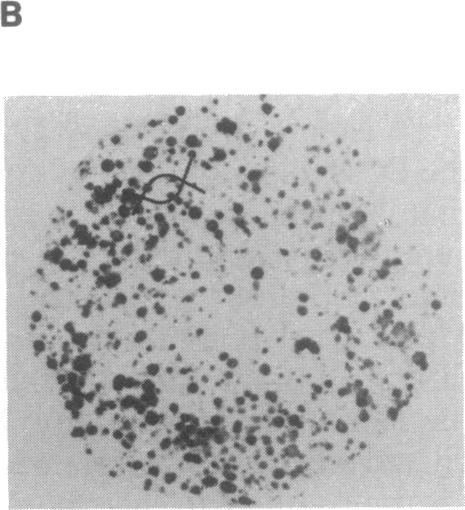
Diphtheria toxin (DTX)-sensitive mouse cells were isolated from a toxin-resistant thymidine kinase (TK)-negative L-M(TK-) mouse cell population that was transfected with DNA from highly toxin-sensitive monkey Vero cells. Sensitivity to DTX was screened by using a replica plate assay. The purified toxin-sensitive mouse cells were characterized with respect to their ability to bind, internalize, and translocate DTX into the cytosol. In contrast to the L-M(TK-) cells, these DTX-sensitive mouse cells were able to bind and internalize radioiodinated toxin into intracellular vesicles at 37 degrees C. Specific binding of radioiodinated toxin to their cell surface (at 4 degrees C) could not be demonstrated. However, the following evidence for functional receptors capable of binding DTX was obtained: (i) when the toxin-sensitive mouse cells were first allowed to bind DTX at 4 degrees C, followed by washing the cells and shifting the temperature to 37 degrees C (allowing cell surface-bound toxin to enter the cells), the cells were killed; (ii) when cells with surface-bound DTX were exposed briefly to an acidic medium (allowing the toxin to penetrate the plasma membrane directly), protein synthesis was inhibited; and (iii) when cells were incubated with DTX in the presence of the CRM 197, a nontoxic form of DTX with binding properties similar to native DTX, the cytotoxic effect of DTX was markedly decreased. The results demonstrate that the toxin-sensitive mouse cells are killed by a mechanism similar to that observed in naturally occurring toxin-sensitive cell lines. The data further suggest that the transfected mouse cells express functional receptors for DTX.
从对毒素具有抗性的胸苷激酶(TK)阴性的L-M(TK-)小鼠细胞群体中分离出对白喉毒素(DTX)敏感的小鼠细胞,该细胞群体用来自高度毒素敏感的猴Vero细胞的DNA进行了转染。通过使用复制平板试验筛选对DTX的敏感性。对纯化的毒素敏感小鼠细胞在结合、内化DTX并将其转运到细胞质中的能力方面进行了表征。与L-M(TK-)细胞不同,这些DTX敏感的小鼠细胞能够在37℃下将放射性碘化毒素结合并内化到细胞内囊泡中。未证明放射性碘化毒素在其细胞表面(4℃)的特异性结合。然而,获得了以下关于能够结合DTX的功能性受体的证据:(i)当首先使毒素敏感的小鼠细胞在4℃下结合DTX,然后洗涤细胞并将温度转移至37℃(使细胞表面结合的毒素进入细胞)时,细胞被杀死;(ii)当具有表面结合DTX的细胞短暂暴露于酸性介质(使毒素直接穿透质膜)时,蛋白质合成受到抑制;(iii)当细胞在CRM 197存在下与DTX一起孵育时,CRM 197是一种具有与天然DTX相似结合特性的无毒形式的DTX,DTX的细胞毒性作用明显降低。结果表明,毒素敏感的小鼠细胞通过与天然毒素敏感细胞系中观察到的机制类似的机制被杀死。数据进一步表明,转染的小鼠细胞表达DTX的功能性受体。