Department of Biochemistry, Chemistry and Physics, Niagara University, Niagara University, NY, USA.
Biotechnol Biofuels. 2013 Sep 14;6(1):132. doi: 10.1186/1754-6834-6-132.
Time-of-Flight Secondary Ion Mass Spectrometry (ToF-SIMS) is a surface sensitive mass spectrometry technique with potential strengths as a method for detecting enzymatic activity on solid materials. In particular, ToF-SIMS has been applied to detect the enzymatic degradation of woody lignocellulose. Proof-of-principle experiments previously demonstrated the detection of both lignin-degrading and cellulose-degrading enzymes on solvent-extracted hardwood and softwood. However, these preliminary experiments suffered from low sample throughput and were restricted to samples which had been solvent-extracted in order to minimize the potential for mass interferences between low molecular weight extractive compounds and polymeric lignocellulose components.
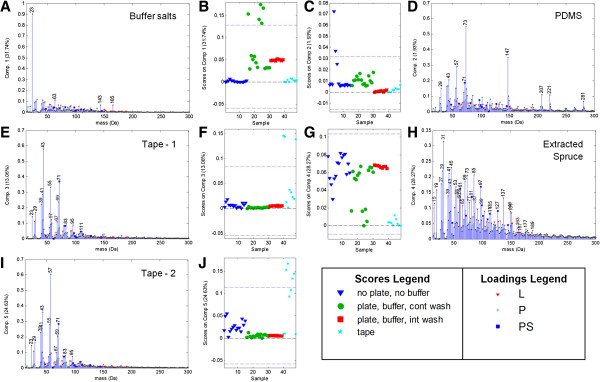
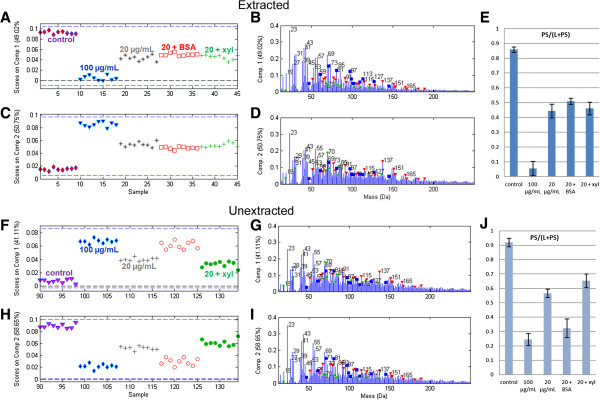
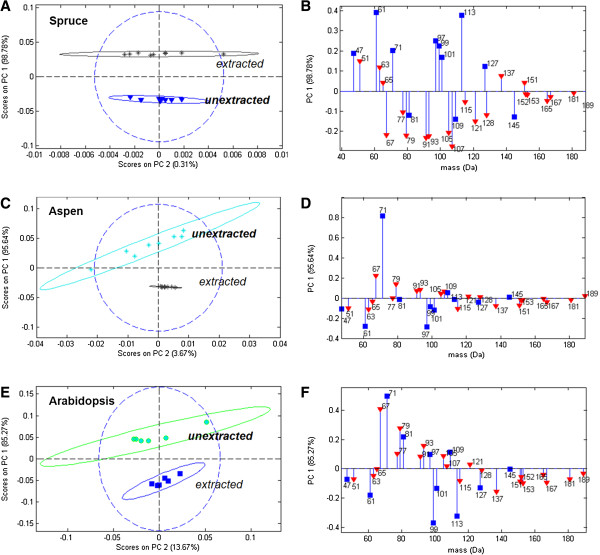
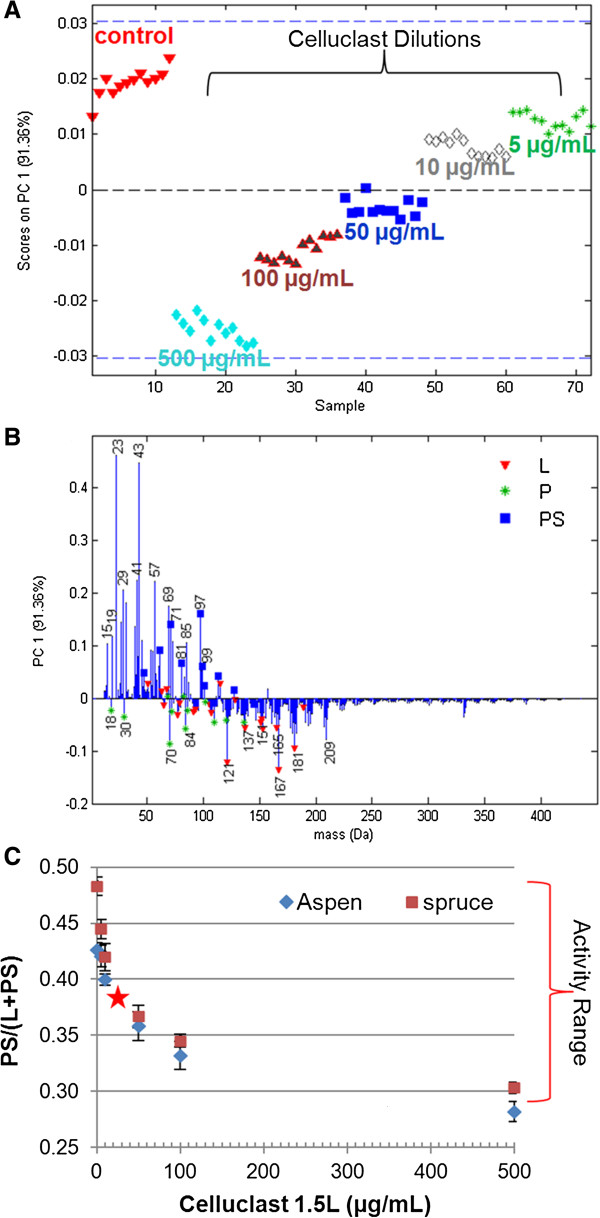
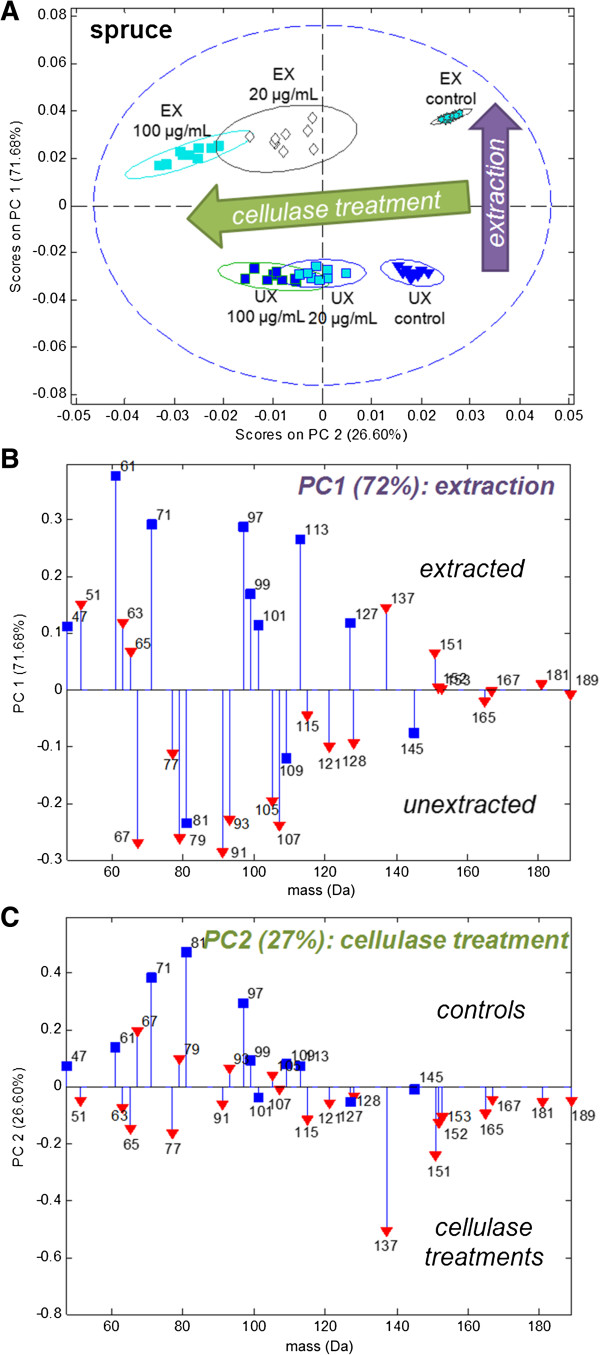
The present work introduces a new, higher-throughput method for processing powdered wood samples for ToF-SIMS, meanwhile exploring likely sources of sample contamination. Multivariate analysis (MVA) including Principal Component Analysis (PCA) and Multivariate Curve Resolution (MCR) was regularly used to check for sample contamination as well as to detect extractives and enzyme activity. New data also demonstrates successful ToF-SIMS analysis of unextracted samples, placing an emphasis on identifying the low-mass secondary ion peaks related to extractives, revealing how extractives change previously established peak ratios used to describe enzyme activity, and elucidating peak intensity patterns for better detection of cellulase activity in the presence of extractives. The sensitivity of ToF-SIMS to a range of cellulase doses is also shown, along with preliminary experiments augmenting the cellulase cocktail with other proteins.
These new procedures increase the throughput of sample preparation for ToF-SIMS analysis of lignocellulose and expand the applications of the method to include unextracted lignocellulose. These are important steps towards the practical use of ToF-SIMS as a tool to screen for changes in plant composition, whether the transformation of the lignocellulose is achieved through enzyme application, plant mutagenesis, or other treatments.
飞行时间二次离子质谱(ToF-SIMS)是一种具有表面敏感性的质谱技术,具有作为检测固体材料上酶活性的方法的潜在优势。特别是,ToF-SIMS 已被应用于检测木质木质纤维素的酶解。先前的原理验证实验证明了溶剂提取的硬木和软木上木质素降解酶和纤维素降解酶的检测。然而,这些初步实验的样品通量较低,并且仅限于已经溶剂提取的样品,以尽量减少低分子量提取物化合物和聚合木质纤维素成分之间的质量干扰的潜在可能性。
本工作介绍了一种用于 ToF-SIMS 处理粉末状木材样品的新的、高通量的方法,同时探索了样品污染的可能来源。多元分析(MVA)包括主成分分析(PCA)和多元曲线分辨(MCR),定期用于检查样品污染以及检测提取物和酶活性。新数据还成功地证明了未提取样品的 ToF-SIMS 分析,重点是识别与提取物相关的低质量二次离子峰,揭示了提取物如何改变以前用于描述酶活性的建立的峰比,并阐明了峰强度模式,以便在存在提取物的情况下更好地检测纤维素酶活性。还显示了 ToF-SIMS 对一系列纤维素酶剂量的敏感性,以及用其他蛋白质补充纤维素酶混合物的初步实验。
这些新程序提高了 ToF-SIMS 分析木质纤维素的样品制备的通量,并将该方法的应用扩展到包括未提取的木质纤维素。这些是将 ToF-SIMS 作为一种工具用于筛选植物成分变化的实际应用的重要步骤,无论木质纤维素的转化是通过酶应用、植物诱变还是其他处理来实现的。