Fischer Gloria, Brunner Romuald, Parzer Peter, Resch Franz, Kaess Michael
Section for Disorders of Personality Development, Clinic of Child and Adolescent Psychiatry, Centre of Psychosocial Medicine, University of Heidelberg, Blumenstrasse 8, Heidelberg 69115, Germany.
Trials. 2013 Sep 13;14:294. doi: 10.1186/1745-6215-14-294.
Worldwide, prevalence rates of adolescent non-suicidal self-injury (NSSI) range between 13 and 45%. In Germany, lifetime prevalence of NSSI is around 25% in non-clinical samples, and the one-year prevalence for repetitive NSSI is 4%. NSSI is present in the context of several axis I and II disorders (for example, affective disorders or borderline personality disorder); however, preliminary evidence suggests that it would be justified to consider NSSI as its own diagnostic category. Despite the large impact of this behavior, there is still a lack of evidence-based, specific, and effective manualized treatment approaches for adolescents with NSSI.
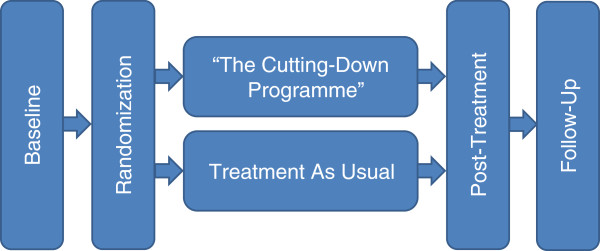
METHODS/DESIGN: The study is designed as a randomized controlled trial (RCT) to test the effectiveness of a new cognitive-behavioral treatment manual for self-harming adolescents - the 'Cutting-Down-Programme' (CDP). A total of 80 adolescents aged between 12 and 17 years from a region in Southern Germany who have engaged in repetitive NSSI (≥5 incidents) in the last 6 months will be randomized into a treatment group (CDP) or a control group that will receive treatment as usual (TAU). The adolescents will be assessed by means of structured interviews and questionnaires at three time points (before treatment, directly after treatment and six months after treatment). Primary outcome criterion is a significant reduction (or remission) in the frequency of NSSI. Secondary outcome criteria are depressivity as well as general well-being and self-worth. Additionally, comorbid psychiatric disorders and childhood adversity will be evaluated as predictors of therapeutic outcome.
Recently, a pilot study in the United Kingdom showed significant reductions in self-harming behavior, depressive symptoms and trait anxiety. This is the first RCT to test the effectiveness of a short-term psychotherapeutic intervention in outpatients engaging in NSSI.
The study is registered in the German Clinical Trials Register DRKS00003605.
在全球范围内,青少年非自杀性自伤(NSSI)的患病率在13%至45%之间。在德国,非临床样本中NSSI的终生患病率约为25%,重复性NSSI的一年患病率为4%。NSSI存在于多种轴I和轴II障碍(例如情感障碍或边缘性人格障碍)的背景下;然而,初步证据表明将NSSI视为一种独立的诊断类别是合理的。尽管这种行为影响巨大,但对于有NSSI的青少年,仍然缺乏基于证据的、具体且有效的手册化治疗方法。
方法/设计:本研究设计为一项随机对照试验(RCT),以测试一种针对自伤青少年的新认知行为治疗手册——“减少自伤计划”(CDP)的有效性。来自德国南部一个地区的80名年龄在12至17岁之间、在过去6个月内有重复性NSSI(≥5次事件)的青少年将被随机分为治疗组(CDP)或接受常规治疗(TAU)的对照组。将在三个时间点(治疗前、治疗后即刻和治疗后六个月)通过结构化访谈和问卷对青少年进行评估。主要结局标准是NSSI频率的显著降低(或缓解)。次要结局标准是抑郁程度以及总体幸福感和自我价值感。此外,将评估共病精神障碍和童年逆境作为治疗结局的预测因素。
最近,英国的一项试点研究显示自伤行为、抑郁症状和特质焦虑有显著降低。这是第一项测试短期心理治疗干预对有NSSI的门诊患者有效性的RCT。
该研究已在德国临床试验注册中心DRKS00003605注册。