Cambridge Institute for Medical Research, University of Cambridge, Cambridge Biomedical Campus, Cambridge CB2 0XY, UK; Department of Medicine, University of Cambridge School of Clinical Medicine, Addenbrooke's Hospital, Cambridge CB2 0QQ, UK.
Cell. 2013 Sep 26;155(1):57-69. doi: 10.1016/j.cell.2013.08.034. Epub 2013 Sep 12.
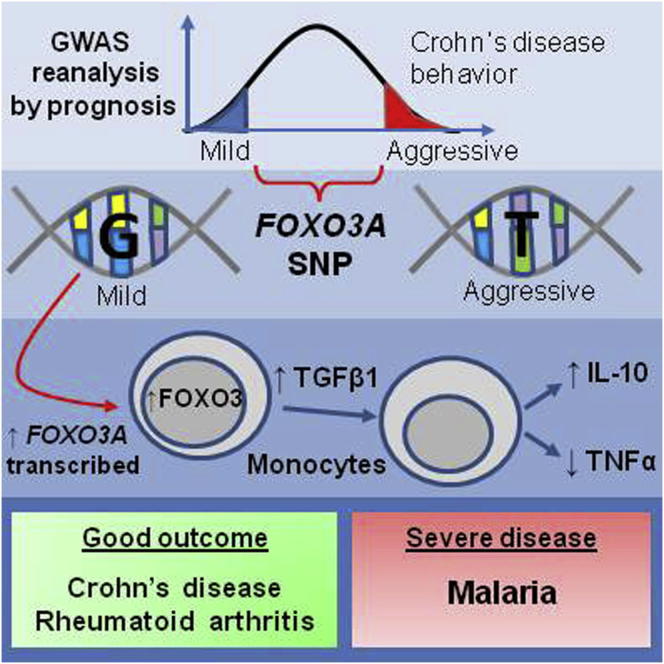
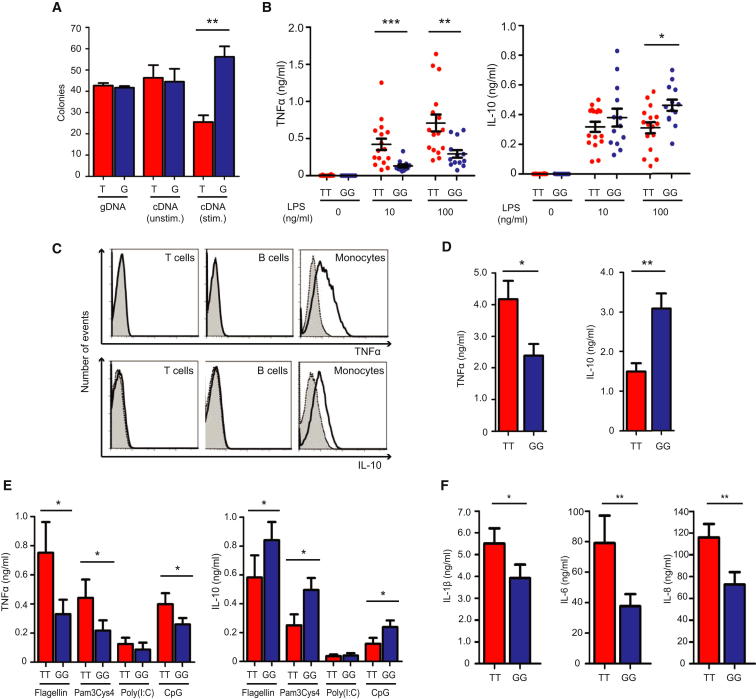
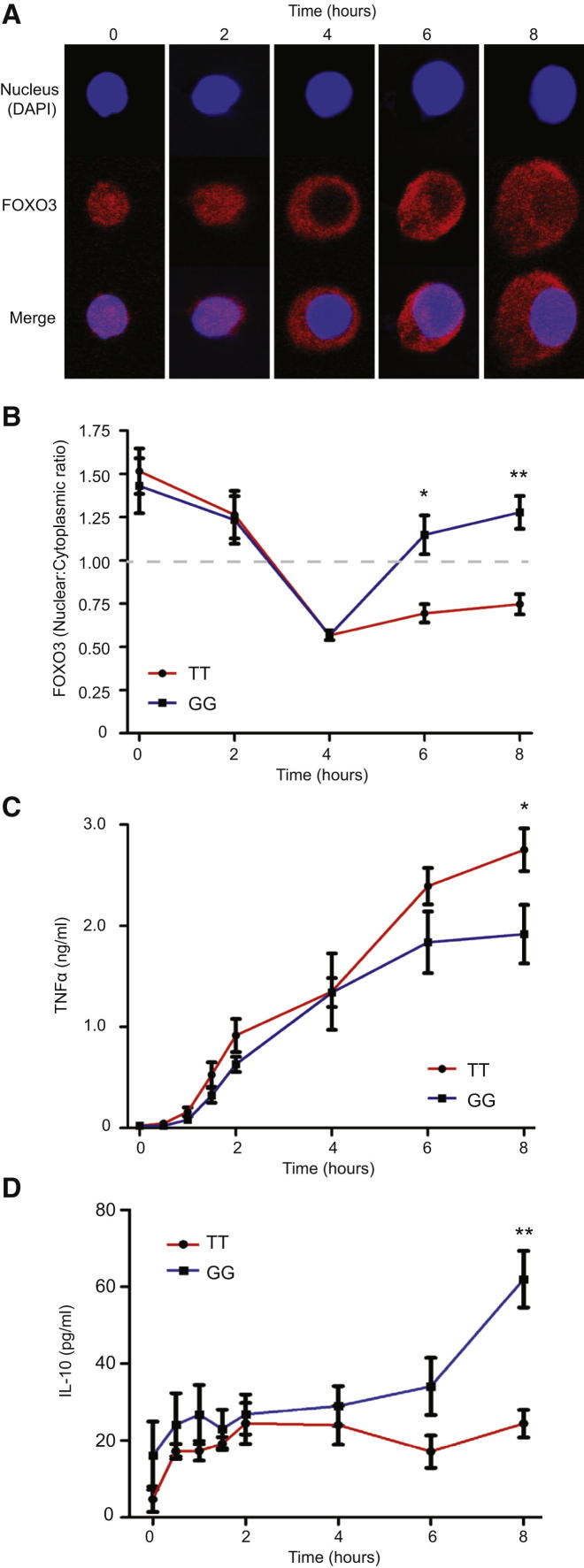
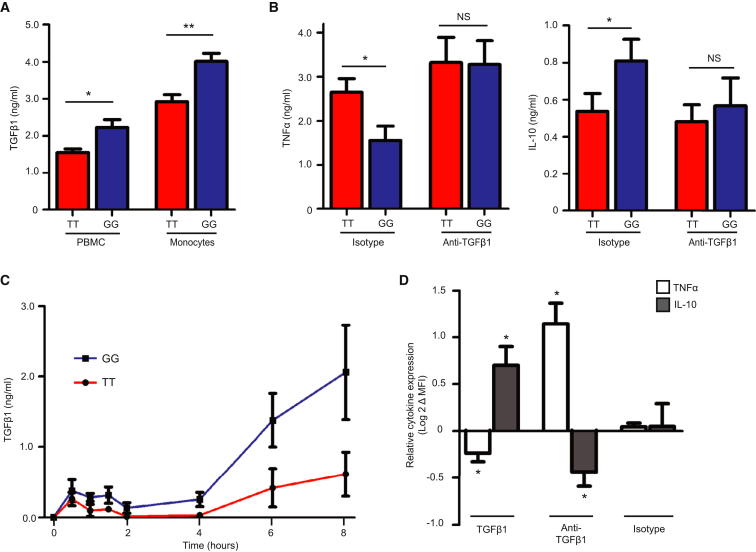
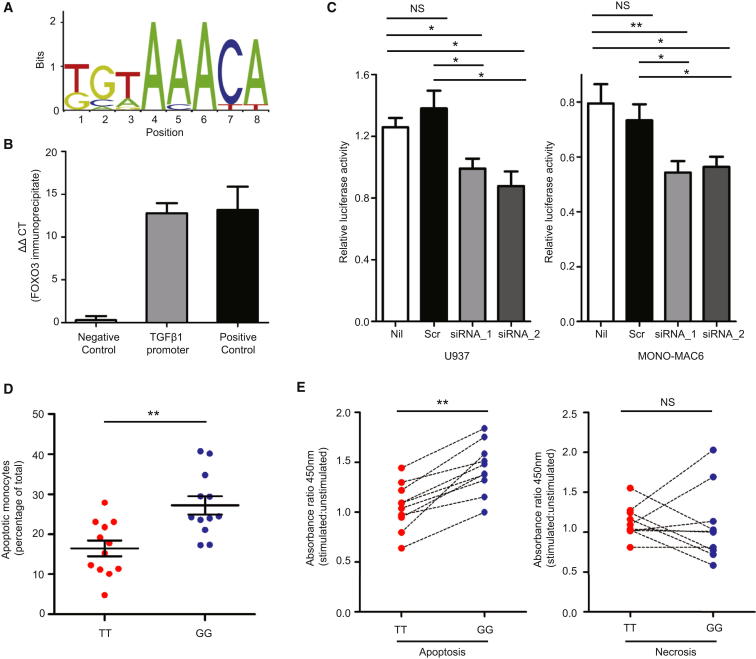
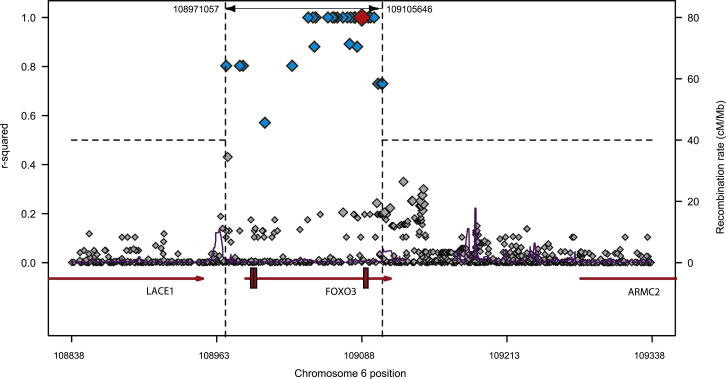
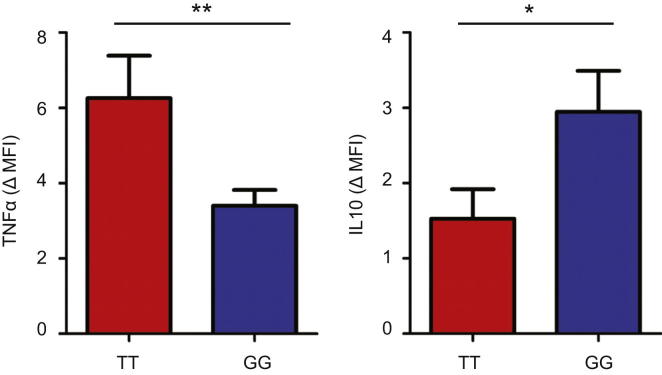
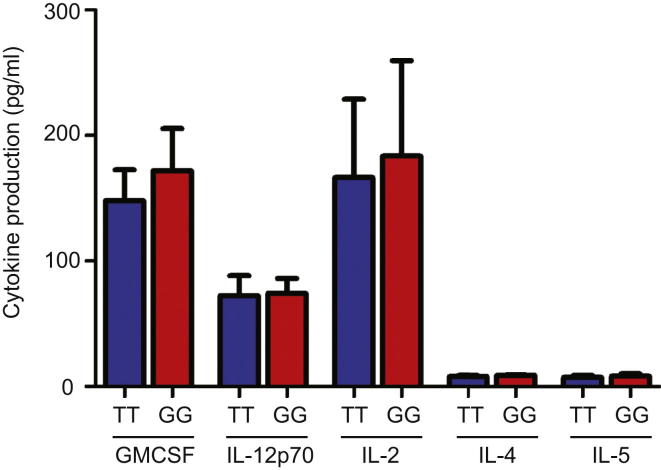
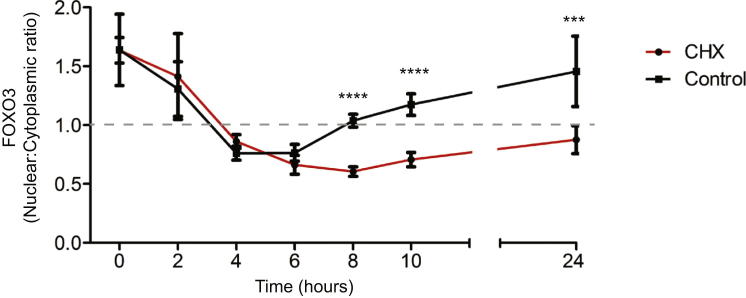
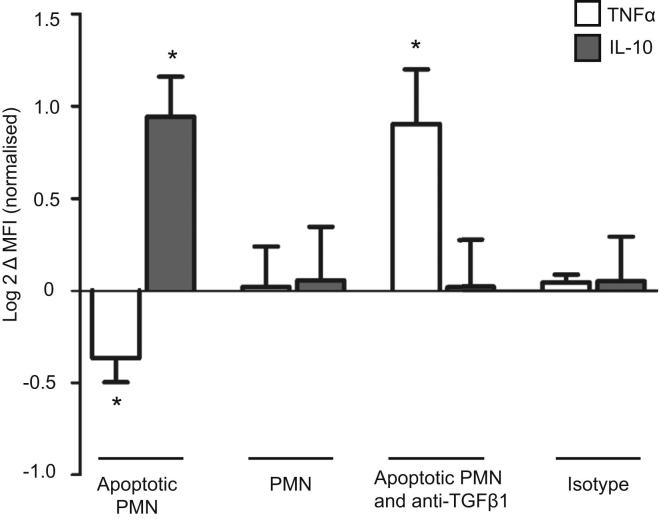
The clinical course and eventual outcome, or prognosis, of complex diseases varies enormously between affected individuals. This variability critically determines the impact a disease has on a patient's life but is very poorly understood. Here, we exploit existing genome-wide association study data to gain insight into the role of genetics in prognosis. We identify a noncoding polymorphism in FOXO3A (rs12212067: T > G) at which the minor (G) allele, despite not being associated with disease susceptibility, is associated with a milder course of Crohn's disease and rheumatoid arthritis and with increased risk of severe malaria. Minor allele carriage is shown to limit inflammatory responses in monocytes via a FOXO3-driven pathway, which through TGFβ1 reduces production of proinflammatory cytokines, including TNFα, and increases production of anti-inflammatory cytokines, including IL-10. Thus, we uncover a shared genetic contribution to prognosis in distinct diseases that operates via a FOXO3-driven pathway modulating inflammatory responses.
复杂疾病的临床病程和最终结局(或预后)在受影响个体之间差异极大。这种可变性极大地决定了疾病对患者生活的影响,但人们对此知之甚少。在这里,我们利用现有的全基因组关联研究数据深入了解遗传在预后中的作用。我们在 FOXO3A 中发现了一个非编码多态性(rs12212067:T > G),尽管该次要(G)等位基因与疾病易感性无关,但与克罗恩病和类风湿关节炎的轻度病程以及严重疟疾的风险增加有关。研究表明,携带次要等位基因通过 FOXO3 驱动的途径限制单核细胞的炎症反应,该途径通过 TGFβ1 减少促炎细胞因子(包括 TNFα)的产生,并增加抗炎细胞因子(包括 IL-10)的产生。因此,我们揭示了不同疾病预后中存在的一个共同遗传贡献,该贡献通过调节炎症反应的 FOXO3 驱动途径发挥作用。