Department of Social Dentistry, School of Dentistry, University of São Paulo, São PauloSP, Brazil.
J Appl Oral Sci. 2013 Jul-Aug;21(4):358-62. doi: 10.1590/1678-775720130022.
Validation studies of physical anthropology methods in the different population groups are extremely important, especially in cases in which the population variations may cause problems in the identification of a native individual by the application of norms developed for different communities.
This study aimed to estimate the gender of skeletons by application of the method of Oliveira, et al. (1995), previously used in a population sample from Northeast Brazil.
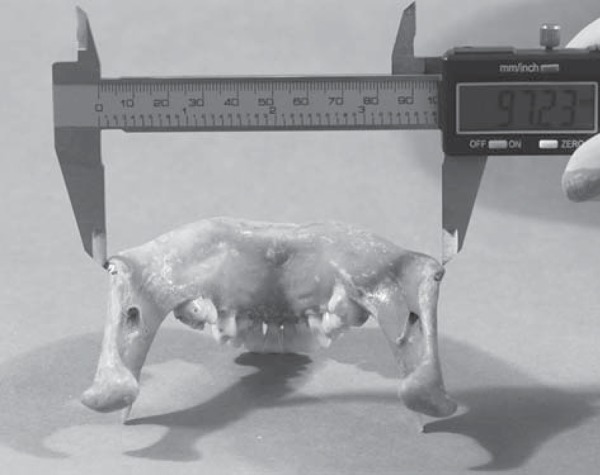
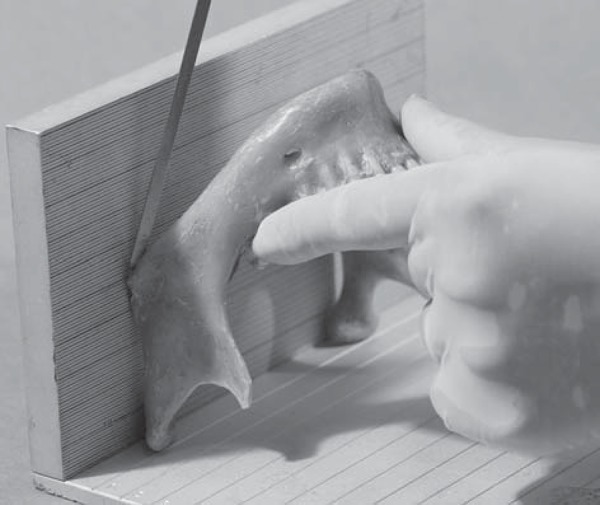
The accuracy of this method was assessed for a population from Southeast Brazil and validated by statistical tests. The method used two mandibular measurements, namely the bigonial distance and the mandibular ramus height. The sample was composed of 66 skulls and the method was applied by two examiners. The results were statistically analyzed by the paired t test, logistic discriminant analysis and logistic regression.
The results demonstrated that the application of the method of Oliveira, et al. (1995) in this population achieved very different outcomes between genders, with 100% for females and only 11% for males, which may be explained by ethnic differences. However, statistical adjustment of measurement data for the population analyzed allowed accuracy of 76.47% for males and 78.13% for females, with the creation of a new discriminant formula.
It was concluded that methods involving physical anthropology present high rate of accuracy for human identification, easy application, low cost and simplicity; however, the methodologies must be validated for the different populations due to differences in ethnic patterns, which are directly related to the phenotypic aspects. In this specific case, the method of Oliveira, et al. (1995) presented good accuracy and may be used for gender estimation in Brazil in two geographic regions, namely Northeast and Southeast; however, for other regions of the country (North, Central West and South), previous methodological adjustment is recommended as demonstrated in this study.
在不同人群中验证体质人类学方法非常重要,特别是在由于人群变化可能导致应用为不同社区制定的标准识别本地个体时。
本研究旨在应用 Oliveira 等人(1995 年)的方法来估计骨骼的性别,该方法先前已在巴西东北部的人群样本中使用。
评估该方法在巴西东南部人群中的准确性,并通过统计检验进行验证。该方法使用了两个下颌测量值,即下颌角距离和下颌支高度。样本由 66 个头骨组成,由两名检查者应用该方法。结果通过配对 t 检验、逻辑判别分析和逻辑回归进行统计分析。
结果表明,该方法在该人群中的应用在性别之间产生了非常不同的结果,女性的准确率为 100%,而男性仅为 11%,这可能是由于种族差异所致。然而,对所分析人群的测量数据进行统计调整后,男性的准确率为 76.47%,女性的准确率为 78.13%,并创建了一个新的判别公式。
可以得出结论,涉及体质人类学的方法在人类识别方面具有很高的准确率、易于应用、成本低且简单;然而,由于种族模式的差异,这些方法必须针对不同的人群进行验证,因为种族模式直接与表型方面相关。在这种特殊情况下,Oliveira 等人(1995 年)的方法表现出良好的准确性,可用于巴西两个地理区域(东北和东南)的性别估计;然而,对于该国其他地区(北部、中西部和南部),建议进行先前的方法调整,正如本研究所示。