Department of Immunology, Southern Medical University, Guangzhou, Guangdong, China ; Department of Microbiology and Immunology, School of Basic Medicine, Guangdong Medical College, Dongguan, Guangdong, China.
PLoS One. 2013 Sep 6;8(9):e72505. doi: 10.1371/journal.pone.0072505. eCollection 2013.
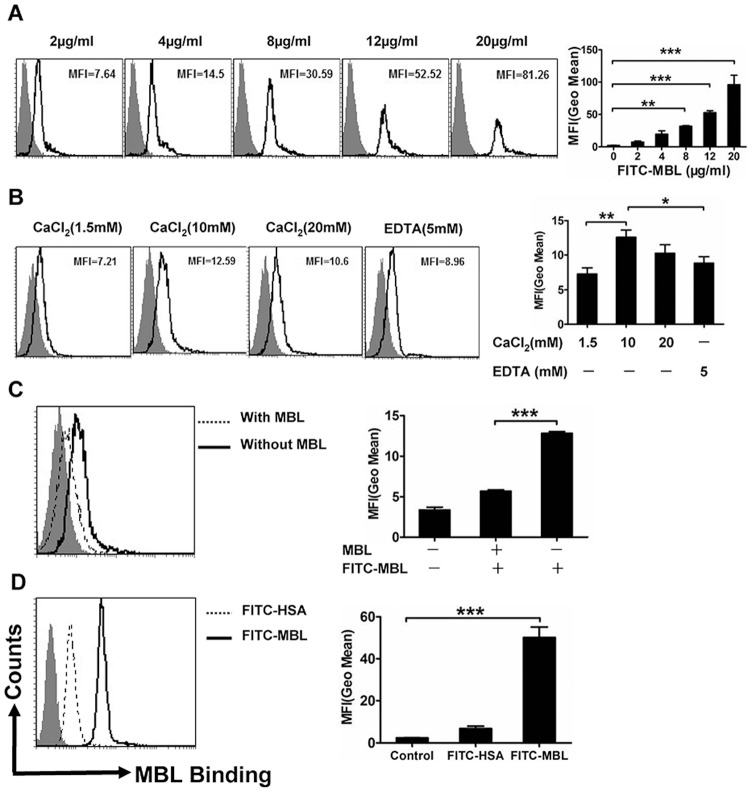
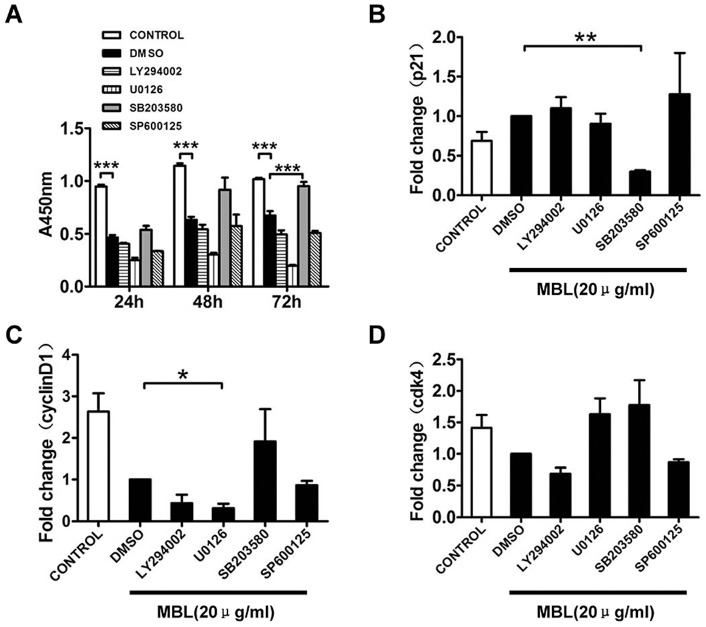
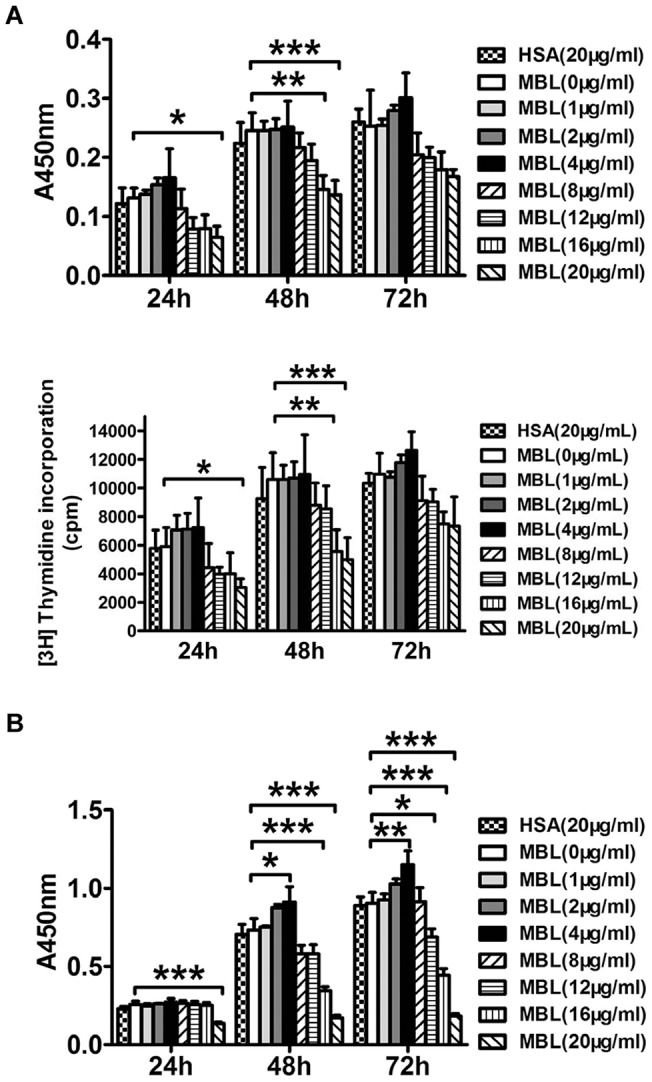
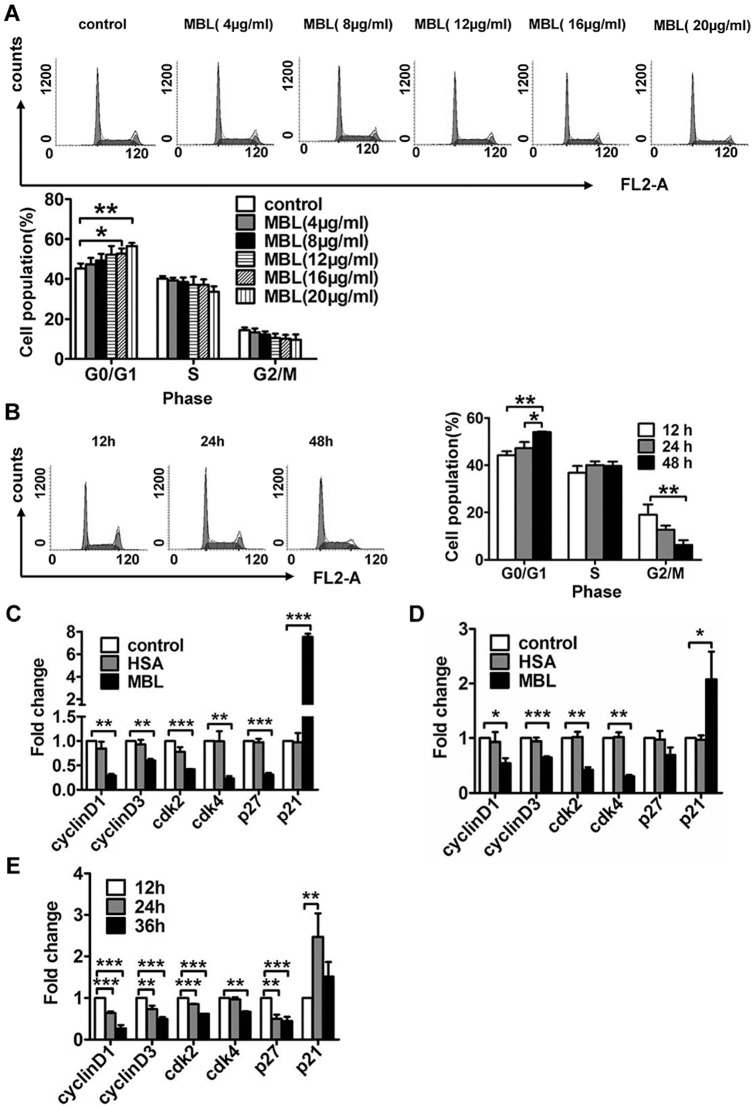
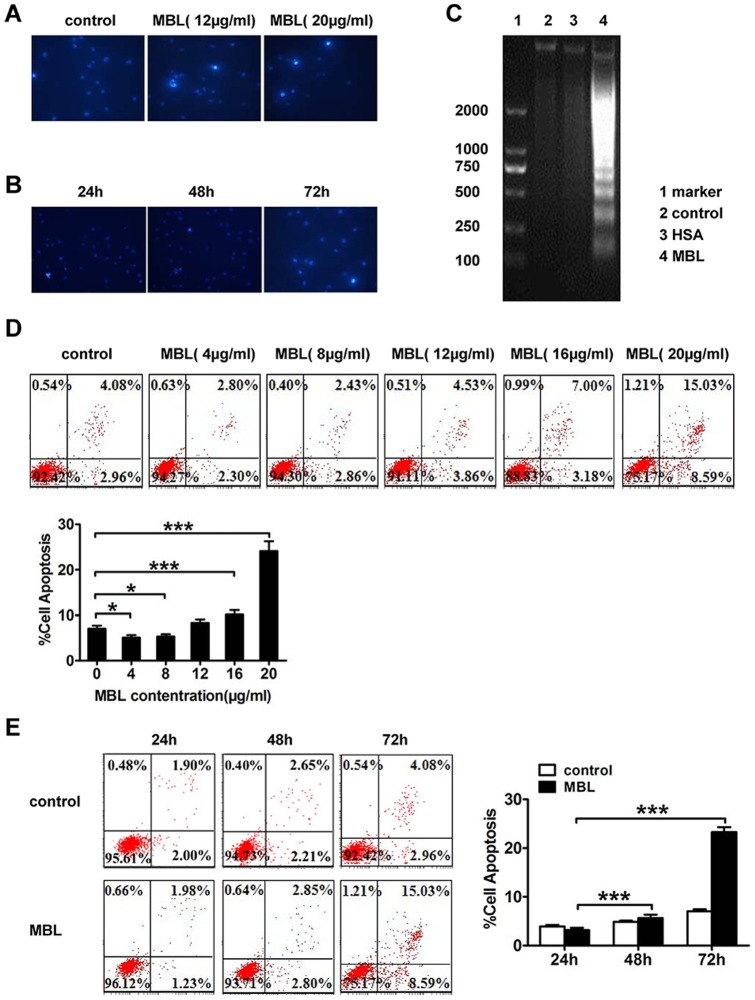
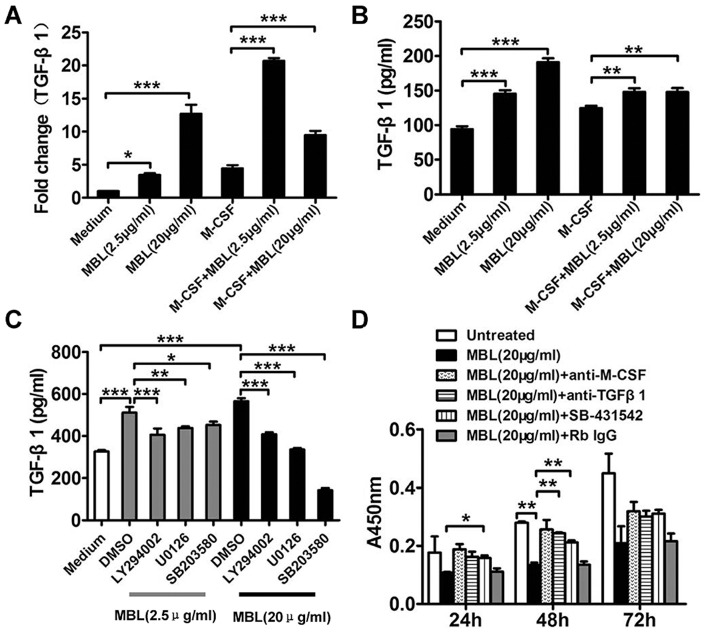
Mannose-binding lectin (MBL), a plasma C-type lectin, plays an important role in innate immunity. However, the interaction, and the consequences of it, between MBL and the immune system remain ill defined. We have investigated the contributing mechanisms and effects of MBL on the proliferation of human monocytes. At lower concentrations (≤4 μg/ml) MBL was shown to partially enhance monocyte proliferation. By contrast, at higher concentrations (8-20 μg/ml) of MBL, cell proliferation was markedly attenuated. MBL-induced growth inhibition was associated with G0/G1 arrest, down-regulation of cyclin D1/D3, cyclin-dependent kinase (Cdk) 2/Cdk4 and up-regulation of the Cdk inhibitory protein Cip1/p21. Additionally, MBL induced apoptosis, and did so through caspase-3 activation and poly ADP-ribose polymerase (PARP) cleavage. Moreover, transforming growth factor (TGF)-β1 levels increased in the supernatants of MBL-stimulated monocyte cultures. We also found that MBL-dependent inhibition of monocyte proliferation could be reversed by the TGF-β receptor antagonist SB-431542, or by anti-TGF-β1 antibody, or by the mitogen-activated protein kinase (MAPK) inhibitors specific for p38 (SB203580), but not ERK (U0126) or JNK (SP600125). Thus, at high concentrations, MBL can affect the immune system by inhibiting monocyte proliferation, which suggests that MBL may exhibit anti-inflammatory effects.
甘露聚糖结合凝集素(MBL),一种血浆 C 型凝集素,在先天免疫中发挥重要作用。然而,MBL 与免疫系统之间的相互作用及其后果仍未得到明确界定。我们研究了 MBL 对人单核细胞增殖的作用机制及其影响。在较低浓度(≤4μg/ml)时,MBL 可部分增强单核细胞增殖。相比之下,在较高浓度(8-20μg/ml)的 MBL 下,细胞增殖明显受到抑制。MBL 诱导的生长抑制与 G0/G1 期阻滞、细胞周期蛋白 D1/D3、细胞周期蛋白依赖性激酶(Cdk)2/Cdk4 下调和 Cdk 抑制蛋白 Cip1/p21 上调有关。此外,MBL 诱导细胞凋亡,并通过半胱天冬酶-3 激活和多聚 ADP-核糖聚合酶(PARP)切割来实现。此外,转化生长因子(TGF)-β1 水平在 MBL 刺激的单核细胞培养物上清液中增加。我们还发现,MBL 依赖性抑制单核细胞增殖可通过 TGF-β 受体拮抗剂 SB-431542 或抗 TGF-β1 抗体或特定的丝裂原活化蛋白激酶(MAPK)抑制剂 p38(SB203580)逆转,但不能通过 ERK(U0126)或 JNK(SP600125)逆转。因此,在高浓度下,MBL 可通过抑制单核细胞增殖来影响免疫系统,这表明 MBL 可能具有抗炎作用。