Technische Universität München, Neuherberg, Germany.
PLoS One. 2013 Sep 6;8(9):e73536. doi: 10.1371/journal.pone.0073536. eCollection 2013.
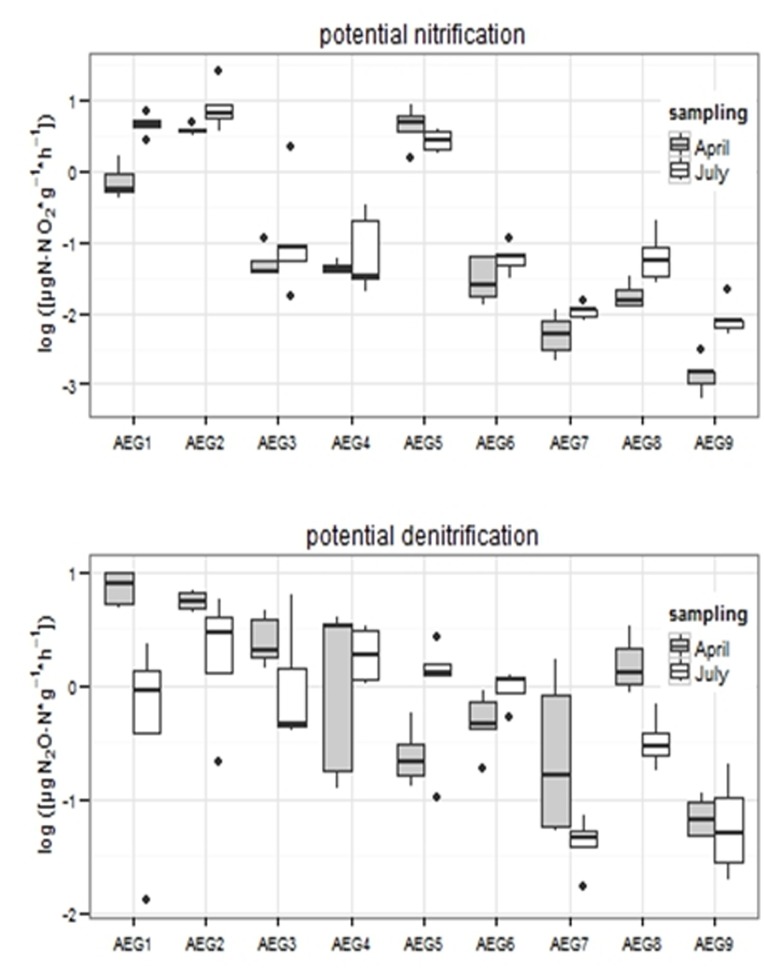
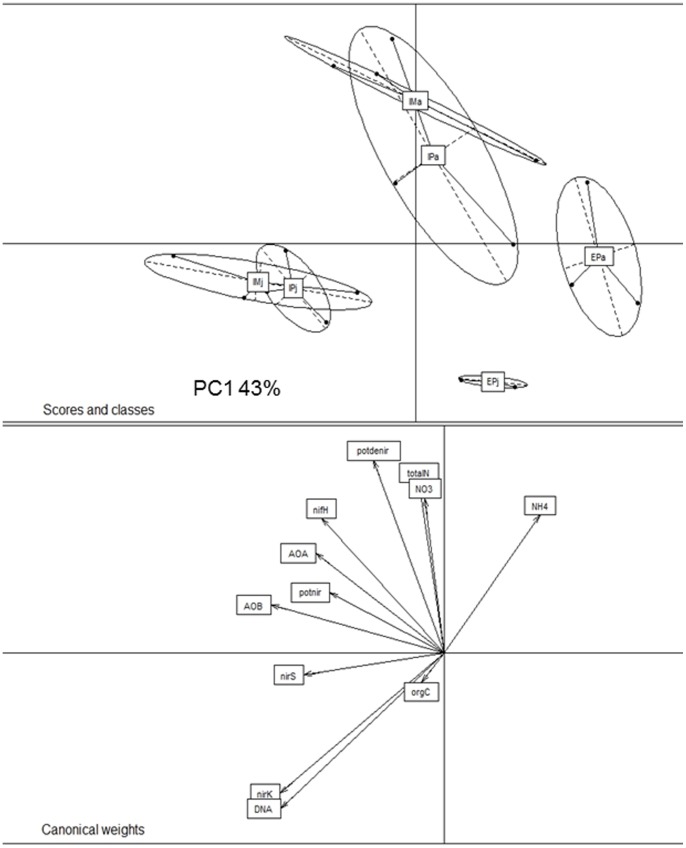
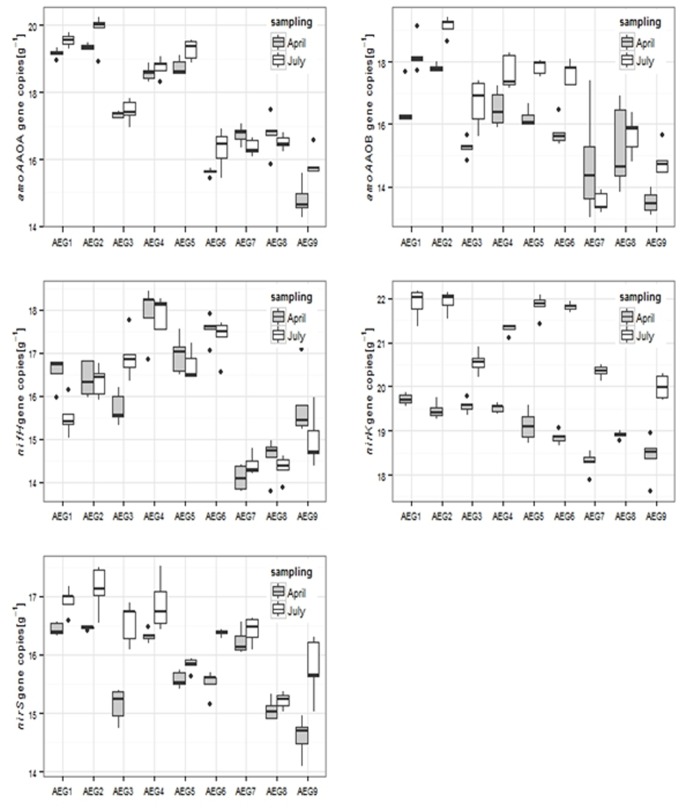
Understanding factors driving the ecology of N cycling microbial communities is of central importance for sustainable land use. In this study we report changes of abundance of denitrifiers, nitrifiers and nitrogen-fixing microorganisms (based on qPCR data for selected functional genes) in response to different land use intensity levels and the consequences for potential turnover rates. We investigated selected grassland sites being comparable with respect to soil type and climatic conditions, which have been continuously treated for many years as intensely used meadows (IM), intensely used mown pastures (IP) and extensively used pastures (EP), respectively. The obtained data were linked to above ground biodiversity pattern as well as water extractable fractions of nitrogen and carbon in soil. Shifts in land use intensity changed plant community composition from systems dominated by s-strategists in extensive managed grasslands to c-strategist dominated communities in intensive managed grasslands. Along the different types of land use intensity, the availability of inorganic nitrogen regulated the abundance of bacterial and archaeal ammonia oxidizers. In contrast, the amount of dissolved organic nitrogen determined the abundance of denitrifiers (nirS and nirK). The high abundance of nifH carrying bacteria at intensive managed sites gave evidence that the amounts of substrates as energy source outcompete the high availability of inorganic nitrogen in these sites. Overall, we revealed that abundance and function of microorganisms involved in key processes of inorganic N cycling (nitrification, denitrification and N fixation) might be independently regulated by different abiotic and biotic factors in response to land use intensity.
了解氮循环微生物群落生态的驱动因素对于可持续土地利用至关重要。在本研究中,我们报告了反硝化菌、硝化菌和固氮微生物(基于选定功能基因的 qPCR 数据)丰度的变化,以响应不同的土地利用强度水平及其对潜在周转率的影响。我们调查了一些草地,这些草地在土壤类型和气候条件方面具有可比性,这些草地多年来一直被连续地作为高强度利用的草地(IM)、高强度刈割的草地(IP)和高强度利用的草地(EP)进行处理。所得数据与地上生物多样性模式以及土壤中可提取氮和碳的水分数有关。土地利用强度的变化改变了植物群落的组成,从高强度管理的草地中以 s 策略者为主的系统转变为高强度管理的草地中以 c 策略者为主的群落。沿着不同类型的土地利用强度,无机氮的可用性调节了细菌和古菌氨氧化菌的丰度。相比之下,溶解有机氮的含量决定了反硝化菌(nirS 和 nirK)的丰度。在高强度管理的地点,大量携带 nifH 的细菌的存在表明,作为能源来源的底物的数量在这些地点超过了无机氮的高可用性。总的来说,我们揭示了参与无机氮循环(硝化、反硝化和固氮)关键过程的微生物的丰度和功能可能会受到不同的非生物和生物因素的独立调节,以响应土地利用强度。