Department of Genetics and Microbiology, Faculty of Science, Charles University in Prague, Prague, Czech Republic.
PLoS One. 2013 Sep 11;8(9):e73882. doi: 10.1371/journal.pone.0073882. eCollection 2013.
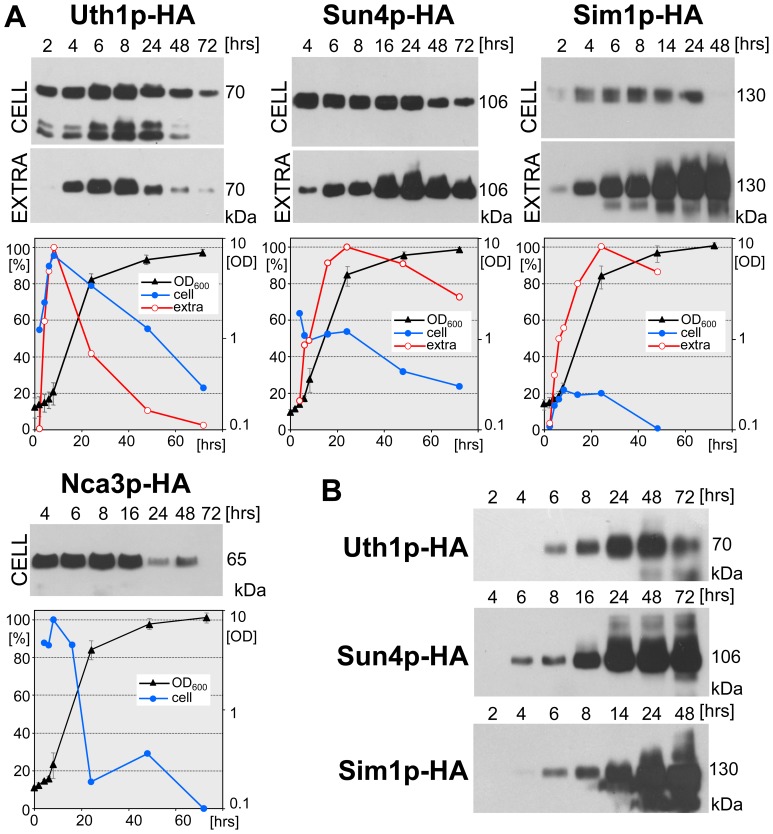
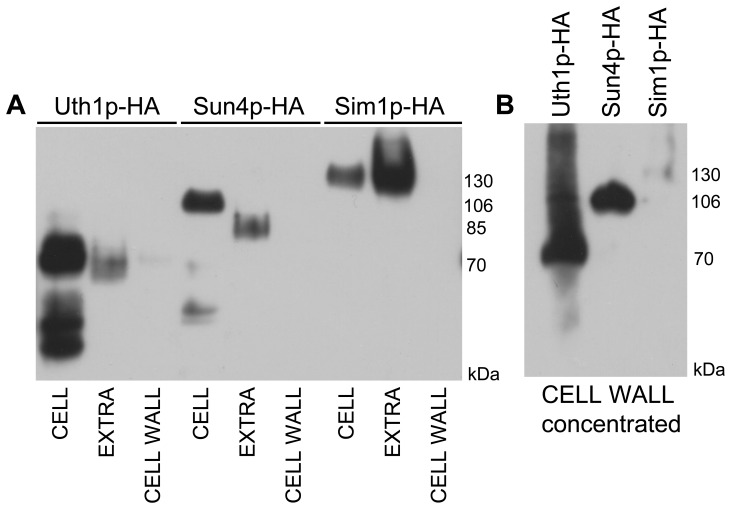
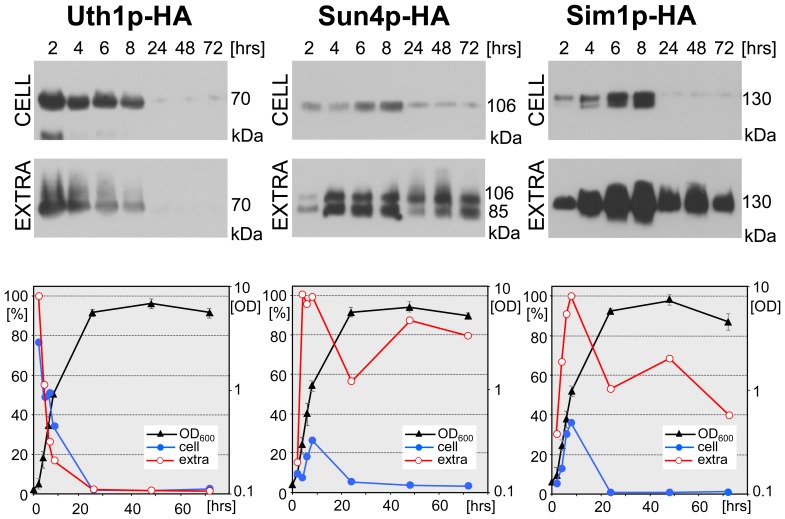
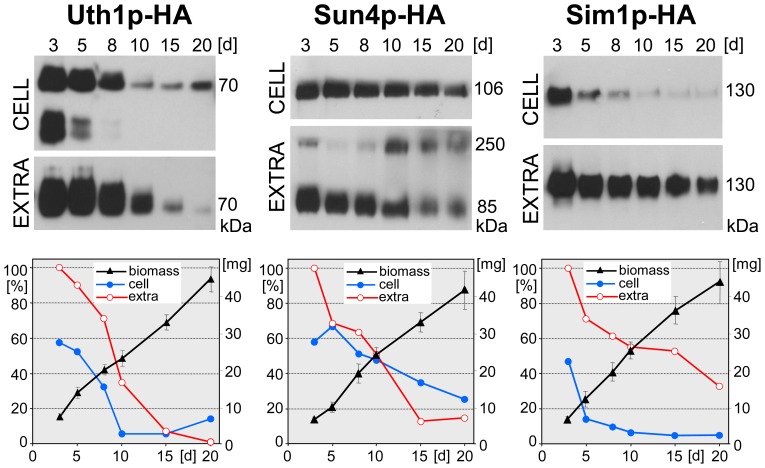
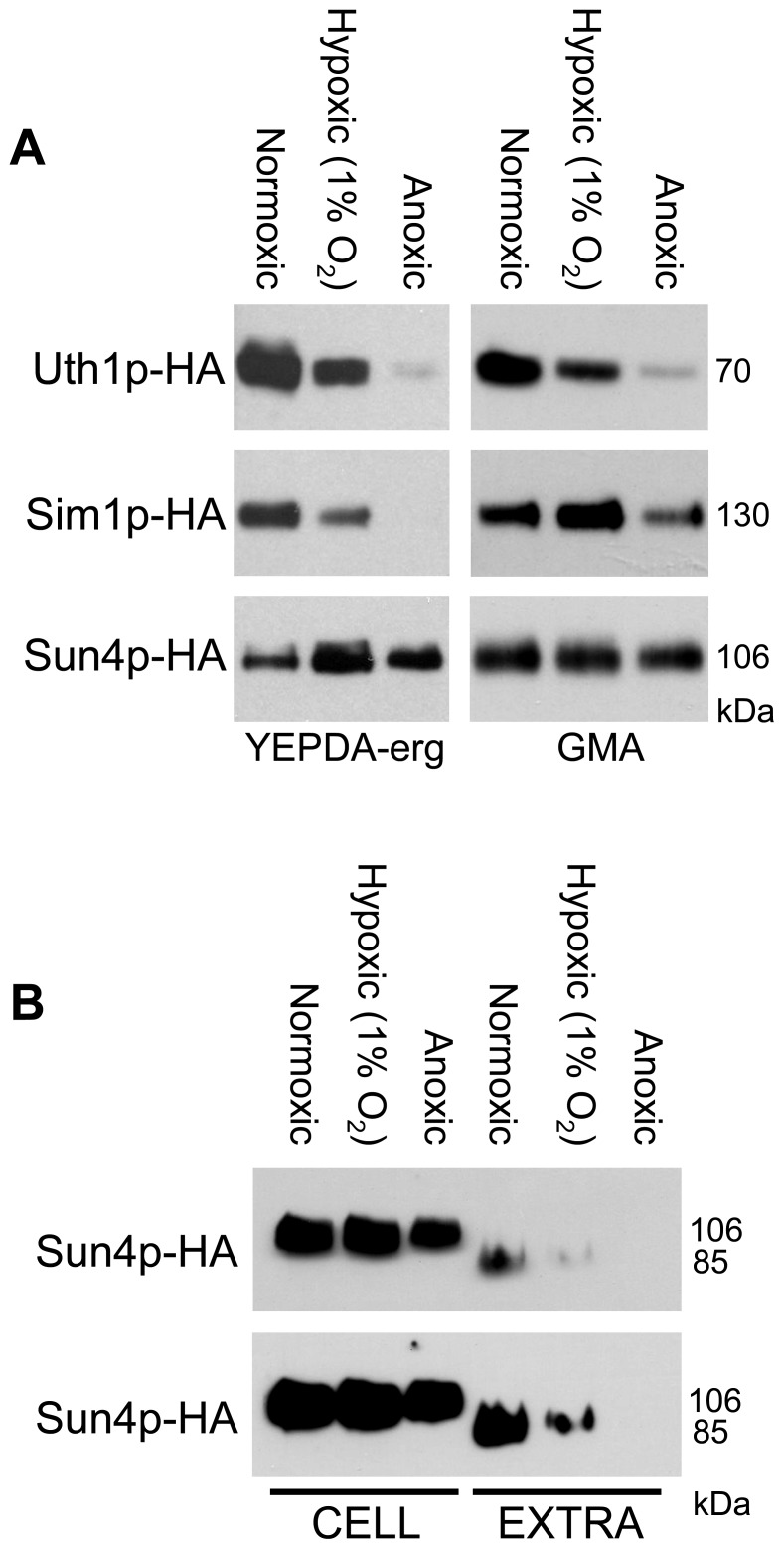
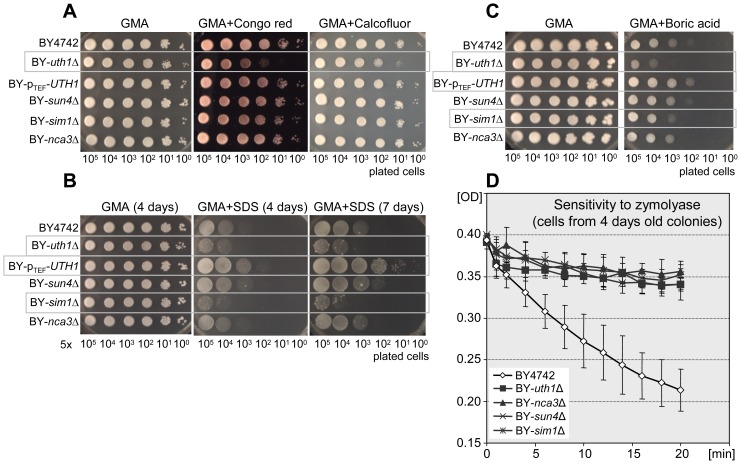
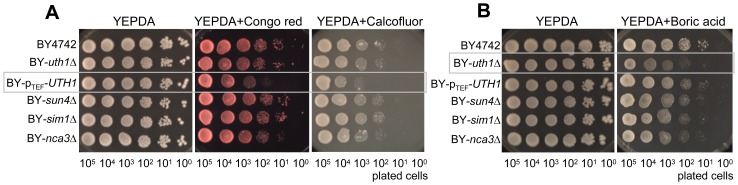
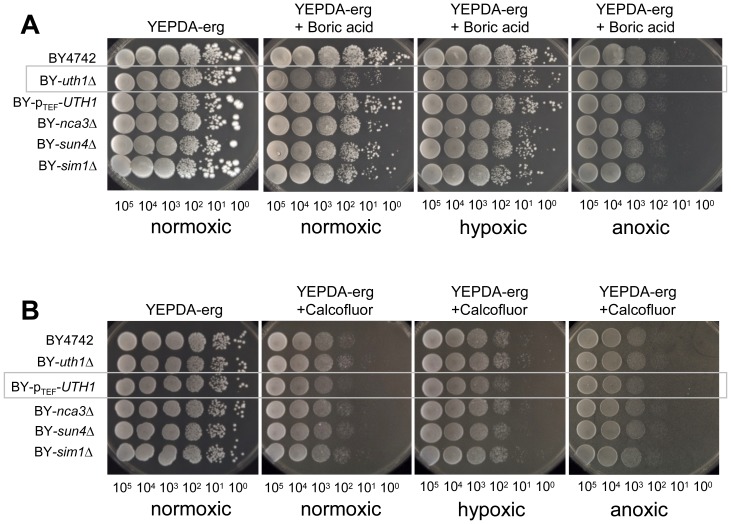
The SUN family is comprised of proteins that are conserved among various yeasts and fungi, but that are absent in mammals and plants. Although the function(s) of these proteins are mostly unknown, they have been linked to various, often unrelated cellular processes such as those connected to mitochondrial and cell wall functions. Here we show that three of the four Saccharomyces cerevisiae SUN family proteins, Uth1p, Sim1p and Sun4p, are efficiently secreted out of the cells in different growth phases and their production is affected by the level of oxygen. The Uth1p, Sim1p, Sun4p and Nca3p are mostly synthesized during the growth phase of both yeast liquid cultures and colonies. Culture transition to slow-growing or stationary phases is linked with a decreased cellular concentration of Sim1p and Sun4p and with their efficient release from the cells. In contrast, Uth1p is released mainly from growing cells. The synthesis of Uth1p and Sim1p, but not of Sun4p, is repressed by anoxia. All four proteins confer cell sensitivity to zymolyase. In addition, Uth1p affects cell sensitivity to compounds influencing cell wall composition and integrity (such as Calcofluor white and Congo red) differently when growing on fermentative versus respiratory carbon sources. In contrast, Uth1p is essential for cell resistance to boric acids irrespective of carbon source. In summary, our novel findings support the hypothesis that SUN family proteins are involved in the remodeling of the yeast cell wall during the various phases of yeast culture development and under various environmental conditions. The finding that Uth1p is involved in cell sensitivity to boric acid, i.e. to a compound that is commonly used as an important antifungal in mycoses, opens up new possibilities of investigating the mechanisms of boric acid's action.
SUN 家族蛋白在各种酵母和真菌中保守存在,但在哺乳动物和植物中不存在。尽管这些蛋白质的功能大多未知,但它们与各种不同的细胞过程有关,如与线粒体和细胞壁功能相关的过程。在这里,我们发现酿酒酵母中的四个 SUN 家族蛋白 Uth1p、Sim1p 和 Sun4p 中的三个,在不同的生长阶段能有效地分泌到细胞外,并且它们的产生受到氧水平的影响。Uth1p、Sim1p、Sun4p 和 Nca3p 在酵母液体培养物和菌落的生长阶段都主要合成。培养物向缓慢生长或静止期的转变与 Sim1p 和 Sun4p 的细胞浓度降低以及它们从细胞中的有效释放有关。相比之下,Uth1p 主要从生长细胞中释放。Uth1p 和 Sim1p 的合成受到缺氧的抑制,但 Sun4p 的合成不受缺氧的抑制。这四种蛋白都使细胞对几丁质酶敏感。此外,Uth1p 影响细胞对影响细胞壁组成和完整性的化合物(如 Calcofluor white 和 Congo red)的敏感性,在利用发酵碳源和呼吸碳源生长时表现出不同的模式。相比之下,Uth1p 对硼酸的细胞抗性是必需的,而与碳源无关。总之,我们的新发现支持了这样一种假设,即 SUN 家族蛋白参与了酵母细胞在各种酵母培养发展阶段和不同环境条件下细胞壁的重塑。发现 Uth1p 参与了细胞对硼酸的敏感性,即对一种通常作为真菌病中重要抗真菌剂的化合物的敏感性,为研究硼酸作用机制开辟了新的可能性。