Biological Psychology Lab, Department of Psychology, University of Oldenburg, Oldenburg, Germany.
PLoS One. 2013 Sep 9;8(9):e74125. doi: 10.1371/journal.pone.0074125. eCollection 2013.
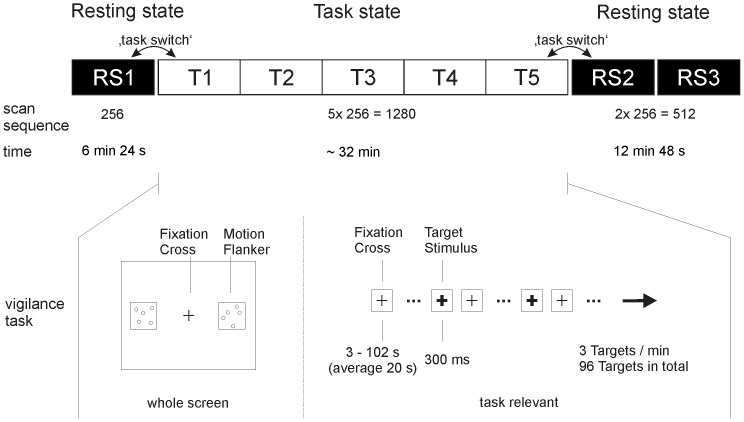
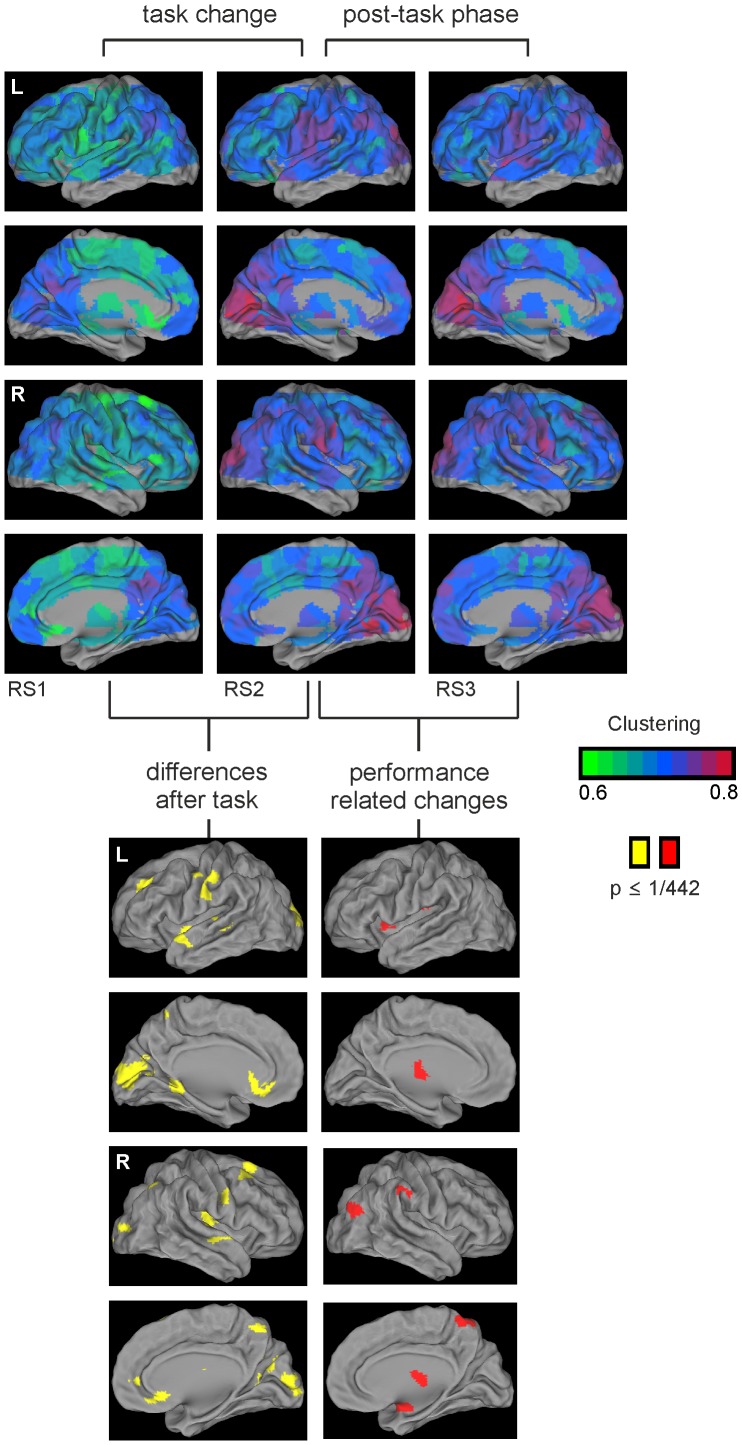
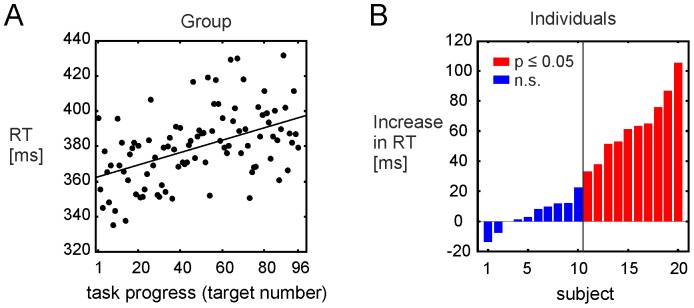
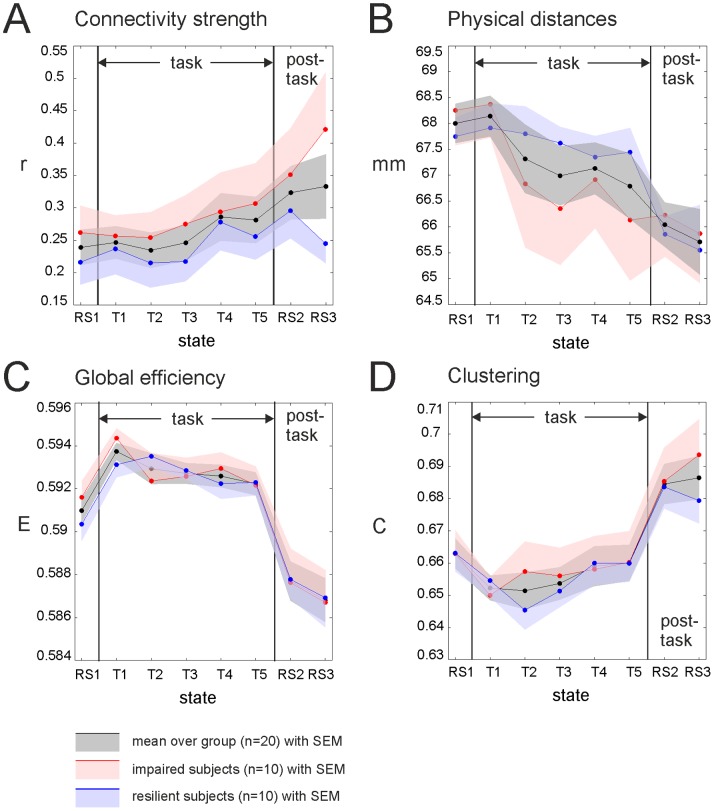
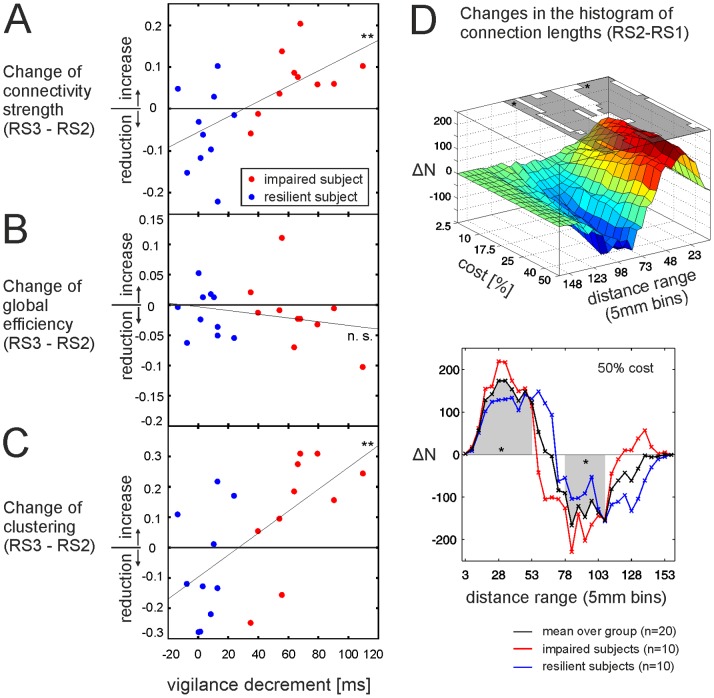
Individuals differ in their cognitive resilience. Less resilient people demonstrate a greater tendency to vigilance decrements within sustained attention tasks. We hypothesized that a period of sustained attention is followed by prolonged changes in the organization of "resting state" brain networks and that individual differences in cognitive resilience are related to differences in post-task network reorganization. We compared the topological and spatial properties of brain networks as derived from functional MRI data (N = 20) recorded for 6 mins before and 12 mins after the performance of an attentional task. Furthermore we analysed changes in brain topology during task performance and during the switches between rest and task conditions. The cognitive resilience of each individual was quantified as the rate of increase in response latencies over the 32-minute time course of the attentional paradigm. On average, functional networks measured immediately post-task demonstrated significant and prolonged changes in network organization compared to pre-task networks with higher connectivity strength, more clustering, less efficiency, and shorter distance connections. Individual differences in cognitive resilience were significantly correlated with differences in the degree of recovery of some network parameters. Changes in network measures were still present in less resilient individuals in the second half of the post-task period (i.e. 6-12 mins after task completion), while resilient individuals already demonstrated significant reductions of functional connectivity and clustering towards pre-task levels. During task performance brain topology became more integrated with less clustering and higher global efficiency, but linearly decreased with ongoing time-on-task. We conclude that sustained attentional task performance has prolonged, "hang-over" effects on the organization of post-task resting-state brain networks; and that more cognitively resilient individuals demonstrate faster rates of network recovery following a period of attentional effort.
个体之间的认知弹性存在差异。弹性较低的人在持续注意力任务中表现出更大的警觉性下降趋势。我们假设,在持续注意力之后,大脑的“静息状态”网络组织会发生长期变化,并且认知弹性的个体差异与任务后网络重组的差异有关。我们比较了在注意力任务前后 6 分钟和 12 分钟记录的功能磁共振成像(fMRI)数据中得出的大脑网络的拓扑和空间特性。此外,我们还分析了在任务执行期间以及在休息和任务状态之间切换期间大脑拓扑结构的变化。每个个体的认知弹性通过注意力范式 32 分钟过程中响应潜伏期的增加率来量化。平均而言,与任务前网络相比,任务后立即测量的功能网络表现出显著且持久的网络组织变化,表现为连接强度更高、聚类更多、效率更低和距离连接更短。认知弹性的个体差异与某些网络参数恢复程度的差异显著相关。在任务后期间(即任务完成后 6-12 分钟),弹性较小的个体的网络测量变化仍然存在,而弹性较大的个体已经表现出功能连接和聚类向任务前水平的显著降低。在任务执行期间,大脑拓扑结构变得更加整合,聚类减少,全局效率提高,但随着任务时间的延长呈线性下降。我们得出的结论是,持续的注意力任务对任务后静息状态大脑网络的组织有持久的“余波”效应;并且更具认知弹性的个体在注意力努力后表现出更快的网络恢复速度。