Sobell Department of Motor Neuroscience and Movement Disorders, Institute of Neurology, University College, London, UK.
Neurobiol Aging. 2012 Apr;33(4):833.e27-37. doi: 10.1016/j.neurobiolaging.2011.08.003. Epub 2011 Oct 19.
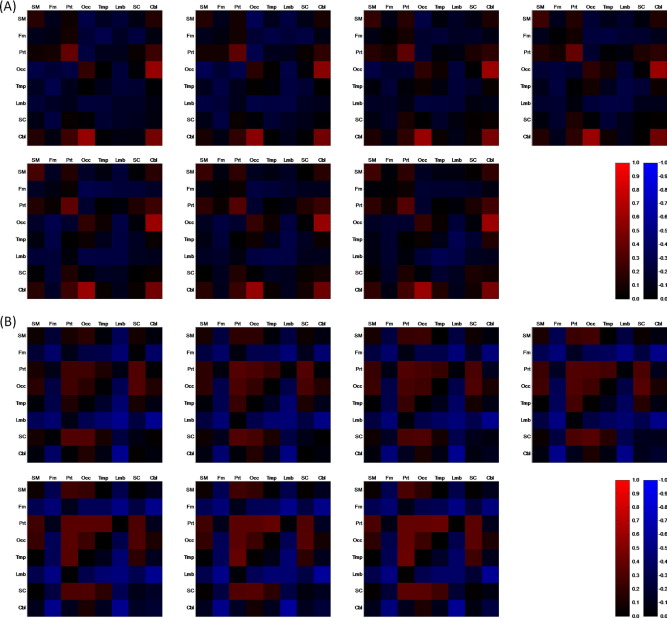
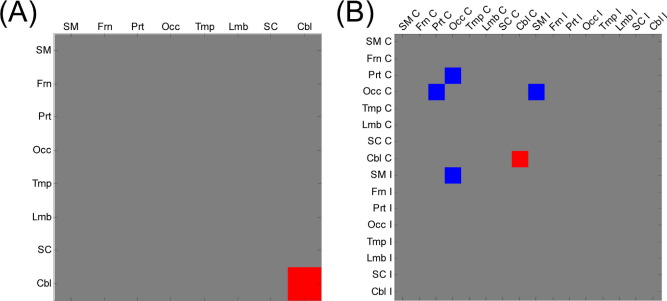
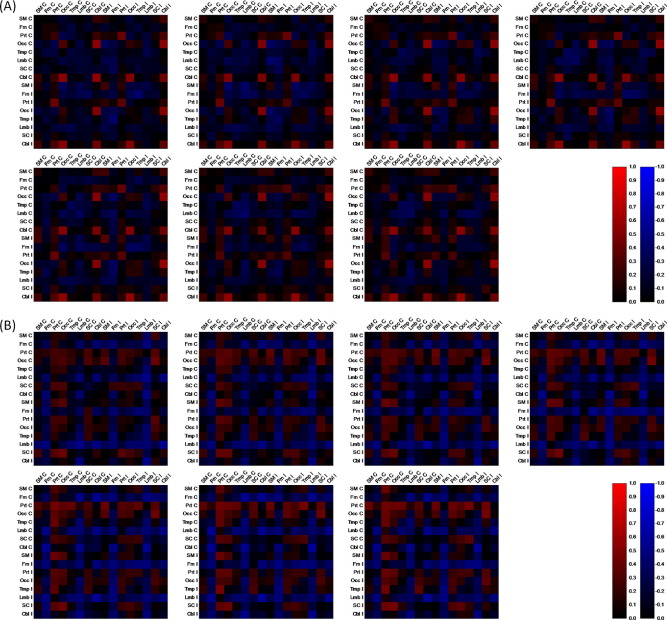
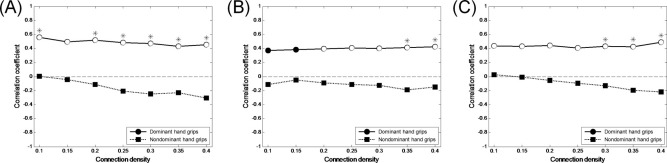
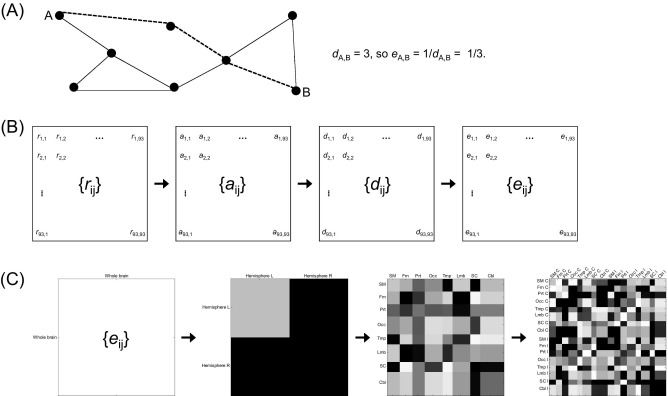
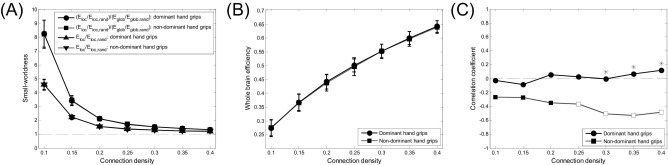
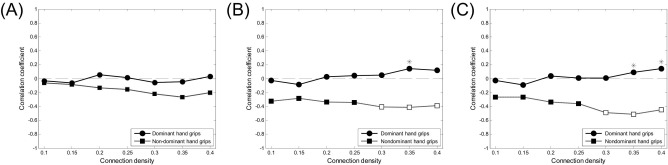
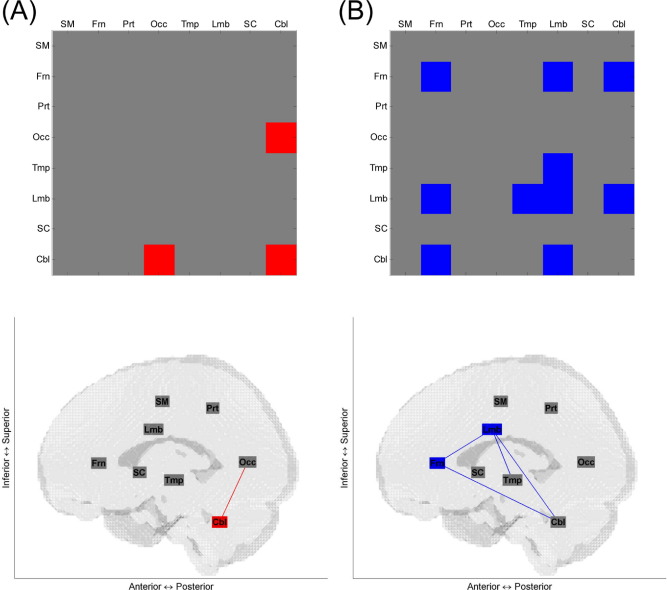
Neuroanatomical changes in the aging brain are widely distributed rather than focal. We investigated age-related changes in large-scale functional brain networks by applying graph theory to functional magnetic resonance imaging data acquired during a simple grip task with either dominant or nondominant hand. We measured the effect of age on efficiency of information transfer within a series of hierarchical functional networks composed of the whole brain or component parts of the whole brain. Global efficiency was maintained with aging during dominant hand use, primarily due to increased efficiency in parietal-occipital-cerebellar-related networks. During nondominant hand use, global efficiency, as well as efficiency within ipsilateral hemisphere and between hemispheres declined with age. This was attributable largely to frontal-temporal-limbic-cerebellar-related networks. Increased efficiency with age was seen in networks involving parietal-occipital regions, but unlike for dominant hand use, this topological reconfiguration could not maintain the level of global efficiency. Here, graph theoretical approaches have demonstrated both compensatory and noncompensatory changes in topological configuration of large-scale networks during aging depending on the task.
大脑老化过程中的神经解剖学变化广泛分布而不是集中于某个部位。我们通过应用图论分析方法,研究了在使用优势手或非优势手进行简单握物任务时,功能磁共振成像数据中大规模功能脑网络的年龄相关性变化。我们测量了一系列由全脑或全脑组成部分组成的分层功能网络内信息传递效率随年龄的变化。在使用优势手时,全局效率随着年龄的增长而保持不变,主要是由于顶枕叶-小脑相关网络的效率提高。在使用非优势手时,全局效率以及同侧半球和半球之间的效率都随年龄增长而下降。这主要归因于额颞叶-边缘叶-小脑相关网络。在涉及顶枕区域的网络中,随着年龄的增长,效率有所提高,但与使用优势手不同,这种拓扑结构的重新配置无法维持全局效率水平。在这里,图论方法已经证明,根据任务的不同,在衰老过程中,大规模网络的拓扑结构会发生代偿和非代偿性变化。