Ramapo College of New Jersey, 505 Ramapo Valley Rd,, Mahwah, NJ 07430, USA.
Hum Genomics. 2013 Sep 16;7(1):19. doi: 10.1186/1479-7364-7-19.
The MECP2 gene codes for methyl CpG binding protein 2 which regulates activities of other genes in the early development of the brain. Mutations in this gene have been associated with Rett syndrome, a form of autism. The purpose of this study was to investigate the role of evolutionarily conserved cis-elements in regulating the post-transcriptional expression of the MECP2 gene and to explore their possible correlations with a mutation that is known to cause mental retardation.
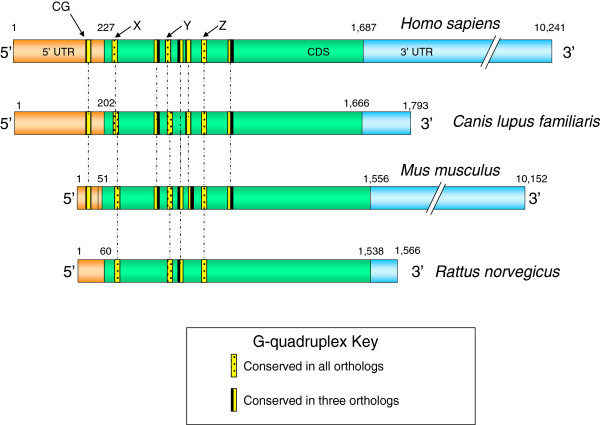
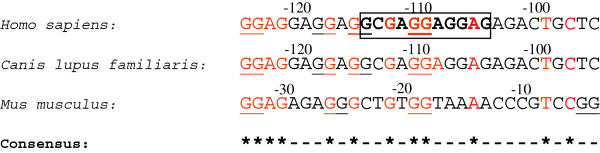
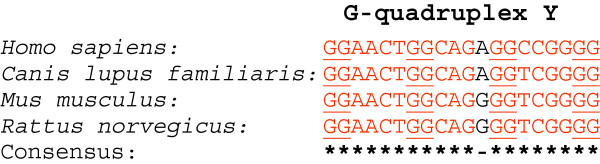
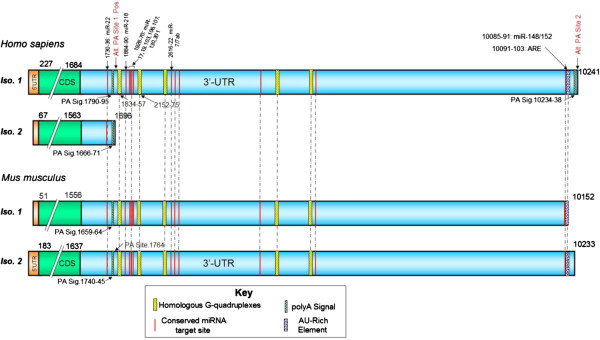
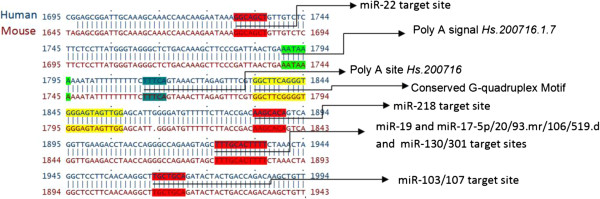
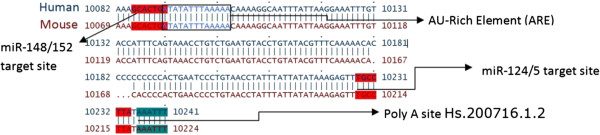
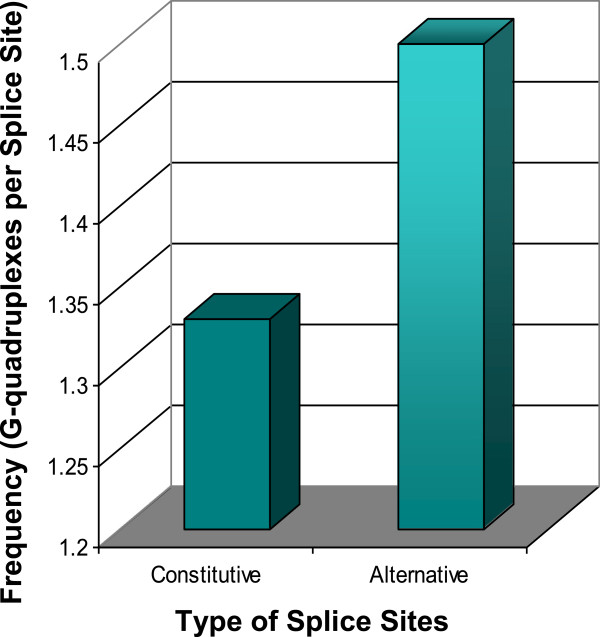
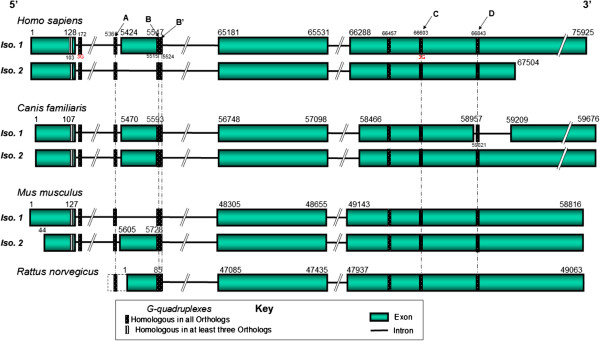
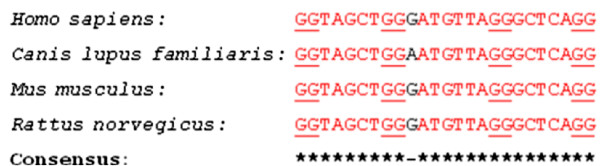
A bioinformatics approach was used to map evolutionarily conserved cis-regulatory elements in the transcribed regions of the human MECP2 gene and its mammalian orthologs. Cis-regulatory motifs including G-quadruplexes, microRNA target sites, and AU-rich elements have gained significant importance because of their role in key biological processes and as therapeutic targets. We discovered in the 5'-UTR (untranslated region) of MECP2 mRNA a highly conserved G-quadruplex which overlapped a known deletion in Rett syndrome patients with decreased levels of MeCP2 protein. We believe that this 5'-UTR G-quadruplex could be involved in regulating MECP2 translation. We mapped additional evolutionarily conserved G-quadruplexes, microRNA target sites, and AU-rich elements in the key sections of both untranslated regions. Our studies suggest the regulation of translation, mRNA turnover, and development-related alternative MECP2 polyadenylation, putatively involving interactions of conserved cis-regulatory elements with their respective trans factors and complex interactions among the trans factors themselves. We discovered highly conserved G-quadruplex motifs that were more prevalent near alternative splice sites as compared to the constitutive sites of the MECP2 gene. We also identified a pair of overlapping G-quadruplexes at an alternative 5' splice site that could potentially regulate alternative splicing in a negative as well as a positive way in the MECP2 pre-mRNAs.
A Rett syndrome mutation with decreased protein expression was found to be associated with a conserved G-quadruplex. Our studies suggest that MECP2 post-transcriptional gene expression could be regulated by several evolutionarily conserved cis-elements like G-quadruplex motifs, microRNA target sites, and AU-rich elements. This phylogenetic analysis has provided some interesting and valuable insights into the regulation of the MECP2 gene involved in autism.
MECP2 基因编码甲基化 CpG 结合蛋白 2,该蛋白在大脑早期发育过程中调节其他基因的活性。该基因的突变与雷特综合征有关,雷特综合征是一种自闭症形式。本研究旨在探讨进化上保守的顺式元件在调节 MECP2 基因转录后表达中的作用,并探讨其与已知导致智力迟钝的突变之间的可能相关性。
使用生物信息学方法对人类 MECP2 基因及其哺乳动物同源物转录区的进化上保守的顺式调控元件进行了映射。顺式调控基序,包括 G-四联体、microRNA 靶位和 AU 丰富元件,由于它们在关键生物过程中的作用以及作为治疗靶点而变得非常重要。我们在 MECP2 mRNA 的 5'-UTR(非翻译区)中发现了一个高度保守的 G-四联体,该四联体与雷特综合征患者中 MeCP2 蛋白水平降低的已知缺失重叠。我们认为这个 5'-UTR G-四联体可能参与调节 MECP2 的翻译。我们在非翻译区的关键部位还映射了其他进化上保守的 G-四联体、microRNA 靶位和 AU 丰富元件。我们的研究表明,翻译、mRNA 周转和发育相关的 MECP2 多聚腺苷酸化的调节,推测涉及保守顺式调控元件与其各自的反式因子的相互作用以及反式因子本身之间的复杂相互作用。我们发现高度保守的 G-四联体基序在 MECP2 基因的可变剪接位点附近比组成性剪接位点更为普遍。我们还在一个可变 5'剪接位点处鉴定了一对重叠的 G-四联体,它们可能以负向和正向方式调节 MECP2 前体 mRNA 的可变剪接。
与蛋白表达降低的雷特综合征突变相关的是一个保守的 G-四联体。我们的研究表明,MECP2 转录后基因表达可能受到几个进化上保守的顺式元件的调节,如 G-四联体基序、microRNA 靶位和 AU 丰富元件。这项系统发育分析为自闭症相关的 MECP2 基因表达调控提供了一些有趣且有价值的见解。