University of Istanbul, Faculty of Dentistry, Department of Prosthodontics, Istanbul, Turkey.
J Adv Prosthodont. 2013 Aug;5(3):226-33. doi: 10.4047/jap.2013.5.3.226. Epub 2013 Aug 31.
This study evaluated the adhesion of 10-MDP containing self-etch and self-adhesive resin cements to dentin with and without the use of etch-and-rinse technique.
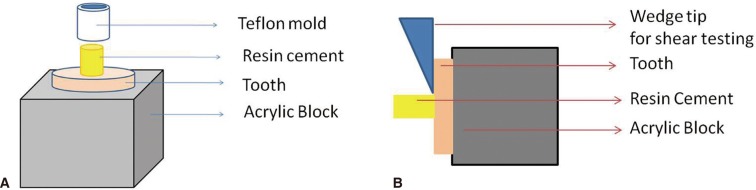
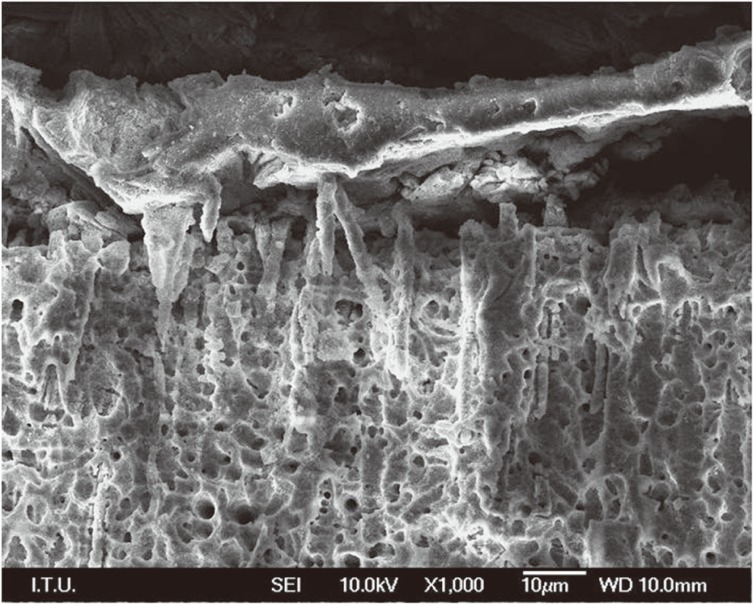
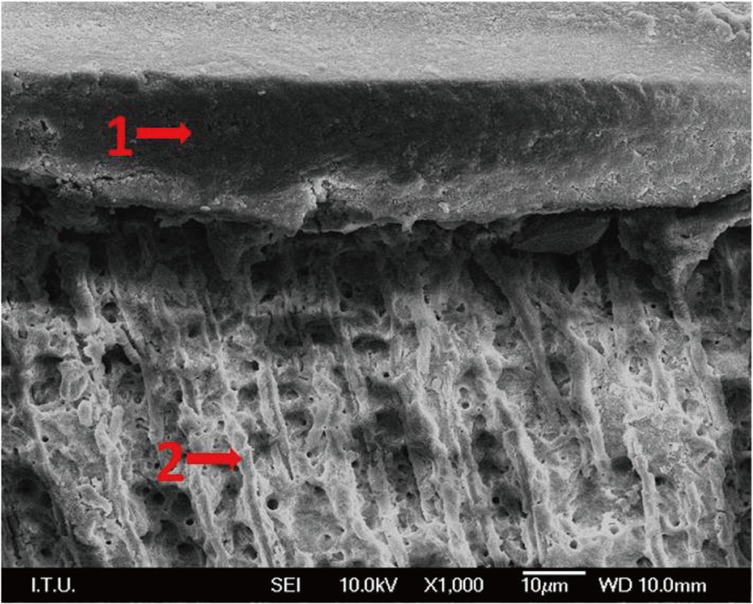
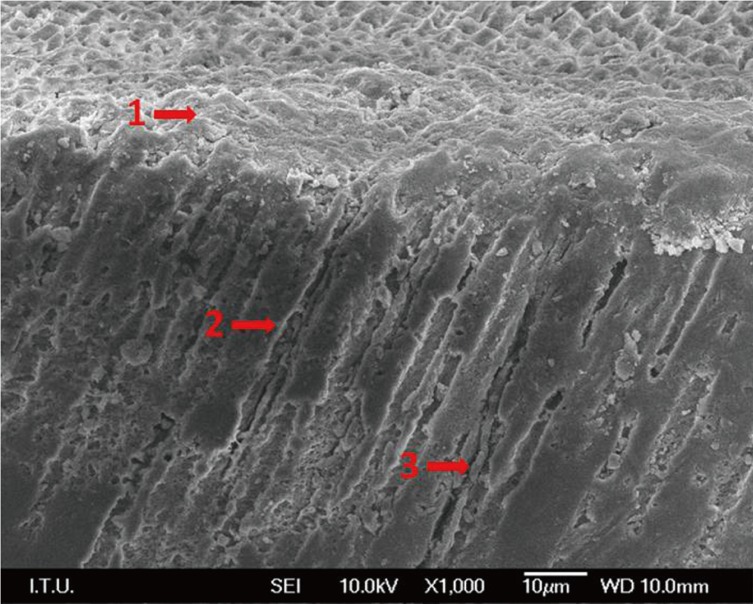
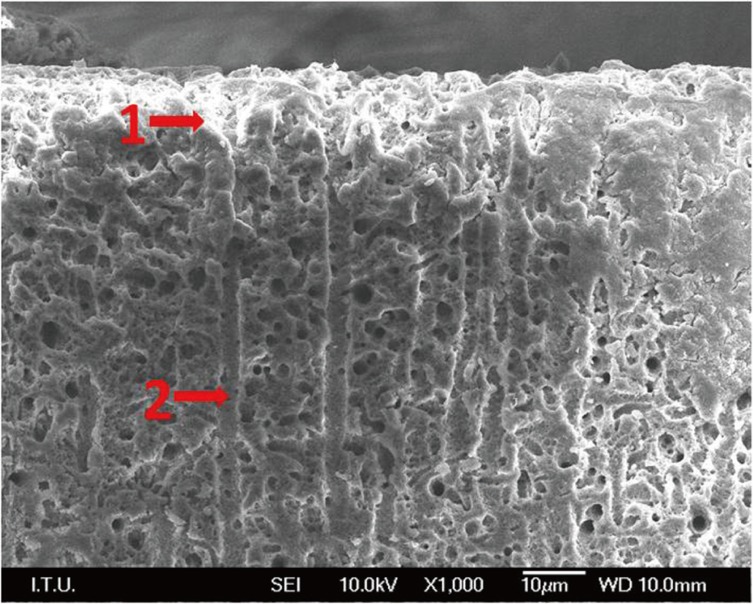
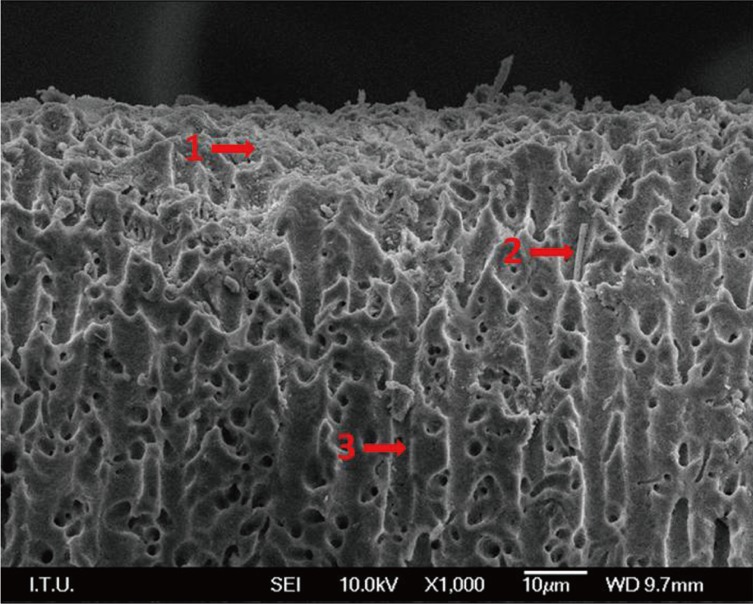
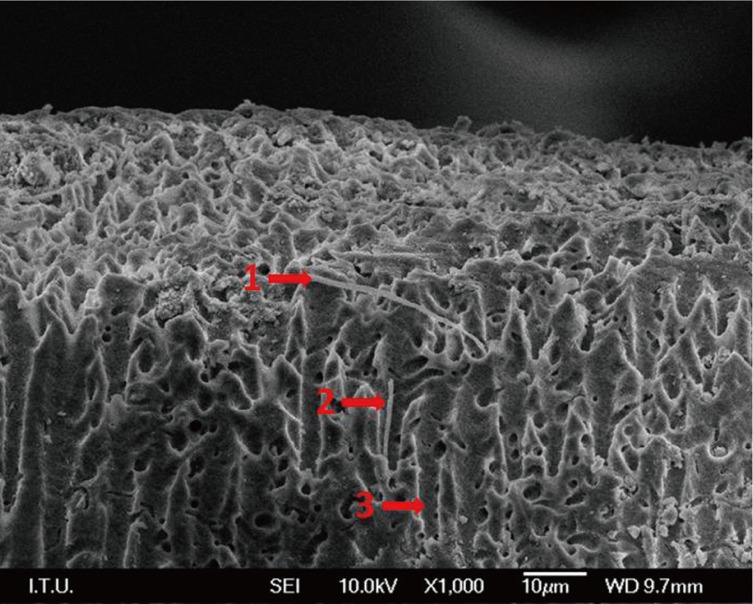
Human third molars (N=180) were randomly divided into 6 groups (n=30 per group). Conventional (Panavia F2.0, Kuraray-PAN) and self-adhesive resin cements (Clearfil SA, Kuraray-CSA) were bonded to dentin surfaces either after application of 3-step etch-and-rinse (35% H3PO4 + ED Primer) or two-step self-etch adhesive resin (Clearfil SE Bond). Specimens were subjected to shear bond strength test using the universal testing machine (0.5 mm/min). The failure types were analyzed using a stereomicroscope and quality of hybrid layer was observed under a scanning electron microscope. The data (MPa) were analyzed using two-way ANOVA and Tukey's tests (α=.05).
Overall, PAN adhesive cement showed significantly higher mean bond strength (12.5 ± 2.3 - 14.1 ± 2.4 MPa) than CSA cement (9.3 ± 1.4 - 13.9 ± 1.9 MPa) (P<.001). Adhesive failures were more frequent in CSA cement groups when used in conjunction with two-step self-adhesive (68%) or no adhesive at all (66%). Hybrid layer quality was inferior in CSA compared to PAN cement in all conditions.
In clinical situations where bonding to dentin substrate is crucial, both conventional and self-adhesive resin cements based on 10-MDP can benefit from etch-and-rinse technique to achieve better quality of adhesion in the early clinical period.
本研究评估了含有 10-MDP 的自酸蚀和自粘接树脂水门汀在使用和不使用酸蚀-冲洗技术的情况下与牙本质的粘接情况。
将 180 个人类第三磨牙(N=180)随机分为 6 组(每组 30 个)。传统(Panavia F2.0,Kuraray-PAN)和自粘接树脂水门汀(Clearfil SA,Kuraray-CSA)在应用 3 步酸蚀-冲洗(35% H3PO4 + ED Primer)或 2 步自酸蚀粘接树脂(Clearfil SE Bond)后分别粘接在牙本质表面。使用万能试验机(0.5 mm/min)对试件进行剪切粘接强度测试。使用立体显微镜分析失效类型,使用扫描电子显微镜观察混合层质量。使用双因素方差分析和 Tukey 检验(α=.05)对数据(MPa)进行分析。
总体而言,与 CSA 水门汀(9.3 ± 1.4 - 13.9 ± 1.9 MPa)相比,PAN 粘接剂水门汀的平均粘接强度(12.5 ± 2.3 - 14.1 ± 2.4 MPa)显著更高(P<.001)。当与两步自粘接(68%)或根本没有粘接剂(66%)一起使用时,CSA 水门汀组中更频繁地发生粘接剂失效。与 PAN 水门汀相比,在所有条件下,CSA 水门汀的混合层质量都较差。
在牙本质基底粘接至关重要的临床情况下,基于 10-MDP 的传统和自粘接树脂水门汀都可以受益于酸蚀-冲洗技术,以在早期临床阶段获得更好的粘接质量。