Department of Parasitology, Faculty of Medicine, Chiang Mai University, Chiang Mai 50200, Thailand.
Parasit Vectors. 2013 Aug 30;6(1):253. doi: 10.1186/1756-3305-6-253.
Resistance to pyrethroid insecticides is widespread among populations of Aedes aegypti, the main vector for the dengue virus. Several different point mutations within the voltage-gated sodium channel (VGSC) gene contribute to such resistance. A mutation at position 1016 in domain II, segment 6 of the VGSC gene in Ae. aegypti leads to a valine to glycine substitution (V1016G) that confers resistance to deltamethrin.
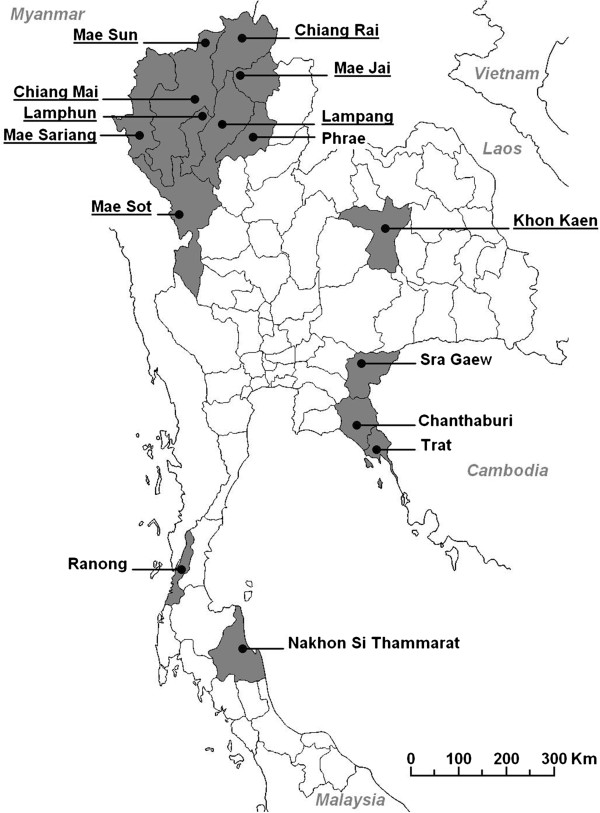
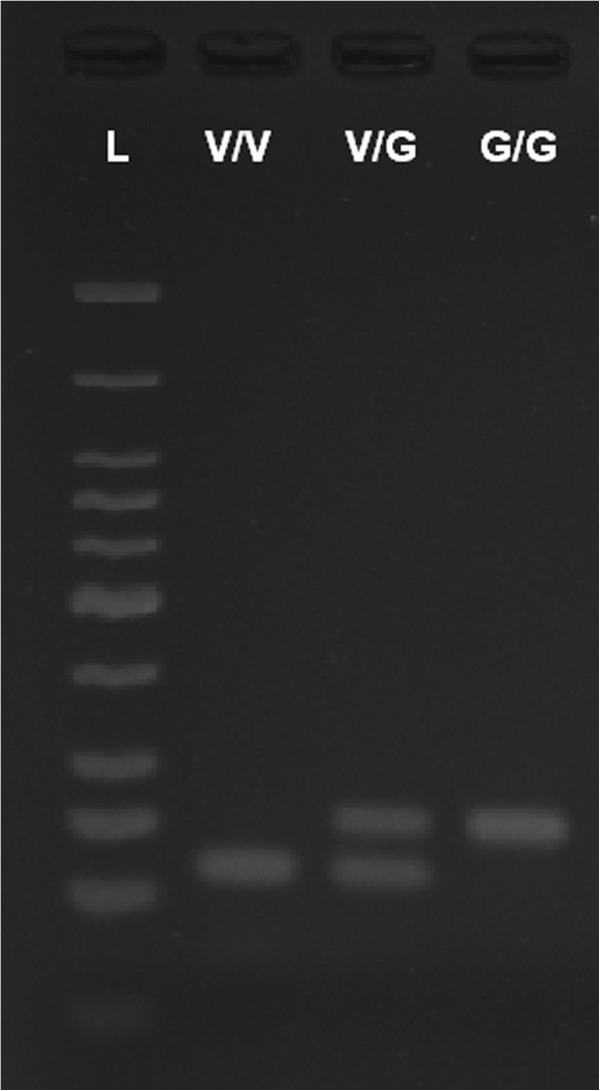
This study developed and utilized an allele-specific PCR (AS-PCR) assay that could be used to detect the V1016G mutation. The assay was validated against a number of sequenced DNA samples of known genotype and was determined to be in complete agreement. Larvae and pupae were collected from various localities throughout Thailand. Samples were reared to adulthood and their resistance status against deltamethrin was determined by standard WHO susceptibility bioassays. Deltamethrin-resistant and susceptible insects were then genotyped for the V1016G mutation. Additionally, some samples were genotyped for a second mutation at position 1534 in domain III (F1534C) which is also known to confer pyrethroid resistance.
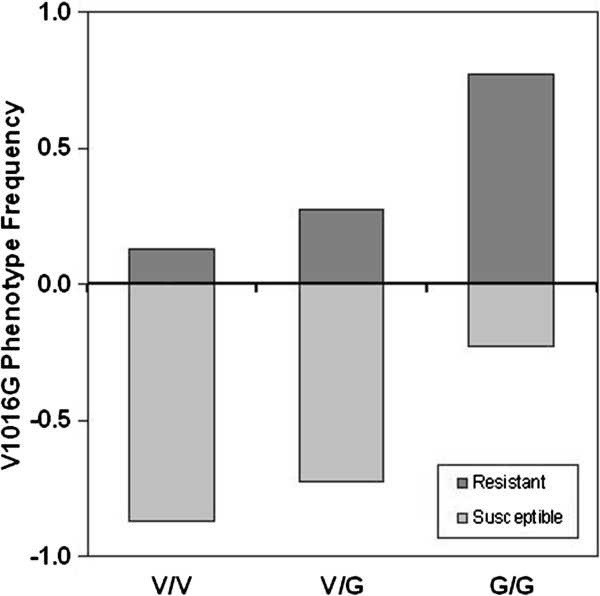
The bioassay results revealed an overall mortality of 77.6%. Homozygous 1016G individuals survived at higher rates than either heterozygous or wild-type (1016 V) mosquitoes. The 1016G mutation was significantly and positively associated with deltamethrin resistance and was widely distributed throughout Thailand. Interestingly, wild-type 1016 V mosquitoes tested were homozygous for the 1534C mutation, and all heterozygous mosquitoes were also heterozygous for 1534C. Mutant homozygous (G/G) mosquitoes expressed the wild-type (F/F) at position 1534. However, the presence of the 1534C mutation was not associated with deltamethrin resistance.
Our bioassay results indicate that all populations sampled display some degree of resistance to deltamethrin. Homozygous 1016G mosquitoes were far likelier to survive such exposure. However, resistance in some populations cannot be explained due to kdr mutations and indicates that other resistance mechanisms are operating. The presence of this mutation alone does not fully explain the resistance phenotype we see among Thai Ae. aegypti populations.
埃及伊蚊是登革热病毒的主要传播媒介,其种群对拟除虫菊酯杀虫剂的抗药性普遍存在。电压门控钠离子通道(VGSC)基因中的几个不同点突变导致了这种抗性。在埃及伊蚊的 VGSC 基因的第 6 段的 II 域 1016 位的突变导致缬氨酸到甘氨酸的取代(V1016G),从而对溴氰菊酯产生抗性。
本研究开发并利用了一种等位基因特异性 PCR(AS-PCR)检测方法,该方法可用于检测 V1016G 突变。该检测方法与许多已知基因型的测序 DNA 样本进行了验证,并完全一致。从泰国各地采集幼虫和蛹。将样本饲养至成虫,并通过标准的世卫组织敏感性生物测定法测定其对溴氰菊酯的抗性。然后对溴氰菊酯抗性和敏感昆虫进行 V1016G 突变的基因分型。此外,还对一些样本进行了第 1534 位(域 III 中的 F1534C)的第二个突变的基因分型,该突变也已知可赋予拟除虫菊酯抗性。
生物测定结果显示,总死亡率为 77.6%。纯合 1016G 个体的存活率高于杂合或野生型(1016V)蚊子。1016G 突变与溴氰菊酯抗性显著正相关,并广泛分布于泰国各地。有趣的是,测试的野生型 1016V 蚊子均为 1534C 突变的纯合子,所有杂合子蚊子也均为 1534C 的杂合子。突变纯合子(G/G)蚊子在第 1534 位表达野生型(F/F)。然而,1534C 突变的存在与溴氰菊酯抗性无关。
我们的生物测定结果表明,所有抽样的种群对溴氰菊酯都有一定程度的抗性。纯合 1016G 蚊子更有可能在这种暴露下存活。然而,由于 kdr 突变,一些种群的抗性无法解释,表明存在其他抗性机制。仅存在这种突变并不能完全解释我们在泰国埃及伊蚊种群中看到的抗性表型。