Clinical R&D, Zydus Research Centre, Cadila Healthcare Limited, Sarkhej-Bavla N.H. No. 8A, Moriya, Ahmedabad, 382 213, Gujarat, India,
Clin Drug Investig. 2013 Nov;33(11):809-16. doi: 10.1007/s40261-013-0128-3.
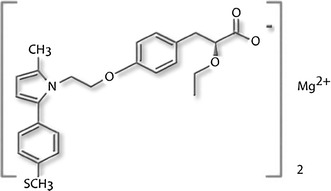
Dyslipidaemia is a major cardiovascular risk factor associated with type 2 diabetes mellitus. Saroglitazar (ZYH1) is a novel peroxisome proliferator-activated receptor (PPAR) agonist with predominant PPARα and moderate PPARγ activity. It has been developed for the treatment of dyslipidaemia and has favourable effects on glycaemic parameters in type 2 diabetes mellitus. The objective of this phase 1 study was to evaluate the pharmacokinetics, safety and tolerability of saroglitazar in healthy human subjects.
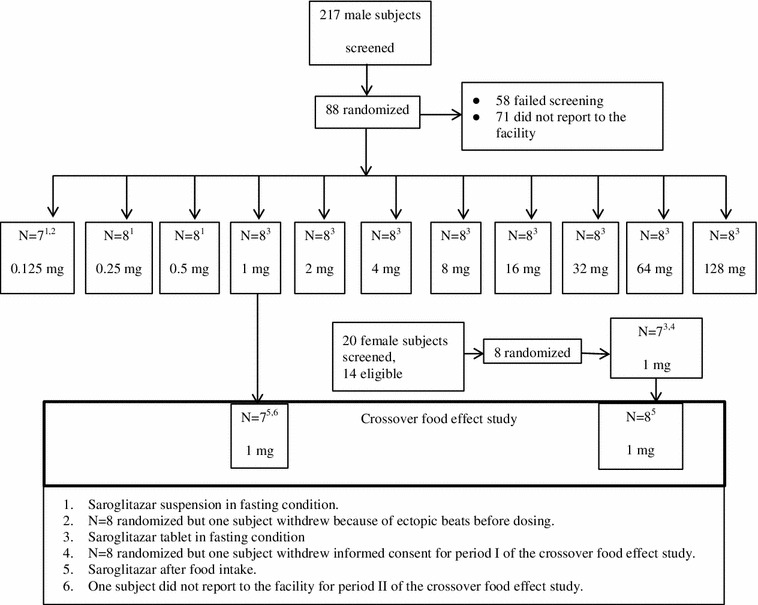
This was a randomized, double-blind, placebo-controlled, single-centre, phase I study in healthy human volunteers, and was performed in two parts; part I evaluated single ascending oral doses of saroglitazar (0.125, 0.25, 0.5, 1, 2, 4, 8, 16, 32, 64 and 128 mg) in healthy subjects, and part II measured the effects of food and sex on the pharmacokinetics of 1 mg saroglitazar, the human equivalent efficacy dose derived from pre-clinical studies. A total of 96 subjects were enrolled in the study, which included 88 healthy male subjects in part I and 16 healthy subjects (8 males from part I of the study and 8 females) in part II.
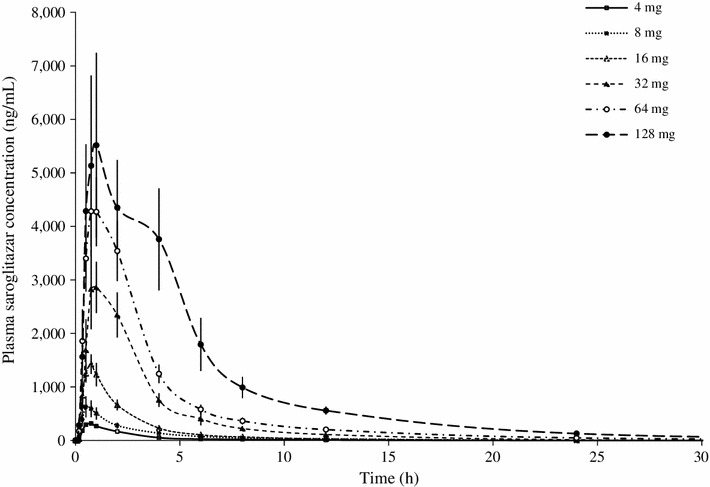
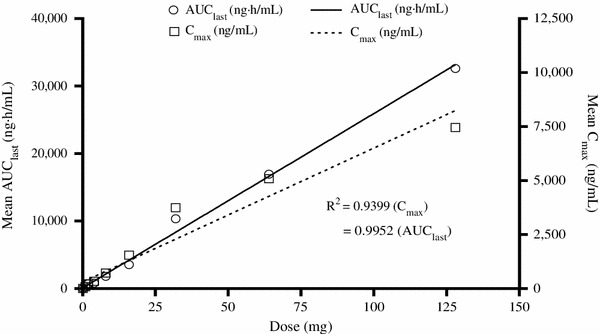
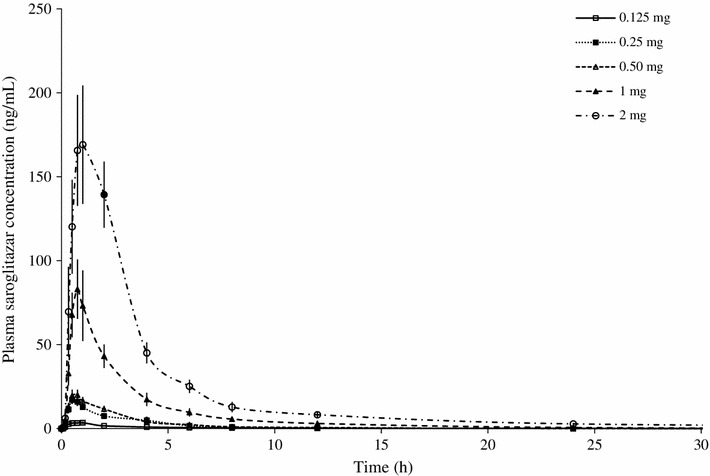
Saroglitazar was rapidly and well absorbed across all doses in the single-dose pharmacokinetic study, with a median time to the peak plasma concentration (t(max)) of less than 1 h (range 0.63-1 h) under fasting conditions across the doses studied. The maximum plasma concentration ranged from 3.98 to 7,461 ng/mL across the dose range. The area under the plasma concentration-time curve increased in a dose-related manner. The average terminal half-life of saroglitazar was 5.6 h. Saroglitazar was not eliminated via the renal route. There was no effect of sex on the pharmacokinetics of saroglitazar, except for the terminal half-life, which was significantly shorter in females than in males. Food had a small effect on the pharmacokinetics; however, it was not consistent in males and females. Single oral doses of saroglitazar up to 128 mg were well tolerated. No serious adverse events were reported. Adverse events were generally mild and moderate in nature. Saroglitazar did not show any clinically relevant findings in clinical laboratory investigations, physical examinations, vital signs and electrocardiograms.
The highest dose of saroglitazar evaluated in this study was 128 mg, several times the estimated therapeutic doses (1-4 mg). The pharmacokinetics of saroglitazar support a once daily dosage schedule. Saroglitazar was found to be safe and well tolerated in this study.
血脂异常是与 2 型糖尿病相关的主要心血管危险因素。沙格列汀(ZYH1)是一种新型过氧化物酶体增殖物激活受体(PPAR)激动剂,具有主要的 PPARα 和适度的 PPARγ 活性。它被开发用于治疗血脂异常,并对 2 型糖尿病的血糖参数有良好的影响。本研究的目的是评估沙格列汀在健康人体中的药代动力学、安全性和耐受性。
这是一项在健康志愿者中进行的随机、双盲、安慰剂对照、单中心、I 期研究,分为两部分;第 I 部分评估了沙格列汀(0.125、0.25、0.5、1、2、4、8、16、32、64 和 128mg)单次口服剂量在健康受试者中的药代动力学,第 II 部分测量了食物和性别的影响对 1mg 沙格列汀的药代动力学,这是从临床前研究中得出的人类等效疗效剂量。共有 96 名受试者参加了这项研究,其中第 I 部分包括 88 名健康男性受试者,第 II 部分包括 16 名健康受试者(第 I 部分研究的 8 名男性和 8 名女性)。
在单剂量药代动力学研究中,沙格列汀在所有剂量下均迅速吸收,禁食条件下,中位达峰血浆浓度时间(t(max))小于 1 小时(范围 0.63-1 小时)。最大血浆浓度范围为 3.98 至 7461ng/ml。在剂量范围内,曲线下面积呈剂量相关性增加。沙格列汀的平均终末半衰期为 5.6 小时。沙格列汀不由肾脏途径消除。除女性的终末半衰期明显短于男性外,性别对沙格列汀的药代动力学无影响。食物对药代动力学有轻微影响,但在男性和女性中并不一致。高达 128mg 的沙格列汀单次口服剂量耐受性良好。未报告严重不良事件。不良事件一般为轻度和中度。沙格列汀在临床实验室检查、体格检查、生命体征和心电图中未显示任何有临床意义的发现。
本研究评估的沙格列汀最高剂量为 128mg,是估计治疗剂量(1-4mg)的数倍。沙格列汀的药代动力学支持每日一次的给药方案。在这项研究中,沙格列汀被发现是安全且耐受良好的。