Department of Human and Organizational Development, Peabody School of Education, Vanderbilt University, Nashville, Tennessee, United States of America.
PLoS Med. 2013;10(9):e1001513. doi: 10.1371/journal.pmed.1001513. Epub 2013 Sep 17.
The large-scale emigration of physicians from sub-Saharan Africa (SSA) to high-income nations is a serious development concern. Our objective was to determine current emigration trends of SSA physicians found in the physician workforce of the United States.
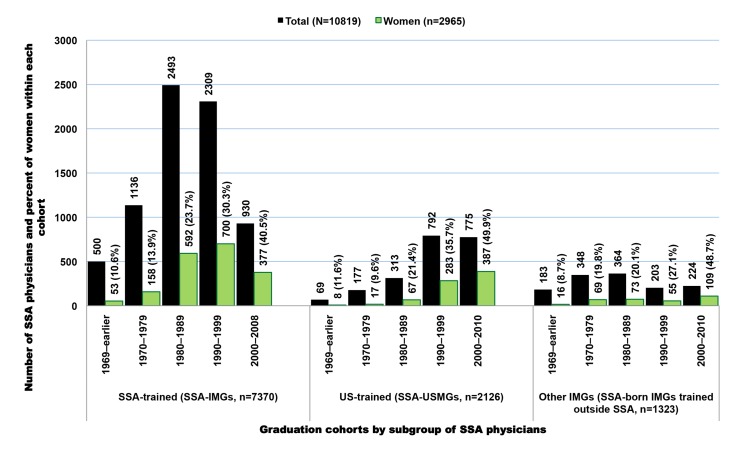
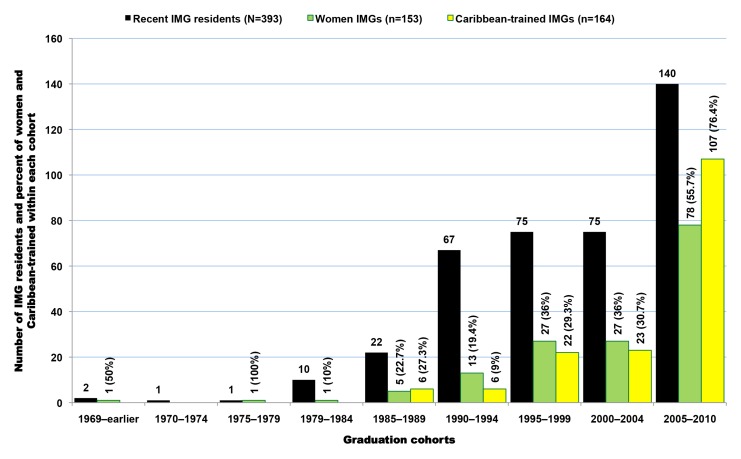
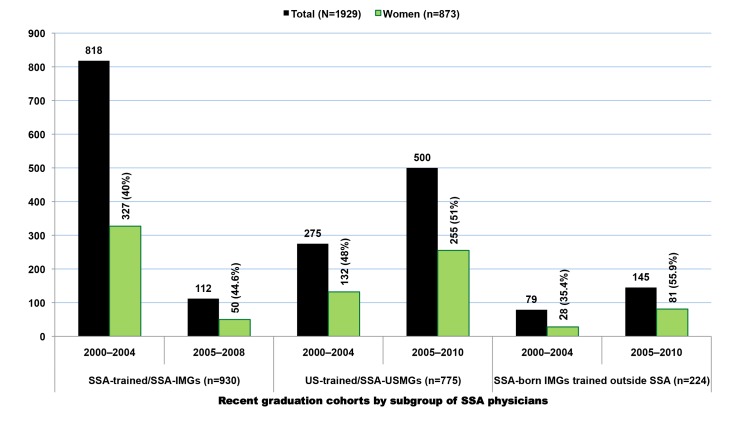
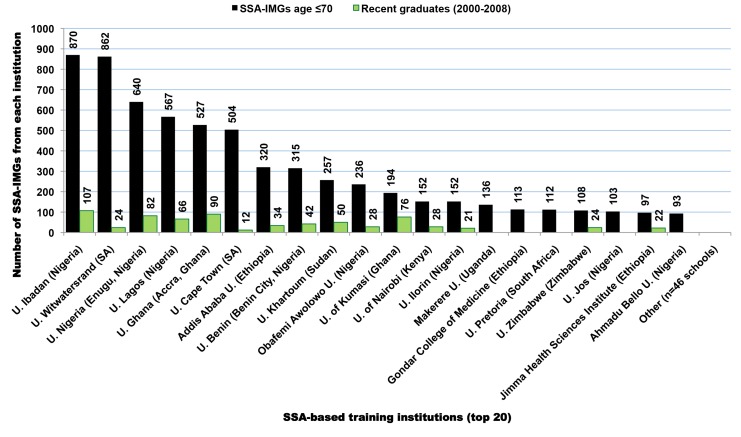
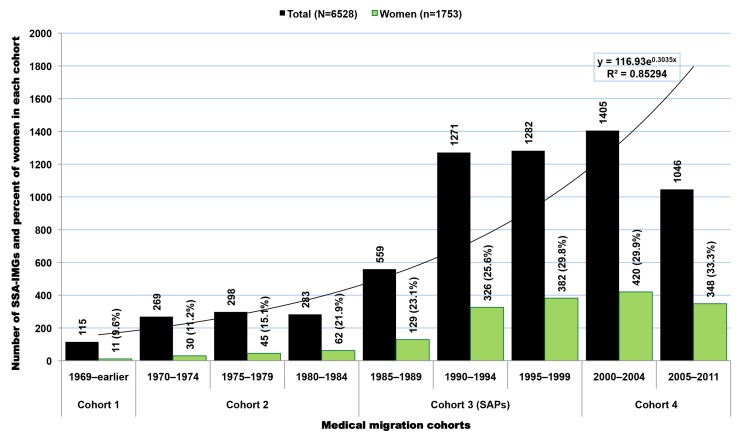
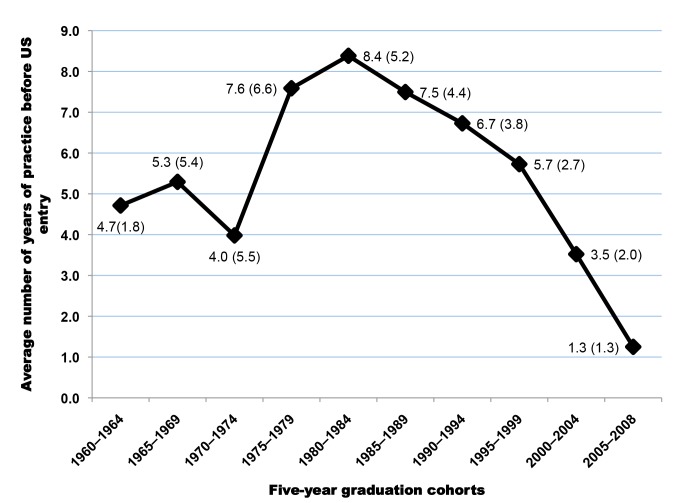
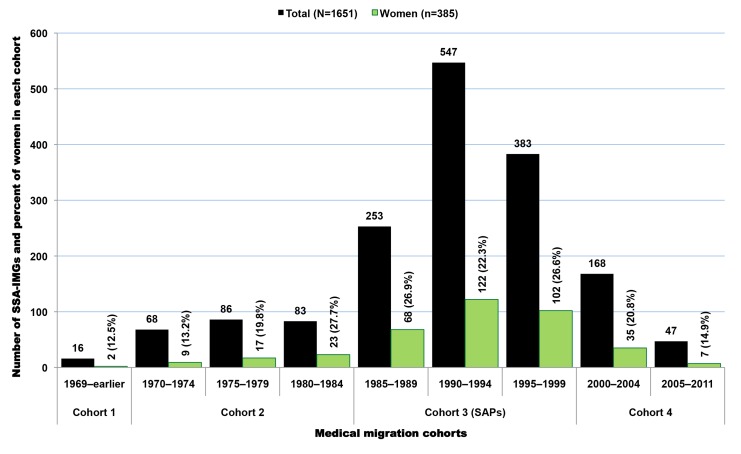
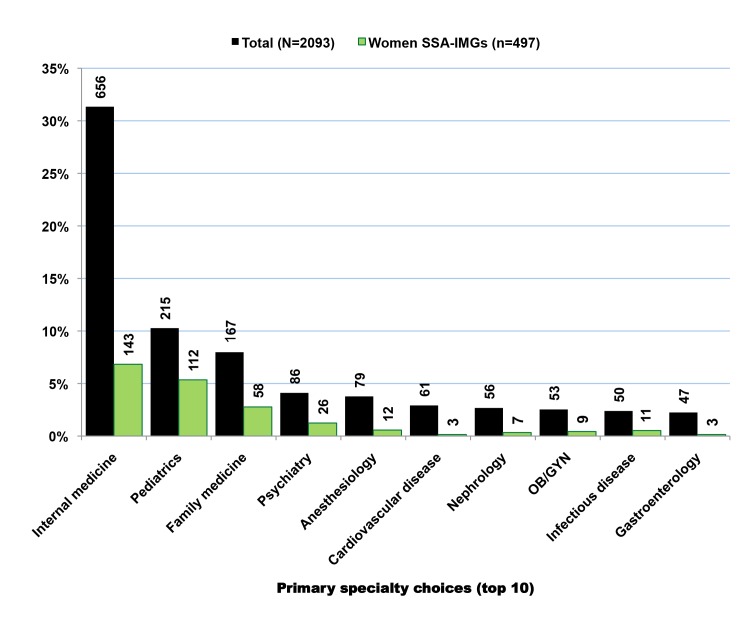
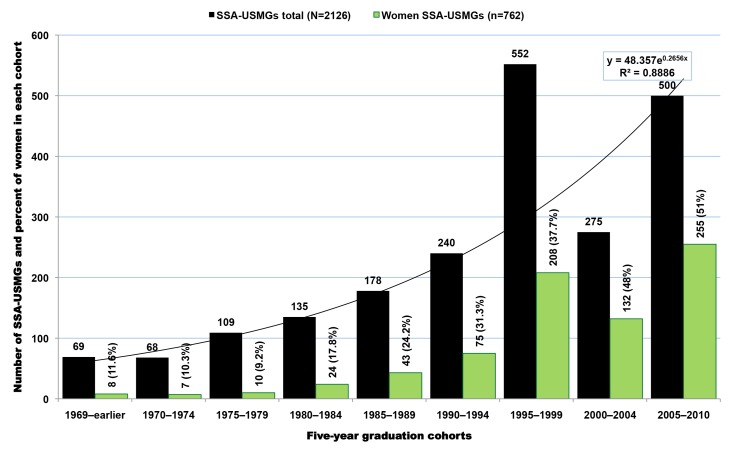
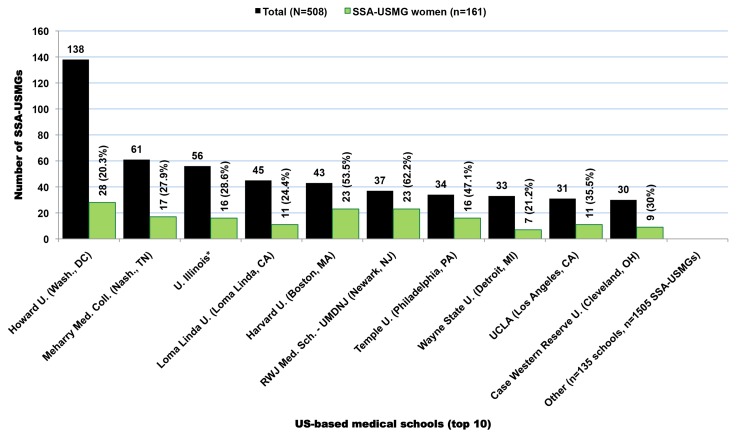
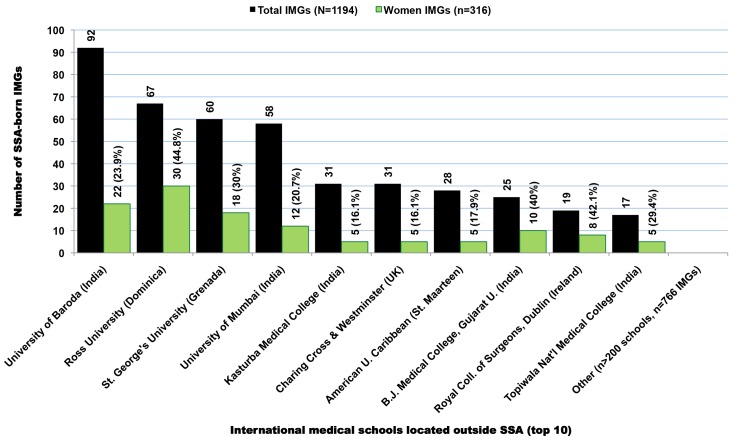
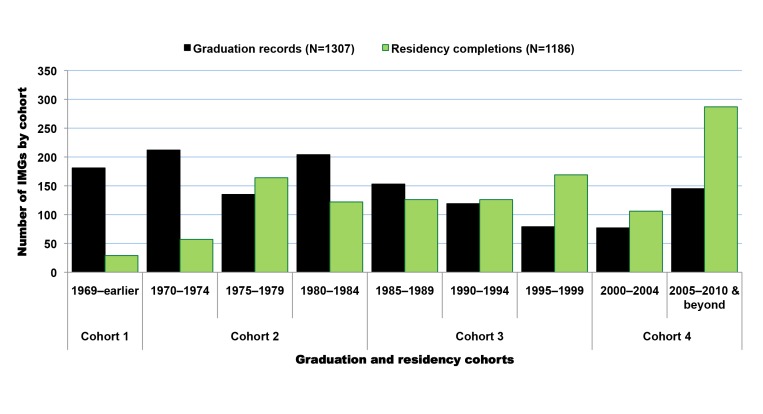
We analyzed physician data from the World Health Organization (WHO) Global Health Workforce Statistics along with graduation and residency data from the 2011 American Medical Association Physician Masterfile (AMA-PM) on physicians trained or born in SSA countries who currently practice in the US. We estimated emigration proportions, year of US entry, years of practice before emigration, and length of time in the US. According to the 2011 AMA-PM, 10,819 physicians were born or trained in 28 SSA countries. Sixty-eight percent (n = 7,370) were SSA-trained, 20% (n = 2,126) were US-trained, and 12% (n = 1,323) were trained outside both SSA and the US. We estimated active physicians (age ≤ 70 years) to represent 96% (n = 10,377) of the total. Migration trends among SSA-trained physicians increased from 2002 to 2011 for all but one principal source country; the exception was South Africa whose physician migration to the US decreased by 8% (-156). The increase in last-decade migration was >50% in Nigeria (+1,113) and Ghana (+243), >100% in Ethiopia (+274), and >200% (+244) in Sudan. Liberia was the most affected by migration to the US with 77% (n = 175) of its estimated physicians in the 2011 AMA-PM. On average, SSA-trained physicians have been in the US for 18 years. They practiced for 6.5 years before US entry, and nearly half emigrated during the implementation years (1984-1999) of the structural adjustment programs.
Physician emigration from SSA to the US is increasing for most SSA source countries. Unless far-reaching policies are implemented by the US and SSA countries, the current emigration trends will persist, and the US will remain a leading destination for SSA physicians emigrating from the continent of greatest need. Please see later in the article for the Editors' Summary.
撒哈拉以南非洲(SSA)的大量医生移民到高收入国家是一个严重的发展问题。我们的目标是确定在美国医生劳动力中发现的 SSA 医生的当前移民趋势。
我们分析了世界卫生组织(WHO)全球卫生劳动力统计数据以及 2011 年美国医学协会医师主文件(AMA-PM)中的毕业和住院医师数据,这些数据涉及在 SSA 国家接受培训或出生的医生,他们目前在美国行医。我们估计了移民比例、进入美国的年份、移民前的行医年限以及在美国的工作年限。根据 2011 年 AMA-PM,有 10,819 名医生出生或培训于 28 个 SSA 国家。其中 68%(n=7,370)为 SSA 培训,20%(n=2,126)为美国培训,12%(n=1,323)为 SSA 和美国以外的培训。我们估计活跃医生(年龄≤70 岁)占总数的 96%(n=10,377)。除了一个主要来源国之外,所有 SSA 培训医生的移民趋势都从 2002 年到 2011 年有所增加;例外是南非,其前往美国的医生移民减少了 8%(-156)。过去十年的移民增长率在尼日利亚(+1,113)和加纳(+243)超过 50%,在埃塞俄比亚(+274)超过 100%,在苏丹(+244)超过 200%。利比里亚受移民到美国的影响最大,2011 年 AMA-PM 中有 77%(n=175)的医生估计在该国。平均而言,SSA 培训的医生在美国已经工作了 18 年。他们在美国入境前工作了 6.5 年,近一半人在结构调整计划(1984-1999 年)实施期间移民。
大多数 SSA 来源国的 SSA 医生向美国移民的人数正在增加。除非美国和 SSA 国家实施影响深远的政策,否则目前的移民趋势将持续下去,美国将仍然是非洲大陆最需要的医生移民的主要目的地。请稍后在文章中查看编辑摘要。