Marín-Béjar Oskar, Marchese Francesco P, Athie Alejandro, Sánchez Yolanda, González Jovanna, Segura Victor, Huang Lulu, Moreno Isabel, Navarro Alfons, Monzó Mariano, García-Foncillas Jesús, Rinn John L, Guo Shuling, Huarte Maite
Genome Biol. 2013;14(9):R104. doi: 10.1186/gb-2013-14-9-r104.
The p53 transcription factor is located at the core of a complex wiring of signaling pathways that are critical for the preservation of cellular homeostasis. Only recently it has become clear that p53 regulates the expression of several long intergenic noncoding RNAs (lincRNAs). However, relatively little is known about the role that lincRNAs play in this pathway.
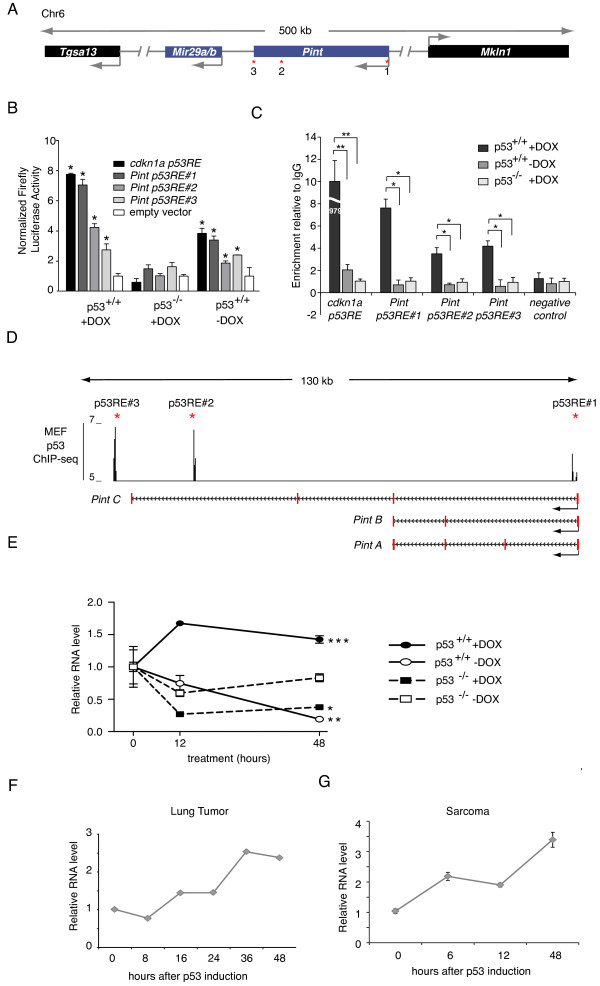
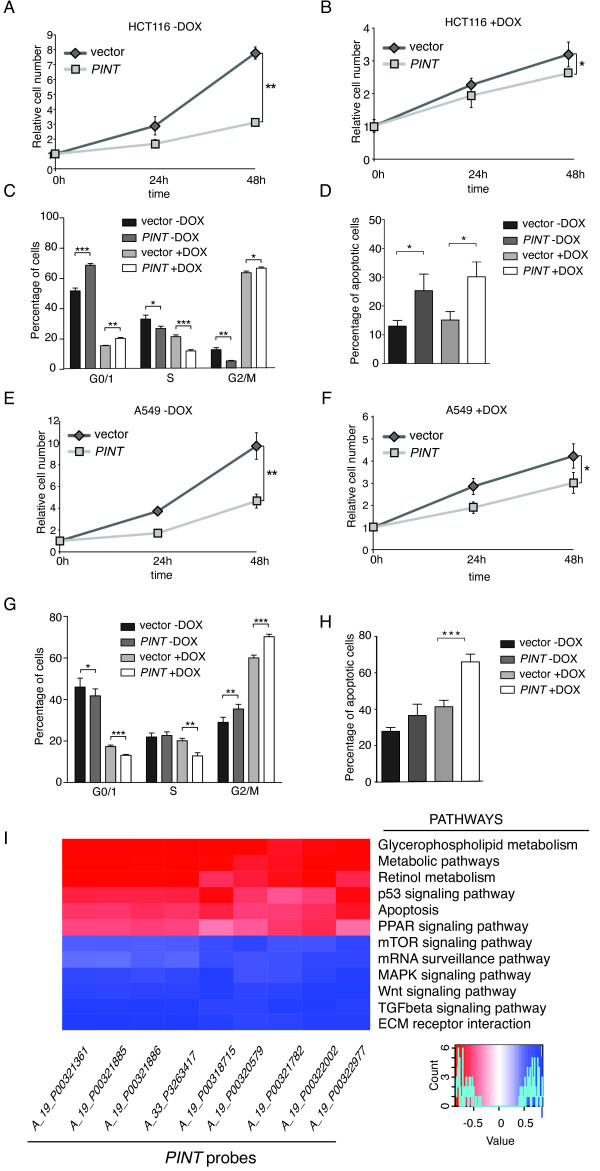
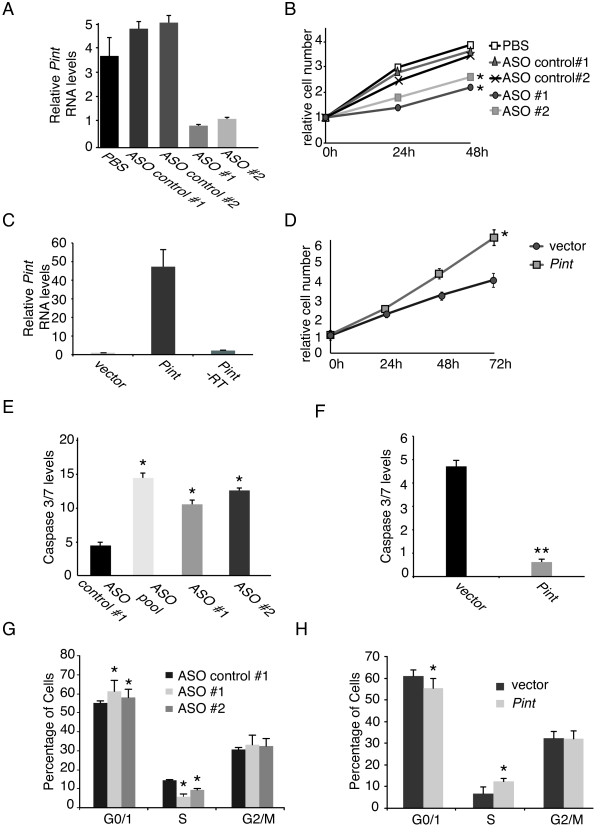
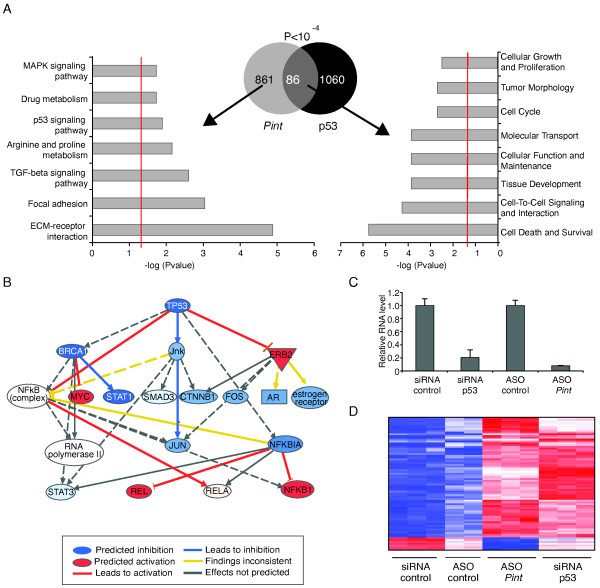
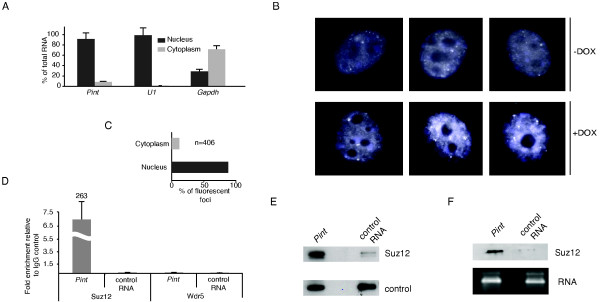
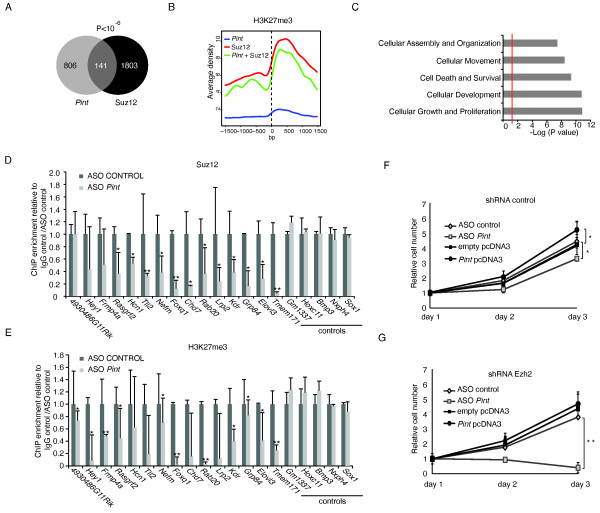
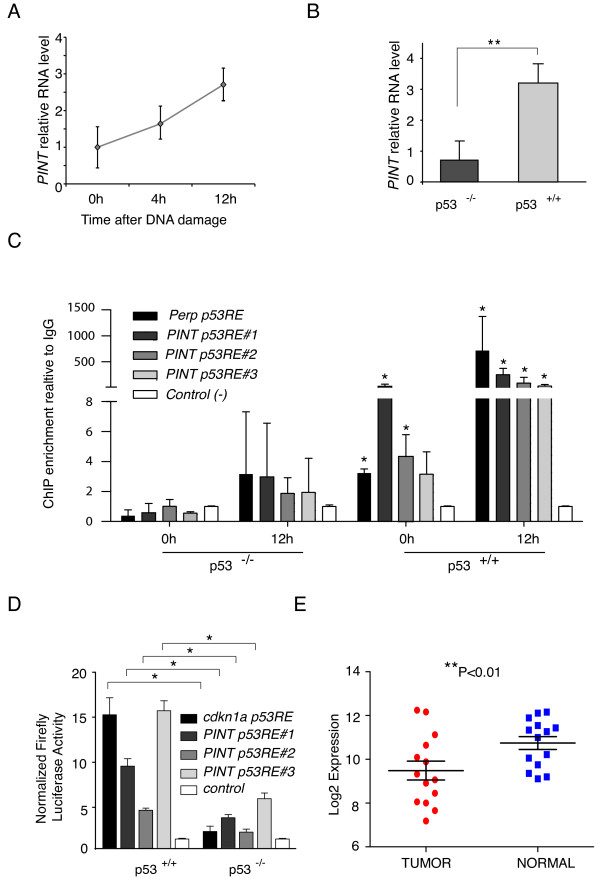
Here we characterize a lincRNA named Pint (p53 induced noncoding transcript). We show that Pint is aubiquitously expressed lincRNA that is finely regulated by p53. In mouse cells, Pint promotes cell proliferation and survival by regulating the expression of genes of the TGF-b, MAPK and p53 pathways. Pint is a nuclear lincRNA that directly interacts with the Polycomb repressive complex 2 (PRC2), and is required for PRC2 targeting of specific genes for H3K27 tri-methylation and repression. Furthermore, Pint functional activity is highly dependent on PRC2 expression. We have also identified Pint human ortholog (PINT), which presents suggestive analogies with the murine lincRNA. PINT is similarly regulated by p53, and its expression significantly correlates with the same cellular pathways as the mouse ortholog, including the p53 pathway. Interestingly, PINT is downregulated in colon primary tumors, while its overexpression inhibits the proliferation of tumor cells, suggesting a possible role as tumor suppressor.
Our results reveal a p53 autoregulatory negative mechanism where a lincRNA connects p53 activation with epigenetic silencing by PRC2. Additionally, we show analogies and differences between the murine and human orthologs, identifying a novel tumor suppressor candidate lincRNA.
p53转录因子位于对维持细胞内稳态至关重要的复杂信号通路网络的核心位置。直到最近才清楚,p53可调节多种长链基因间非编码RNA(lincRNA)的表达。然而,关于lincRNA在该通路中所起的作用,人们了解得还相对较少。
在此,我们对一种名为Pint(p53诱导非编码转录本)的lincRNA进行了表征。我们发现Pint是一种广泛表达的lincRNA,受p53的精细调控。在小鼠细胞中,Pint通过调节TGF-β、MAPK和p53通路的基因表达来促进细胞增殖和存活。Pint是一种核内lincRNA,直接与多梳抑制复合物2(PRC2)相互作用,是PRC2对特定基因进行H3K27三甲基化和抑制作用所必需的。此外,Pint的功能活性高度依赖于PRC2的表达。我们还鉴定出了Pint的人类同源物(PINT),它与小鼠lincRNA有相似之处。PINT同样受p53调控,其表达与小鼠同源物的相同细胞通路显著相关,包括p53通路。有趣的是,PINT在结肠原发性肿瘤中表达下调,而其过表达则抑制肿瘤细胞的增殖,提示其可能作为肿瘤抑制因子发挥作用。
我们的结果揭示了一种p53自调控负向机制,其中一种lincRNA将p53激活与PRC2介导的表观遗传沉默联系起来。此外,我们展示了小鼠和人类同源物之间的异同,鉴定出一种新型的肿瘤抑制因子候选lincRNA。