CHA Cancer Institute, CHA University, 605 Yeoksam-dong, Gangnam-gu, Seoul, 135-081, South Korea.
J Mol Med (Berl). 2013 Nov;91(11):1273-84. doi: 10.1007/s00109-013-1086-1. Epub 2013 Sep 27.
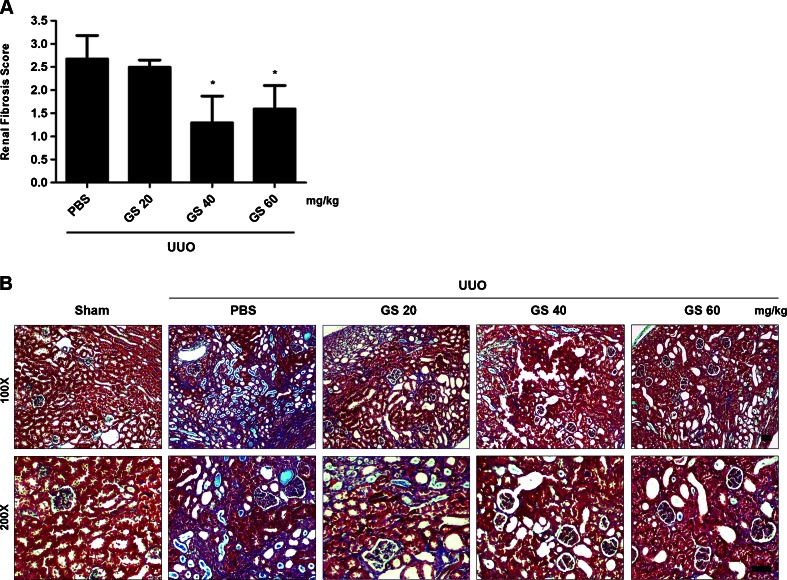
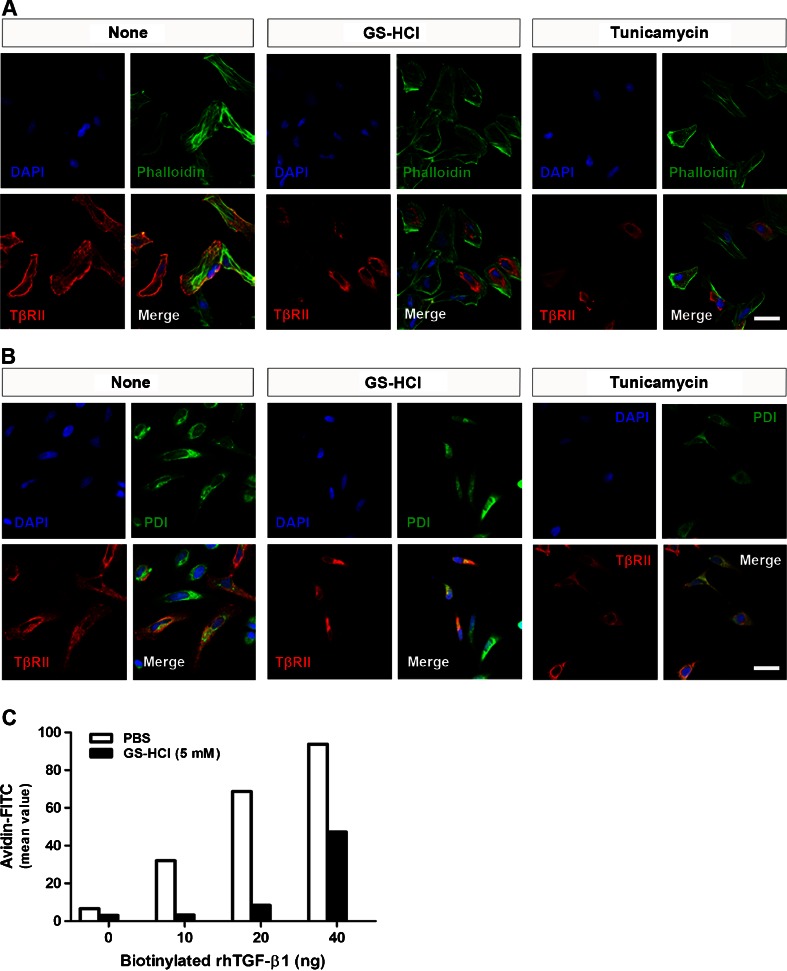
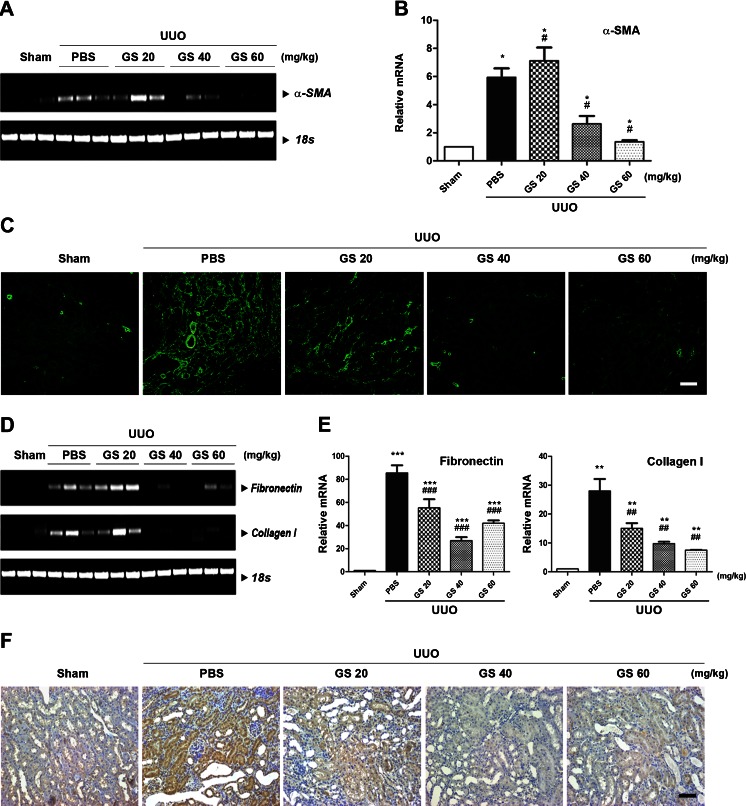
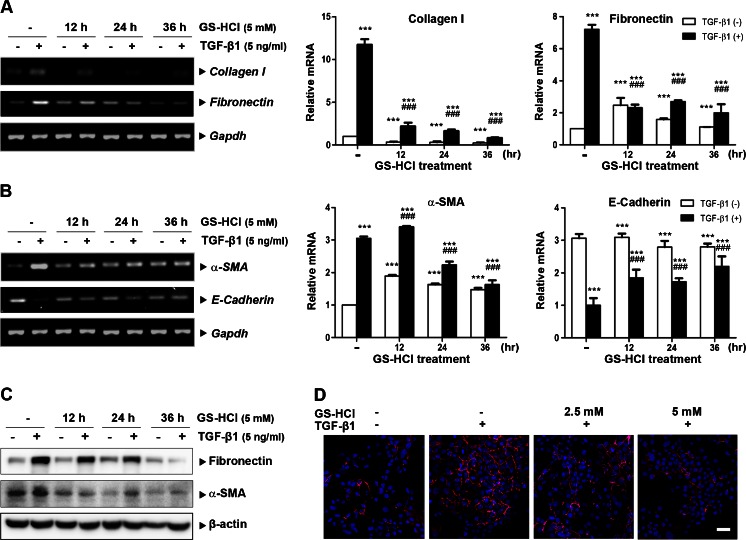
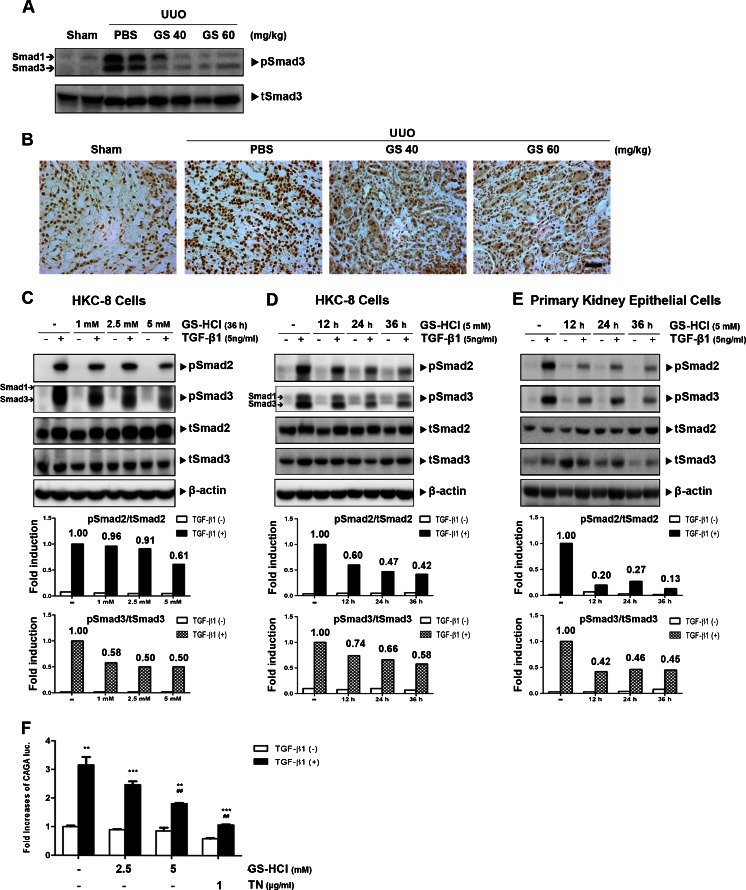
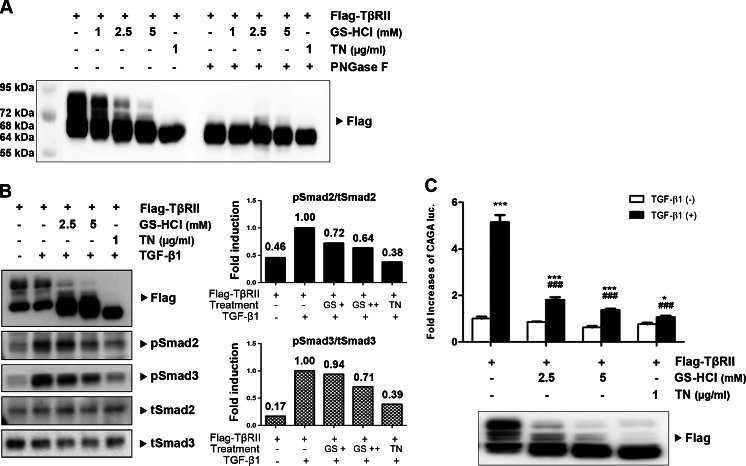
Renal fibrosis is a common consequence of unilateral ureteral obstruction, which provides a useful model to investigate the pathogenesis of obstructive nephropathy and progressive renal fibrosis. Transforming growth factor (TGF-β1) has been recognized as a key mediator in renal fibrosis by stimulating matrix-producing fibrogenic cells and promoting extracellular matrix deposition. Therefore, considerable efforts have been made to regulate TGF-β signaling for antifibrotic therapy. Here, we investigated the mode of action of glucosamine hydrochloride (GS-HCl) on TGF-β1-induced renal fibrosis. In the obstructed kidneys and TGF-β1-treated renal cells, GS-HCl significantly decreased renal expression of α-smooth muscle actin, collagen I, and fibronectin. By investigating the inhibitory mechanism of GS-HCl on renal fibrosis, we found that GS-HCl suppressed TGF-β signaling by inhibiting N-linked glycosylation of the type II TGF-β receptor (TβRII), leading to an inefficient trafficking of TβRII to the membrane surface. Defective N-glycosylation of TβRII further suppressed the TGF-β1-binding to TβRII, thereby decreasing TGF-β signaling. Notably, GS-HCl treatment significantly reduced TGF-β1-induced up-regulation of Smad2/3 phosphorylation and transcriptional activity in vivo and in vitro. Taken together, GS-HCl-mediated regulation of TGF-β signaling exerted an antifibrotic effect, thereby ameliorating renal fibrosis. Our study suggests that GS-HCl would be a promising agent for therapeutic intervention for preventing TGF-β1-induced renal fibrosis in kidney diseases.
Glucosamine-mediated attenuation of TGF-β signaling ameliorates renal fibrosis in vivo TGF-β1-induced fibrogenic action is reduced by glucosamine in vitro N-glycosylation of the type II TGF-β receptor is suppressed by glucosamine Glucosamine-induced defective N-glycosylation of TβRII decreases TGF-β signaling.
肾纤维化是单侧输尿管梗阻的常见后果,为研究梗阻性肾病和进行性肾纤维化的发病机制提供了一个有用的模型。转化生长因子 (TGF-β1) 通过刺激产生基质的纤维原性细胞和促进细胞外基质沉积,被认为是肾纤维化的关键介质。因此,人们已经做出了相当大的努力来调节 TGF-β 信号传导以进行抗纤维化治疗。在这里,我们研究了盐酸氨基葡萄糖 (GS-HCl) 对 TGF-β1 诱导的肾纤维化的作用方式。在梗阻的肾脏和 TGF-β1 处理的肾细胞中,GS-HCl 显著降低了肾脏中α-平滑肌肌动蛋白、胶原 I 和纤维连接蛋白的表达。通过研究 GS-HCl 对肾纤维化的抑制机制,我们发现 GS-HCl 通过抑制 II 型 TGF-β 受体 (TβRII) 的 N 连接糖基化来抑制 TGF-β 信号,从而导致 TβRII 向膜表面的有效运输受损。TβRII 的缺陷 N 糖基化进一步抑制了 TGF-β1 与 TβRII 的结合,从而降低了 TGF-β 信号。值得注意的是,GS-HCl 处理显著减少了 TGF-β1 在体内和体外诱导的 Smad2/3 磷酸化和转录活性的上调。总之,GS-HCl 介导的 TGF-β 信号调节发挥了抗纤维化作用,从而改善了肾纤维化。我们的研究表明,GS-HCl 可能是治疗肾脏疾病中 TGF-β1 诱导的肾纤维化的有前途的药物。
氨基葡萄糖介导的 TGF-β 信号衰减可改善体内 TGF-β1 诱导的纤维化作用 氨基葡萄糖可降低体外 TGF-β1 诱导的纤维原性作用 II 型 TGF-β 受体的 N-糖基化受氨基葡萄糖抑制 氨基葡萄糖诱导的 TβRII 缺陷 N-糖基化降低 TGF-β 信号。