1] Institute of Molecular Medicine and Cell Research, Albert-Ludwigs-University Freiburg, Freiburg, Germany [2] Spemann Graduate School of Biology and Medicine, Albert-Ludwigs-University Freiburg, Freiburg, Germany [3] Faculty of Biology, Albert-Ludwigs-University Freiburg, Freiburg, Germany.
Institute of Molecular Medicine and Cell Research, Albert-Ludwigs-University Freiburg, Freiburg, Germany.
Oncogene. 2014 Sep 4;33(36):4474-84. doi: 10.1038/onc.2013.395. Epub 2013 Sep 30.
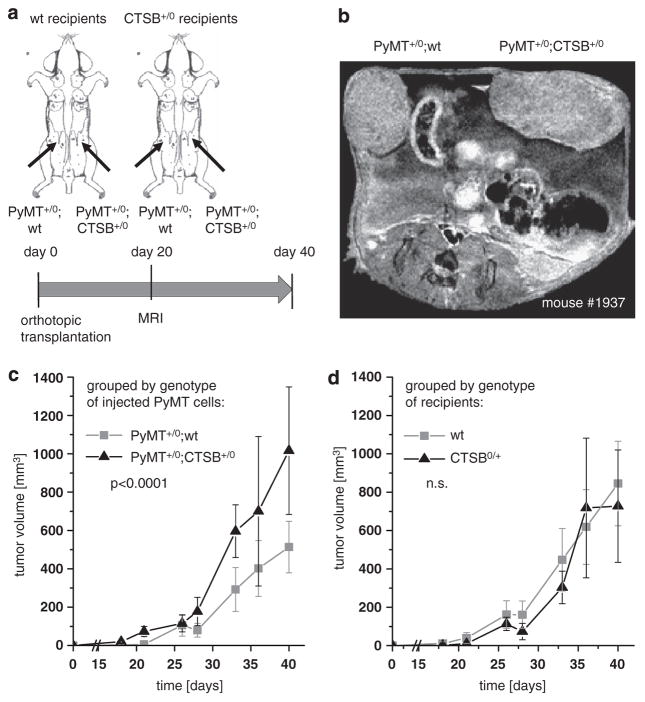
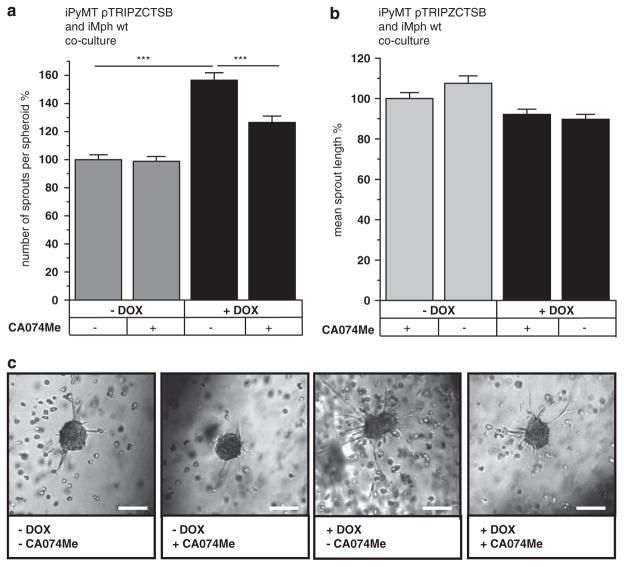
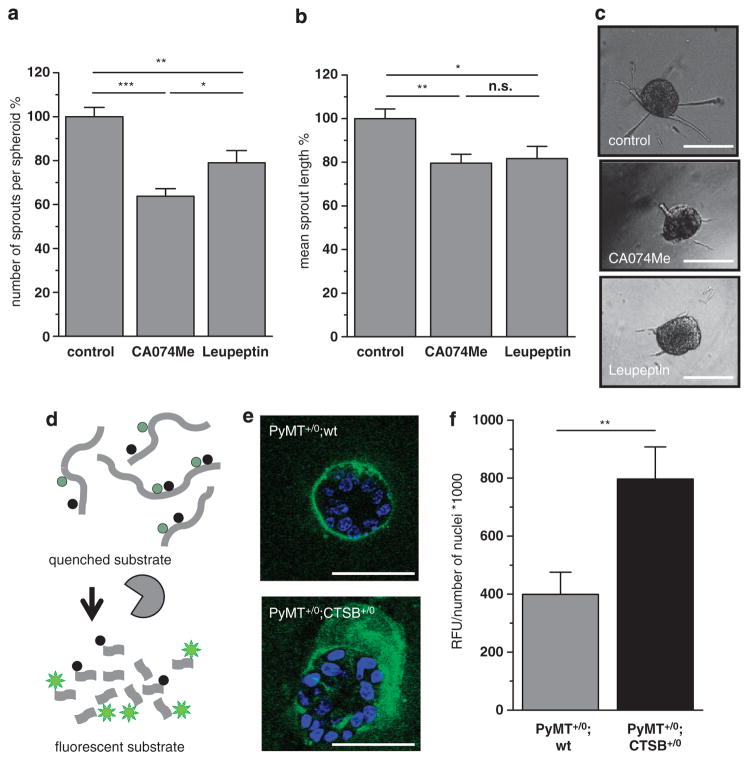
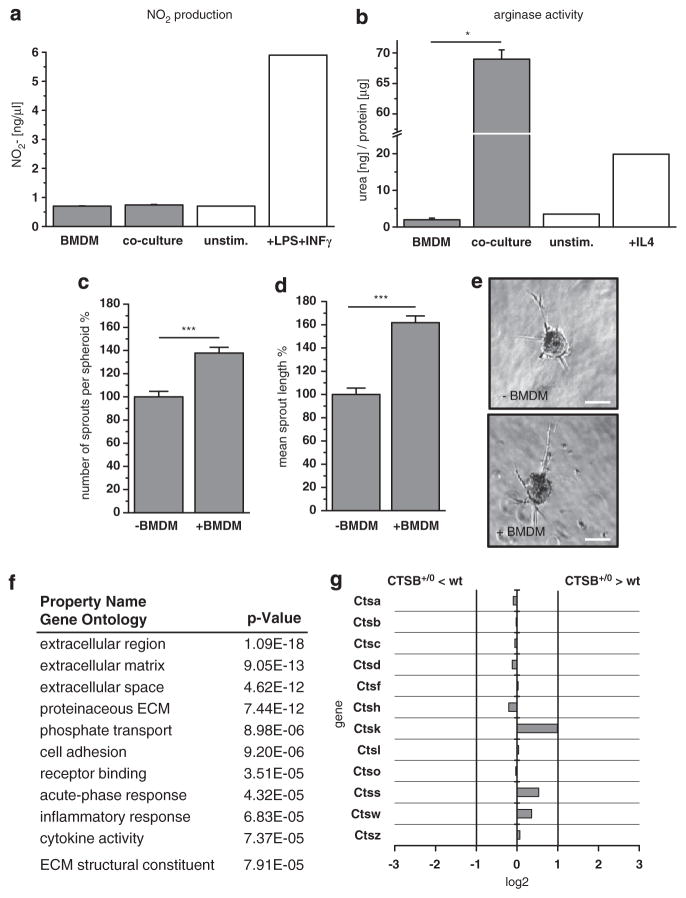
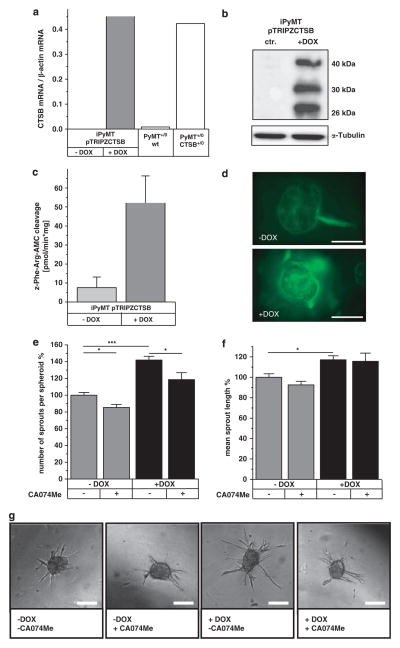
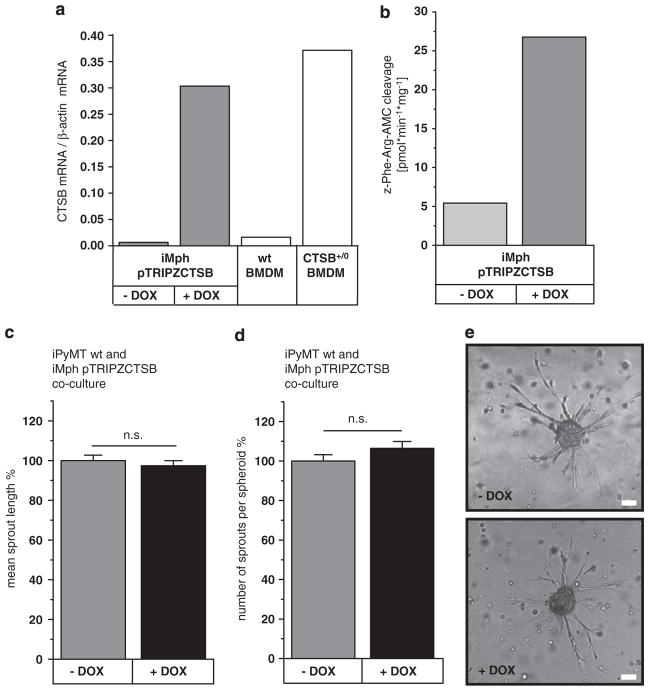
The cysteine protease cathepsin B (CTSB) is frequently overexpressed in human breast cancer and correlated with a poor prognosis. Genetic deficiency or pharmacological inhibition of CTSB attenuates tumor growth, invasion and metastasis in mouse models of human cancers. CTSB is expressed in both cancer cells and cells of the tumor stroma, in particular in tumor-associated macrophages (TAM). In order to evaluate the impact of tumor- or stromal cell-derived CTSB on Polyoma Middle T (PyMT)-induced breast cancer progression, we used in vivo and in vitro approaches to induce human CTSB overexpression in PyMT cancer cells or stromal cells alone or in combination. Orthotopic transplantation experiments revealed that CTSB overexpression in cancer cells rather than in the stroma affects PyMT tumor progression. In 3D cultures, primary PyMT tumor cells showed higher extracellular matrix proteolysis and enhanced collective cell invasion when CTSB was overexpressed and proteolytically active. Coculture of PyMT cells with bone marrow-derived macrophages induced a TAM-like macrophage phenotype in vitro, and the presence of such M2-polarized macrophages in 3D cultures enhanced sprouting of tumor spheroids. We employed a doxycycline (DOX)-inducible CTSB expression system to selectively overexpress human CTSB either in cancer cells or in macrophages in 3D cocultures. Tumor spheroid invasiveness was only enhanced when CTSB was overexpressed in cancer cells, whereas CTSB expression in macrophages alone did not further promote invasiveness of tumor spheroids. We conclude that CTSB overexpression in the PyMT mouse model promotes tumor progression not by a stromal effect, but by a direct, cancer cell-inherent mode of action: CTSB overexpression renders the PyMT cancers more invasive by increasing proteolytic extracellular matrix protein degradation fostering collective cell invasion into adjacent tissue.
组织蛋白酶 B (CTSB) 是一种半胱氨酸蛋白酶,在人类乳腺癌中经常过表达,并与预后不良相关。在人类癌症的小鼠模型中,CTSB 的基因缺失或药理抑制可减弱肿瘤生长、侵袭和转移。CTSB 在癌细胞和肿瘤基质细胞中均有表达,特别是在肿瘤相关巨噬细胞(TAM)中。为了评估肿瘤或基质细胞来源的 CTSB 对 Polyoma Middle T(PyMT)诱导的乳腺癌进展的影响,我们使用体内和体外方法单独或联合诱导 PyMT 癌细胞或基质细胞中人 CTSB 的过表达。原位移植实验表明,CTSB 在癌细胞中的过表达而非基质中的过表达影响 PyMT 肿瘤的进展。在 3D 培养物中,当 CTSB 过表达并具有蛋白水解活性时,原发性 PyMT 肿瘤细胞表现出更高的细胞外基质蛋白水解和增强的细胞集体侵袭。PyMT 细胞与骨髓来源的巨噬细胞共培养在体外诱导出 TAM 样巨噬细胞表型,并且在 3D 培养物中存在这种 M2 极化的巨噬细胞增强了肿瘤球体的发芽。我们使用强力霉素(DOX)诱导的 CTSB 表达系统在 3D 共培养物中选择性地在癌细胞或巨噬细胞中过表达人 CTSB。只有当 CTSB 在癌细胞中过表达时,肿瘤球体的侵袭性才会增强,而单独在巨噬细胞中表达 CTSB 不会进一步促进肿瘤球体的侵袭性。我们得出结论,CTSB 在 PyMT 小鼠模型中的过表达不是通过基质效应促进肿瘤进展,而是通过直接的、癌细胞固有的作用模式:CTSB 过表达通过增加蛋白水解细胞外基质蛋白降解来增加 PyMT 癌症的侵袭性,促进集体细胞侵袭到相邻组织。