Babanazarova Olga, Sidelev Sergey, Schischeleva Svetlana
Yaroslavl State University, Matrosova 9, Yaroslavl 150057, Russia.
Aquat Biosyst. 2013 Sep 30;9(1):18. doi: 10.1186/2046-9063-9-18.
The permanent dominance of Planktothrix-like сyanobacteria has been often reported for shallow eutrophic\hypertrophic lakes in central Europe in summer\autumn. However studies on phytoplankton growth under ice cover in nutrient-rich lakes are very scarce. Lake Nero provides a good example of the contrasting seasonal extremes in environmental conditions. Moreover, the ecosystem underwent a catastrophic transition from eutrophic to hypertrophic 2003-05, with dominance of filamentous cyanobacteria in summer\autumn. Towards the end of the period of ice cover, there is an almost complete lack of light and oxygen but abundance in nutrients, especially ammonium nitrogen, soluble reactive phosphorus and total phosphorus in lake Nero. The aim of the present study was to describe species composition and abundance of the phytoplankton, in relation to the abiotic properties of the habitat to the end of winters 1999-2010. We were interested if Planktothrix-like сyanobacteria kept their dominant role under the ice conditions or only survived, and how did the under-ice phytoplankton community differ from year to year.
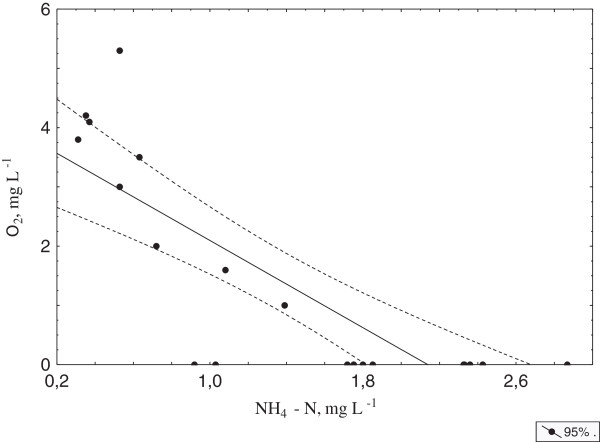
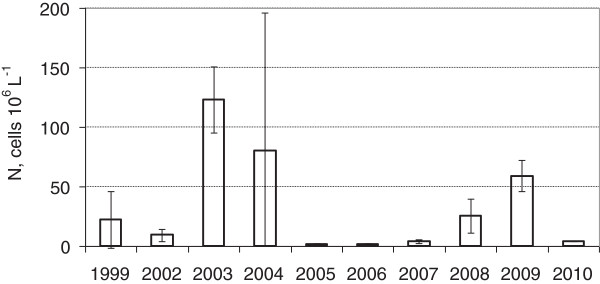
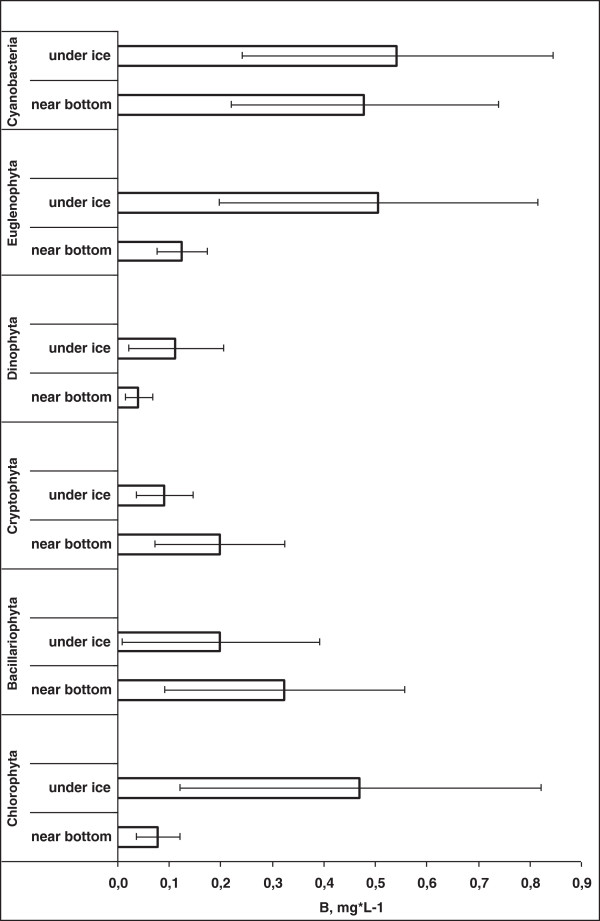
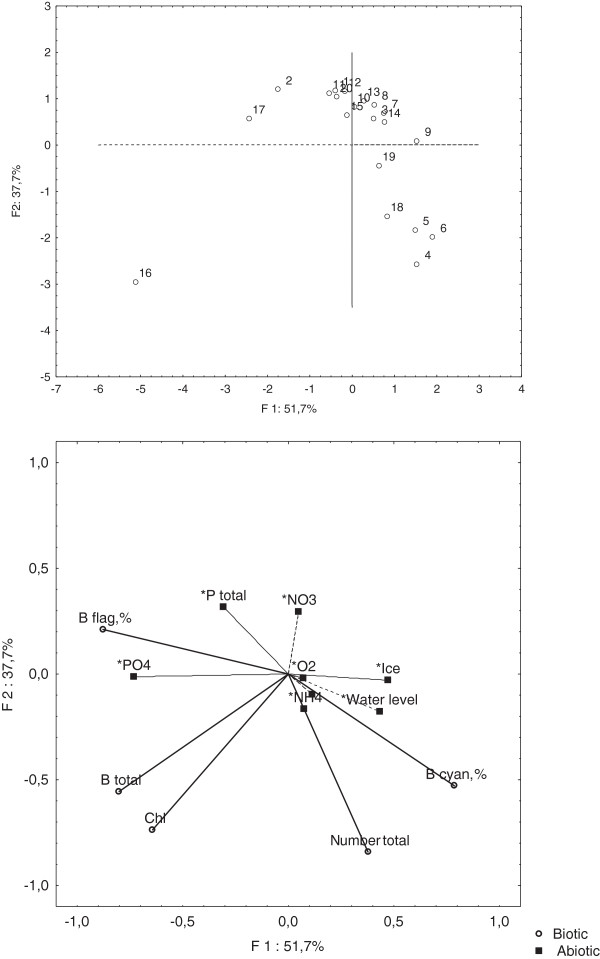
Samples collected contained 172 algal taxa of sub-generic rank. Abundance of phytoplankton varied widely from very low to the bloom level. Cyanobacteria (Limnothrix, Pseudanabaena, Planktothrix) were present in all winter samples but did not always dominate. Favourable conditions included low winter temperature, thicker ice, almost complete lack of oxygen and high ammonium concentration. Flagellates belonging to Euglenophyta and Cryptophyta dominated in warmer winters, when phosphorus concentrations increased.
A full picture of algal succession in the lake may be obtained only if systematic winter observations are taken into account. Nearly anoxic conditions, severe light deficiency and high concentration of biogenic elements present a highly selective environment for phytoplankton. Hypertrophic water bodies of moderate zone covered by ice in winter and dominated by Planktothrix - like сyanobacteria in summer/autumn may follow several scenarios in the end of winter. It may be intense proliferation сyanobacteria normally dominating in summer, or the switch to the other species like the euglenoids and cryptomonads flagellates, or almost total depletion of phytoplankton.
在中欧,夏季/秋季富营养化/超富营养化的浅水湖泊中,类席藻蓝细菌常处于长期优势地位。然而,关于富营养湖泊冰盖下浮游植物生长的研究非常匮乏。涅罗湖就是一个很好的例子,其环境条件在季节上呈现出极端的反差。此外,2003 - 2005年该生态系统经历了从富营养化到超富营养化的灾难性转变,夏季/秋季丝状蓝细菌占主导地位。在冰盖期即将结束时,涅罗湖几乎完全缺乏光照和氧气,但营养物质丰富,尤其是铵态氮、可溶性活性磷和总磷。本研究的目的是描述1999 - 2010年冬季末浮游植物的物种组成和丰度,以及与栖息地非生物特性的关系。我们感兴趣的是类席藻蓝细菌在冰盖条件下是保持其优势地位还是仅能存活,以及冰盖下浮游植物群落每年是如何不同的。
采集的样本包含172个亚属级别的藻类分类单元。浮游植物的丰度差异很大,从极低到水华水平。蓝细菌(湖丝藻、伪鱼腥藻、席藻)在所有冬季样本中均有出现,但并非总是占主导地位。有利条件包括冬季低温、冰层较厚、几乎完全缺氧和高铵浓度。当磷浓度增加时,属于裸藻门和隐藻门的鞭毛虫在较温暖的冬季占主导地位。
只有将系统的冬季观测考虑在内,才能全面了解该湖泊中的藻类演替情况。近乎缺氧的条件、严重的光照不足和高浓度的生源要素为浮游植物提供了一个极具选择性的环境。冬季被冰覆盖、夏季/秋季以类席藻蓝细菌为主导的温带超富营养水体在冬季末可能会出现几种情况。可能是夏季通常占主导地位的蓝细菌大量增殖,或者转向其他物种,如裸藻和隐藻鞭毛虫,或者浮游植物几乎完全耗尽。