Department of Genomic and Applied Microbiology & Göttingen Genomics Laboratory, Institut für Mikrobiologie und Genetik, Norddeutsches Zentrum für Mikrobielle Genomforschung, Georg-August-Universität Göttingen, Grisebachstr, 8, D-37077 Göttingen, Germany.
BMC Genomics. 2013 Oct 1;14:667. doi: 10.1186/1471-2164-14-667.
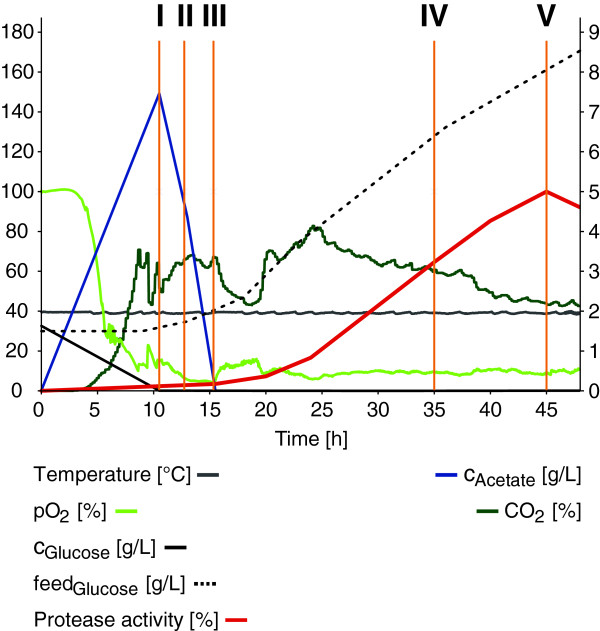
The production of enzymes by an industrial strain requires a complex adaption of the bacterial metabolism to the conditions within the fermenter. Regulatory events within the process result in a dynamic change of the transcriptional activity of the genome. This complex network of genes is orchestrated by proteins as well as regulatory RNA elements. Here we present an RNA-Seq based study considering selected phases of an industry-oriented fermentation of Bacillus licheniformis.
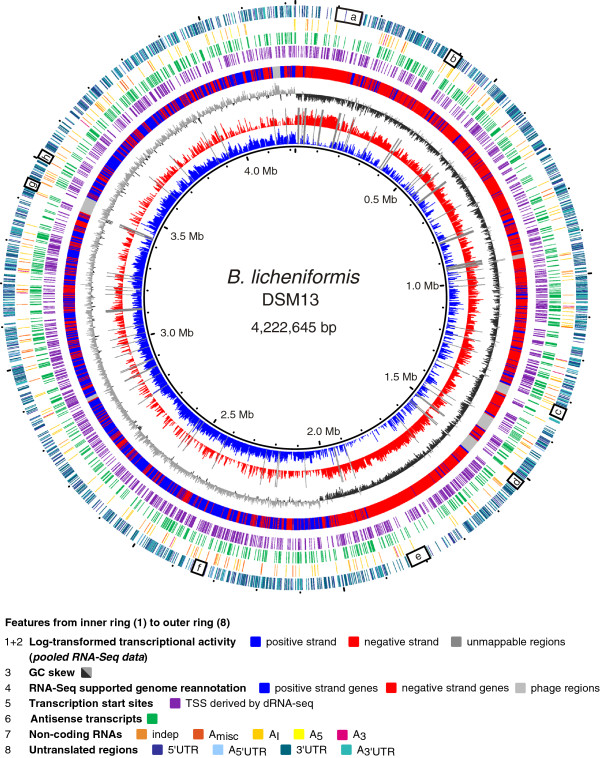
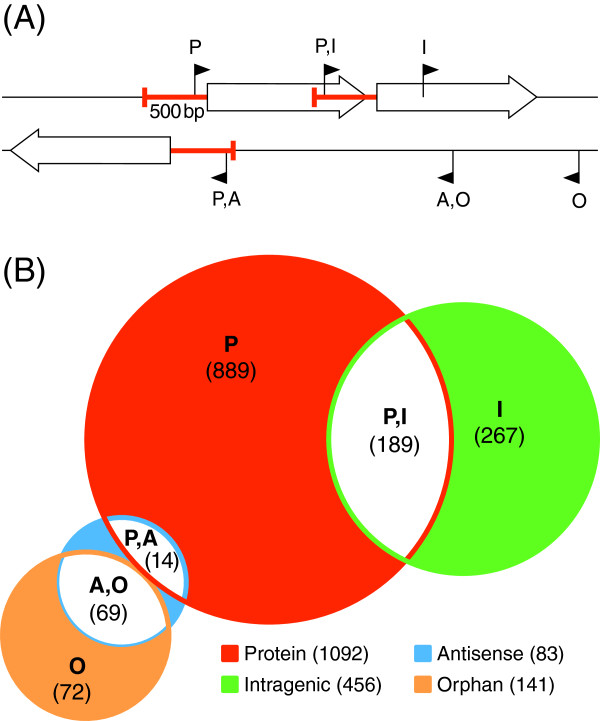
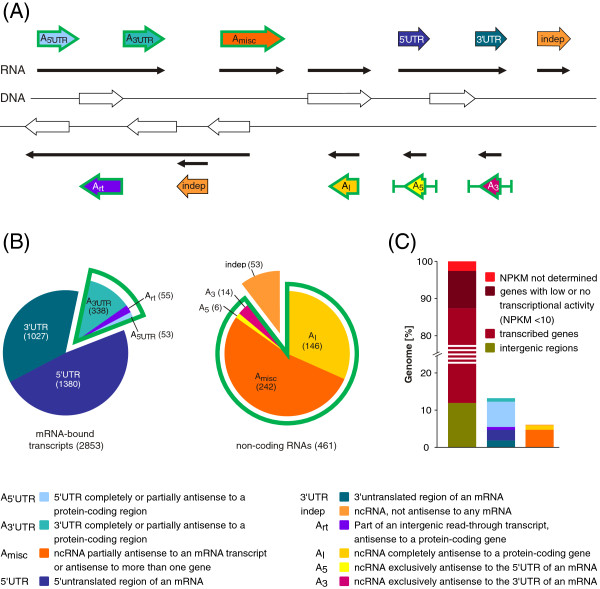
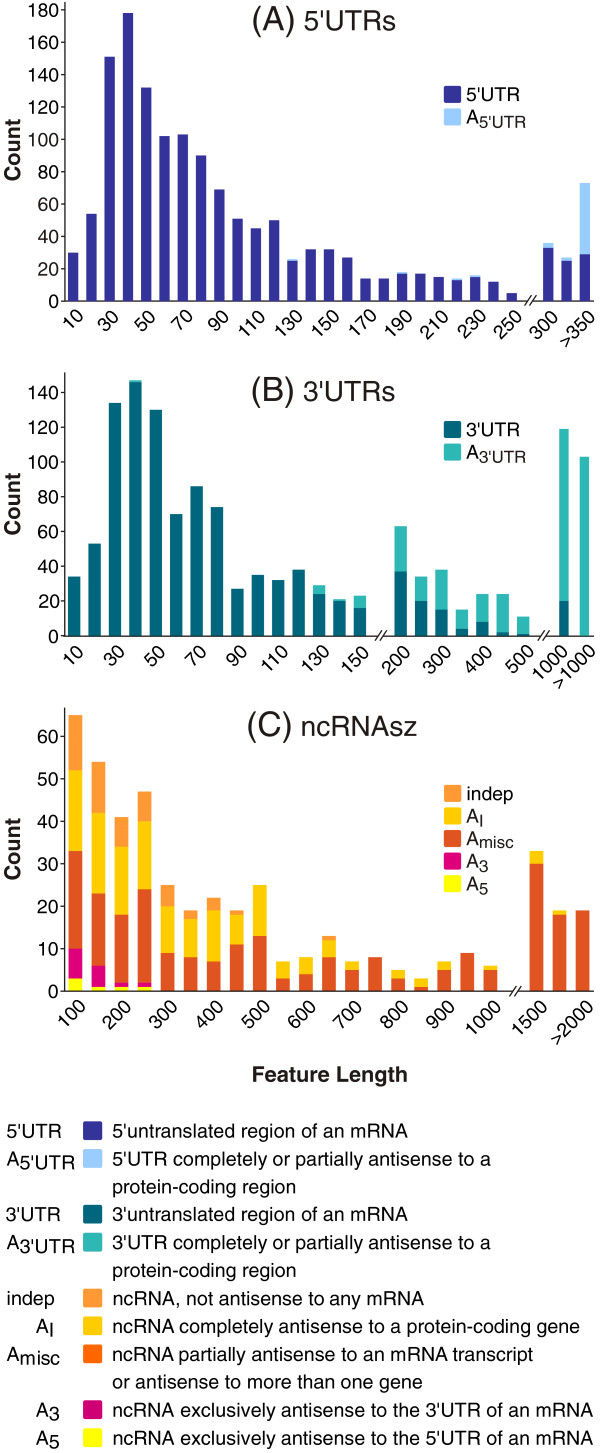
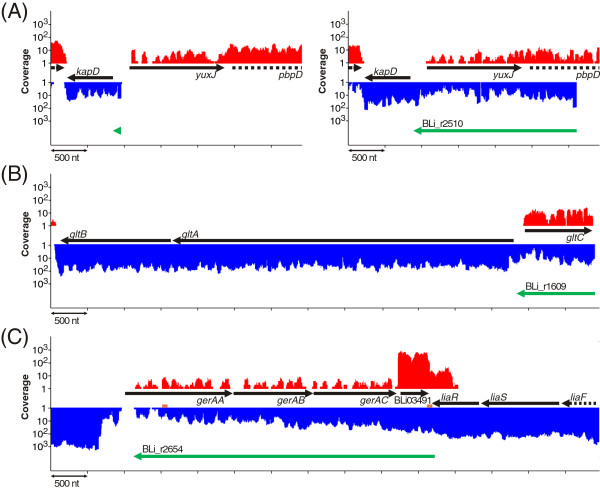
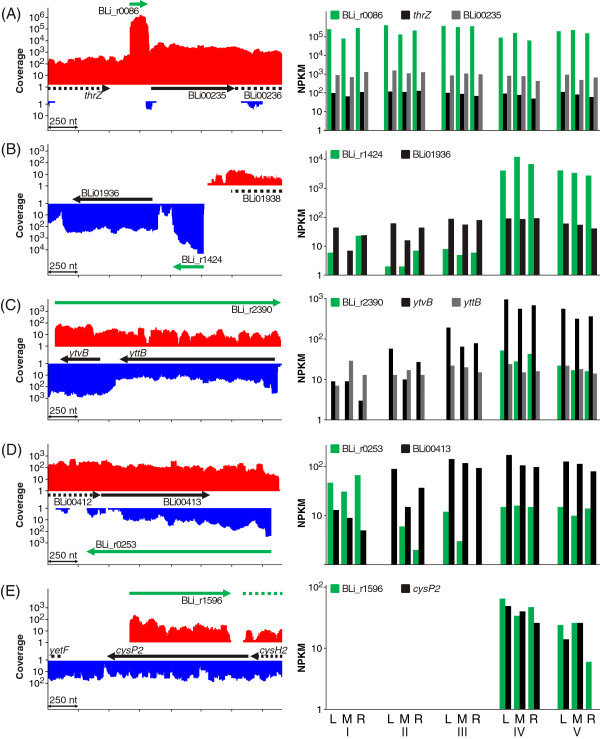
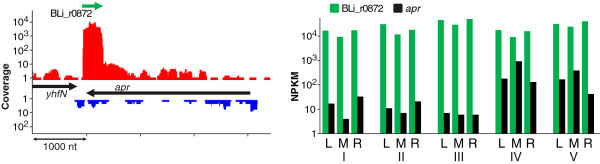
A detailed analysis of 20 strand-specific RNA-Seq datasets revealed a multitude of transcriptionally active genomic regions. 3314 RNA features encoded by such active loci have been identified and sorted into ten functional classes. The identified sequences include the expected RNA features like housekeeping sRNAs, metabolic riboswitches and RNA switches well known from studies on Bacillus subtilis as well as a multitude of completely new candidates for regulatory RNAs. An unexpectedly high number of 855 RNA features are encoded antisense to annotated protein and RNA genes, in addition to 461 independently transcribed small RNAs. These antisense transcripts contain molecules with a remarkable size range variation from 38 to 6348 base pairs in length. The genome of the type strain B. licheniformis DSM13 was completely reannotated using data obtained from RNA-Seq analyses and from public databases.
The hereby generated data-sets represent a solid amount of knowledge on the dynamic transcriptional activities during the investigated fermentation stages. The identified regulatory elements enable research on the understanding and the optimization of crucial metabolic activities during a productive fermentation of Bacillus licheniformis strains.
工业菌株产生酶需要细菌代谢对发酵罐内条件进行复杂的适应。该过程中的调控事件导致基因组转录活性的动态变化。这个复杂的基因网络由蛋白质以及调控 RNA 元件协调。在这里,我们展示了一项基于 RNA-Seq 的研究,该研究考虑了地衣芽孢杆菌工业化发酵的选定阶段。
对 20 个链特异性 RNA-Seq 数据集的详细分析揭示了大量转录活跃的基因组区域。从这些活跃基因座编码的 3314 个 RNA 特征被鉴定出来,并被分类为十个功能类别。所鉴定的序列包括预期的 RNA 特征,如管家 sRNA、代谢核糖开关和 RNA 开关,这些都是来自枯草芽孢杆菌研究的众所周知的特征,以及大量新的调控 RNA 候选物。出乎意料的是,有 855 个 RNA 特征编码与注释的蛋白质和 RNA 基因反义,此外还有 461 个独立转录的小 RNA。这些反义转录本包含的分子长度变化范围惊人,从 38 到 6348 个碱基对。使用从 RNA-Seq 分析和公共数据库获得的数据,对模式菌株地衣芽孢杆菌 DSM13 的基因组进行了全面重新注释。
由此产生的数据集代表了在研究的发酵阶段动态转录活性方面的大量知识。所鉴定的调控元件使我们能够研究在生产力发酵地衣芽孢杆菌菌株过程中理解和优化关键代谢活动的方法。