1] Research Institute for Science and Technology, Tokyo University of Science, Noda 278-8510, Japan [2] Division of Research and Development, Organ Technologies Inc, Tokyo 01-0048, Japan.
Nat Commun. 2013;4:2498. doi: 10.1038/ncomms3498.
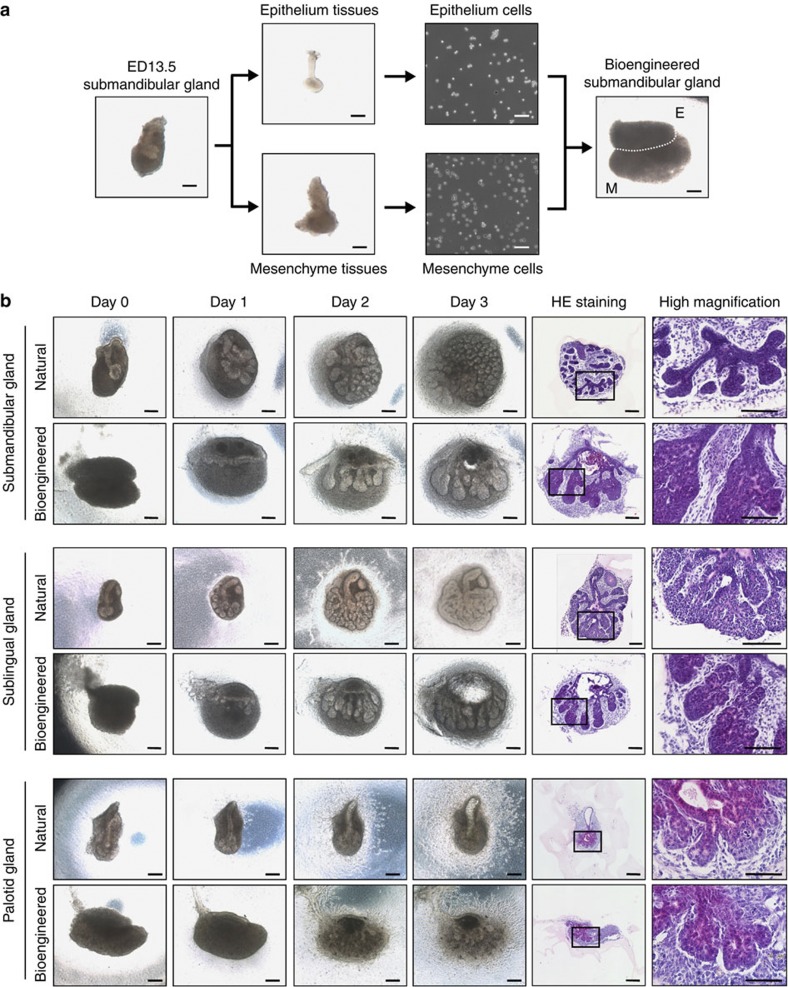
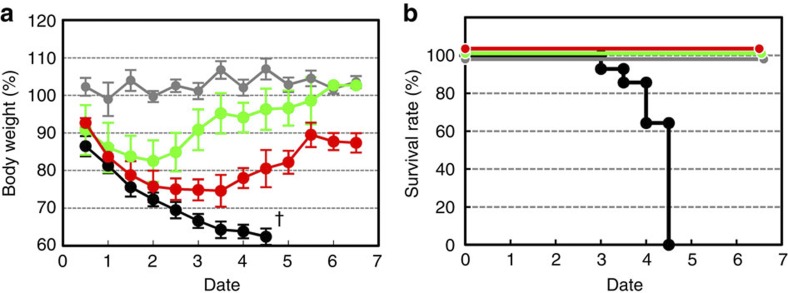
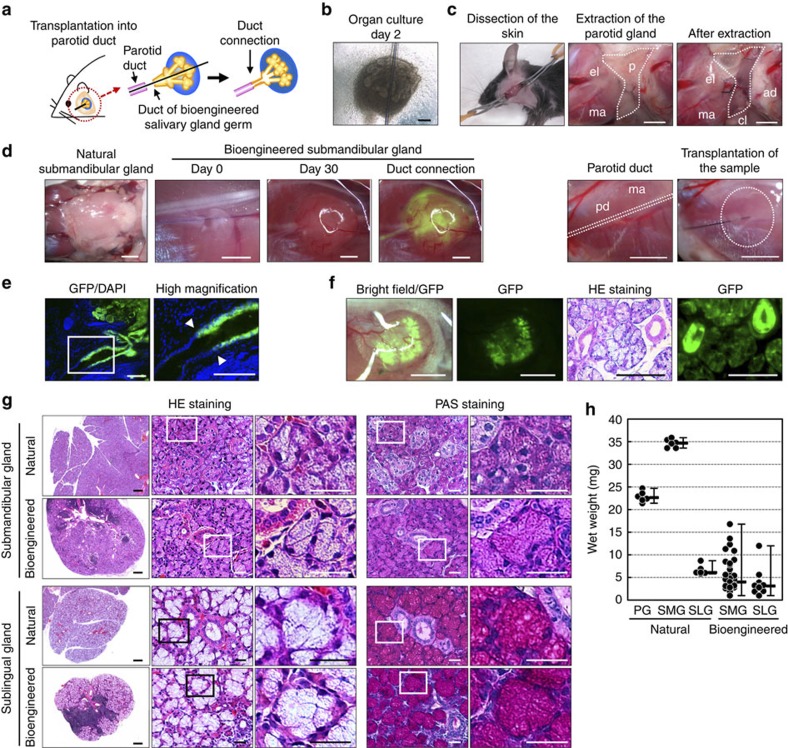
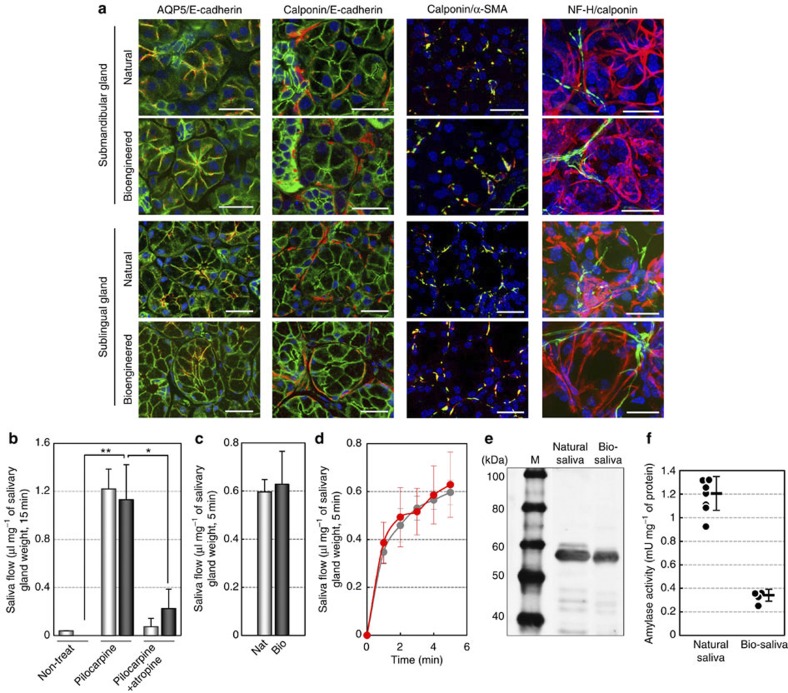
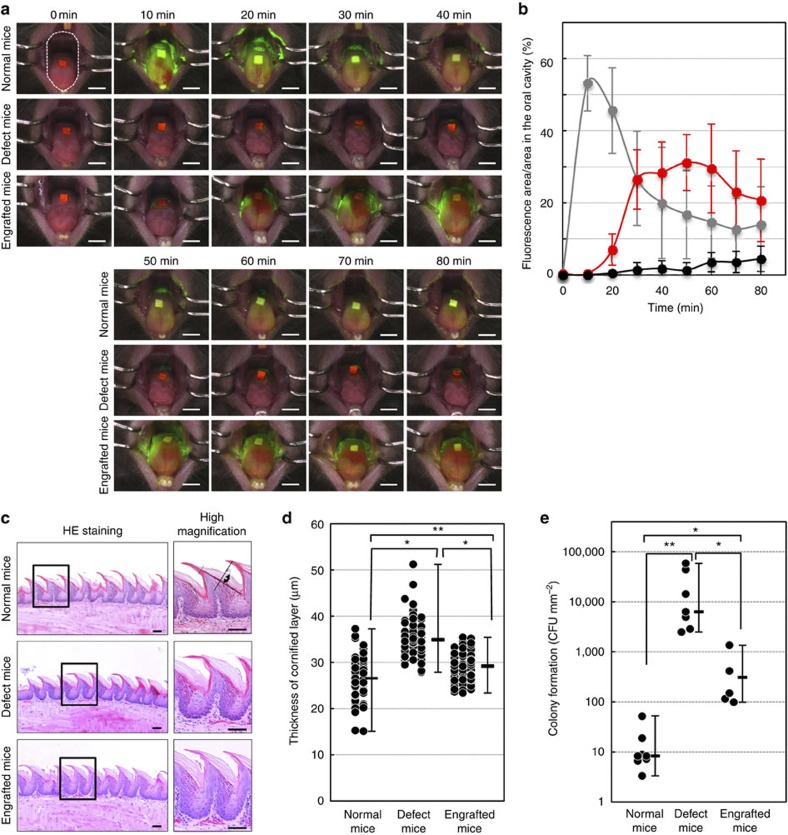
Salivary gland hypofunction, also known as xerostomia, occurs as a result of radiation therapy for head cancer, Sjögren's syndrome or aging, and can cause a variety of critical oral health issues, including dental decay, bacterial infection, mastication dysfunction, swallowing dysfunction and reduced quality of life. Here we demonstrate the full functional regeneration of a salivary gland that reproduces the morphogenesis induced by reciprocal epithelial and mesenchymal interactions through the orthotopic transplantation of a bioengineered salivary gland germ as a regenerative organ replacement therapy. The bioengineered germ develops into a mature gland through acinar formations with a myoepithelium and innervation. The bioengineered submandibular gland produces saliva in response to the administration of pilocarpine and gustatory stimulation by citrate, protects against oral bacterial infection and restores normal swallowing in a salivary gland-defective mouse model. This study thus provides a proof-of-concept for bioengineered salivary gland regeneration as a potential treatment of xerostomia.
唾液腺功能减退,又称口干症,可由头颈部癌症的放射治疗、干燥综合征或衰老引起,可导致多种严重的口腔健康问题,包括龋齿、细菌感染、咀嚼功能障碍、吞咽功能障碍和生活质量下降。在这里,我们通过将生物工程化唾液腺芽作为再生器官替代治疗进行同源移植,展示了一种能够重现上皮和间充质相互作用诱导的形态发生的唾液腺的完全功能性再生。生物工程化的芽通过腺泡形成与肌上皮和神经支配一起发育成成熟的腺体。生物工程化的颌下腺在给予毛果芸香碱后分泌唾液,并对柠檬酸的味觉刺激作出反应,可防止口腔细菌感染,并在唾液腺缺陷的小鼠模型中恢复正常吞咽。因此,本研究为生物工程化唾液腺再生作为口干症的潜在治疗方法提供了概念验证。