• 文献检索
  • 文档翻译
  • 深度研究
  • 学术资讯
  • Suppr Zotero 插件Zotero 插件
  • 邀请有礼
  • 套餐&价格
  • 历史记录
应用&插件
Suppr Zotero 插件Zotero 插件浏览器插件Mac 客户端Windows 客户端微信小程序
定价
高级版会员购买积分包购买API积分包
服务
文献检索文档翻译深度研究API 文档MCP 服务
关于我们
关于 Suppr公司介绍联系我们用户协议隐私条款
关注我们

Suppr 超能文献

核心技术专利:CN118964589B侵权必究
粤ICP备2023148730 号-1Suppr @ 2026

文献检索

告别复杂PubMed语法,用中文像聊天一样搜索,搜遍4000万医学文献。AI智能推荐,让科研检索更轻松。

立即免费搜索

文件翻译

保留排版,准确专业,支持PDF/Word/PPT等文件格式,支持 12+语言互译。

免费翻译文档

深度研究

AI帮你快速写综述,25分钟生成高质量综述,智能提取关键信息,辅助科研写作。

立即免费体验

生物打印唾液腺模型及其再生应用。

Bioprinting salivary gland models and their regenerative applications.

作者信息

Klangprapan Jutapak, Souza Glauco R, Ferreira João N

机构信息

Avatar Biotechnologies for Oral Health and Healthy Longevity Research Unit, Faculty of Dentistry, Chulalongkorn University, 34 Henri-Dunant Road, Pathumwan, Bangkok, 10330, Thailand.

Greiner Bio-one North America Inc., 4238 Capital Drive, Monroe, NC, 28110, USA.

出版信息

BDJ Open. 2024 May 30;10(1):39. doi: 10.1038/s41405-024-00219-2.

DOI:10.1038/s41405-024-00219-2
PMID:38816372
原文链接:https://pmc.ncbi.nlm.nih.gov/articles/PMC11139920/
Abstract

OBJECTIVE

Salivary gland (SG) hypofunction is a common clinical condition arising from radiotherapy to suppress head and neck cancers. The radiation often destroys the SG secretory acini, and glands are left with limited regenerative potential. Due to the complex architecture of SG acini and ducts, three-dimensional (3D) bioprinting platforms have emerged to spatially define these in vitro epithelial units and develop mini-organs or organoids for regeneration. Due to the limited body of evidence, this comprehensive review highlights the advantages and challenges of bioprinting platforms for SG regeneration.

METHODS

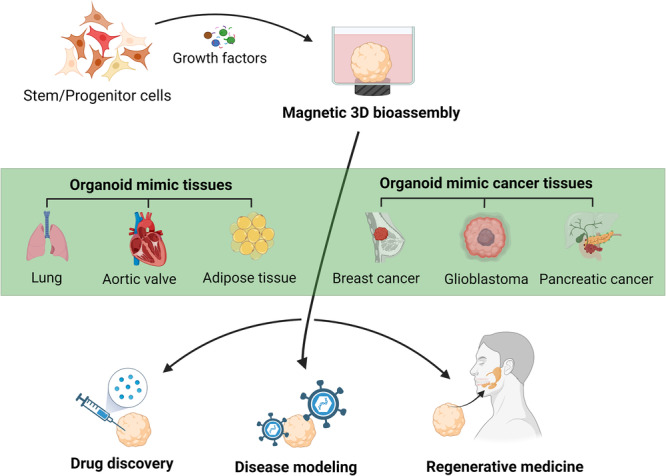
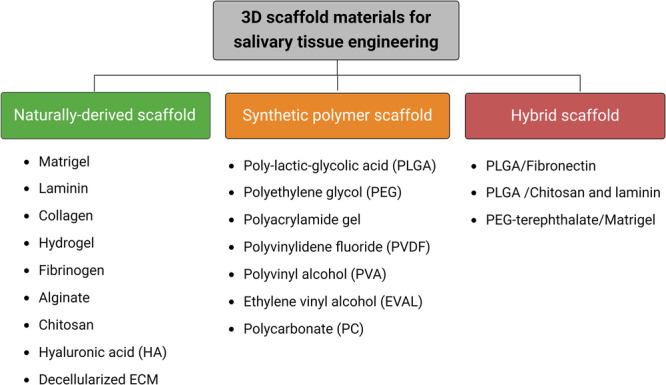
SG microtissue engineering strategies such as magnetic 3D bioassembly of cells and microfluidic coaxial 3D bioprinting of cell-laden microfibers and microtubes have been proposed to replace the damaged acinar units, avoid the use of xenogeneic matrices (like Matrigel), and restore salivary flow.

RESULTS

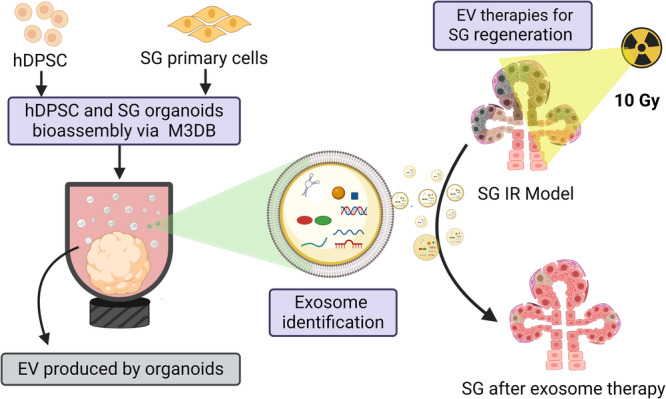
Replacing the SG damaged organ is challenging due to its complex architecture, which combines a ductal network with acinar epithelial units to facilitate a unidirectional flow of saliva. Our research group was the first to develop 3D bioassembly SG epithelial functional organoids with innervation to respond to both cholinergic and adrenergic stimulation. More recently, microtissue engineering using coaxial 3D bioprinting of hydrogel microfibers and microtubes could also supported the formation of viable epithelial units. Both bioprinting approaches could overcome the need for Matrigel by facilitating the assembly of adult stem cells, such as human dental pulp stem cells, and primary SG cells into micro-sized 3D constructs able to produce their own matrix and self-organize into micro-modular tissue clusters with lumenized areas. Furthermore, extracellular vesicle (EV) therapies from organoid-derived secretome were also designed and validated ex vivo for SG regeneration after radiation damage.

CONCLUSION

Magnetic 3D bioassembly and microfluidic coaxial bioprinting platforms have the potential to create SG mini-organs for regenerative applications via organoid transplantation or organoid-derived EV therapies.

摘要

目的

唾液腺功能减退是头颈部癌症放射治疗引发的一种常见临床病症。放疗常破坏唾液腺分泌腺泡,且腺体的再生潜力有限。由于唾液腺腺泡和导管的结构复杂,三维(3D)生物打印平台应运而生,用于在空间上界定这些体外上皮单元,并开发用于再生的微型器官或类器官。鉴于证据有限,本综述重点介绍生物打印平台在唾液腺再生方面的优势和挑战。

方法

已提出唾液腺微组织工程策略,如细胞的磁性3D生物组装以及载细胞微纤维和微管的微流控同轴3D生物打印,以替代受损的腺泡单元,避免使用异种基质(如基质胶),并恢复唾液分泌。

结果

由于唾液腺结构复杂,其导管网络与腺泡上皮单元相结合以促进唾液单向流动,因此替换受损的唾液腺器官具有挑战性。我们的研究小组率先开发出具有神经支配的3D生物组装唾液腺上皮功能类器官,以响应胆碱能和肾上腺素能刺激。最近,使用水凝胶微纤维和微管的同轴3D生物打印进行微组织工程也能够支持有活力的上皮单元的形成。两种生物打印方法都可以通过促进成体干细胞(如人牙髓干细胞)和原代唾液腺细胞组装成能够产生自身基质并自组织成具有腔化区域的微型模块化组织簇的微型3D构建体,从而避免使用基质胶。此外,还设计并在体外验证了源自类器官分泌组的细胞外囊泡(EV)疗法对辐射损伤后唾液腺再生的作用。

结论

磁性3D生物组装和微流控同轴生物打印平台有潜力通过类器官移植或类器官衍生的EV疗法创建用于再生应用的唾液腺微型器官。

https://cdn.ncbi.nlm.nih.gov/pmc/blobs/9820/11139920/349ce9f1919c/41405_2024_219_Fig5_HTML.jpg
https://cdn.ncbi.nlm.nih.gov/pmc/blobs/9820/11139920/df49b9c767a2/41405_2024_219_Fig1_HTML.jpg
https://cdn.ncbi.nlm.nih.gov/pmc/blobs/9820/11139920/a9346c1ff8bc/41405_2024_219_Fig2_HTML.jpg
https://cdn.ncbi.nlm.nih.gov/pmc/blobs/9820/11139920/9931e340fe54/41405_2024_219_Fig3_HTML.jpg
https://cdn.ncbi.nlm.nih.gov/pmc/blobs/9820/11139920/dd0c97b475a1/41405_2024_219_Fig4_HTML.jpg
https://cdn.ncbi.nlm.nih.gov/pmc/blobs/9820/11139920/349ce9f1919c/41405_2024_219_Fig5_HTML.jpg
https://cdn.ncbi.nlm.nih.gov/pmc/blobs/9820/11139920/df49b9c767a2/41405_2024_219_Fig1_HTML.jpg
https://cdn.ncbi.nlm.nih.gov/pmc/blobs/9820/11139920/a9346c1ff8bc/41405_2024_219_Fig2_HTML.jpg
https://cdn.ncbi.nlm.nih.gov/pmc/blobs/9820/11139920/9931e340fe54/41405_2024_219_Fig3_HTML.jpg
https://cdn.ncbi.nlm.nih.gov/pmc/blobs/9820/11139920/dd0c97b475a1/41405_2024_219_Fig4_HTML.jpg
https://cdn.ncbi.nlm.nih.gov/pmc/blobs/9820/11139920/349ce9f1919c/41405_2024_219_Fig5_HTML.jpg

相似文献

1
Bioprinting salivary gland models and their regenerative applications.生物打印唾液腺模型及其再生应用。
BDJ Open. 2024 May 30;10(1):39. doi: 10.1038/s41405-024-00219-2.
2
Trends in Salivary Gland Tissue Engineering: From Stem Cells to Secretome and Organoid Bioprinting.唾液腺组织工程的发展趋势:从干细胞到分泌组和类器官生物打印
Tissue Eng Part B Rev. 2021 Apr;27(2):155-165. doi: 10.1089/ten.TEB.2020.0149. Epub 2020 Aug 26.
3
Salivary gland regeneration: from salivary gland stem cells to three-dimensional bioprinting.唾液腺再生:从唾液腺干细胞到三维生物打印。
SLAS Technol. 2023 Jun;28(3):199-209. doi: 10.1016/j.slast.2023.03.004. Epub 2023 Apr 3.
4
Engineering innervated secretory epithelial organoids by magnetic three-dimensional bioprinting for stimulating epithelial growth in salivary glands.通过磁三维生物打印工程化有神经支配的分泌上皮类器官,以刺激唾液腺中的上皮生长。
Biomaterials. 2018 Oct;180:52-66. doi: 10.1016/j.biomaterials.2018.06.011. Epub 2018 Jun 12.
5
A magnetic three-dimensional levitated primary cell culture system for the development of secretory salivary gland-like organoids.用于开发分泌型唾液腺类器官的磁性三维悬浮原代细胞培养系统。
J Tissue Eng Regen Med. 2019 Mar;13(3):495-508. doi: 10.1002/term.2809. Epub 2019 Mar 6.
6
Microfluidic coaxial 3D bioprinting of cell-laden microfibers and microtubes for salivary gland tissue engineering.微流控同轴 3D 生物打印载细胞微纤维和微管用于唾液腺组织工程。
Biomater Adv. 2023 Nov;154:213588. doi: 10.1016/j.bioadv.2023.213588. Epub 2023 Aug 14.
7
Three-Dimensional Bioprinting Nanotechnologies towards Clinical Application of Stem Cells and Their Secretome in Salivary Gland Regeneration.用于干细胞及其分泌组在唾液腺再生中临床应用的三维生物打印纳米技术
Stem Cells Int. 2016;2016:7564689. doi: 10.1155/2016/7564689. Epub 2016 Dec 20.
8
Magnetic bioassembly platforms towards the generation of extracellular vesicles from human salivary gland functional organoids for epithelial repair.用于从人唾液腺功能性类器官生成细胞外囊泡以进行上皮修复的磁性生物组装平台。
Bioact Mater. 2022 Feb 16;18:151-163. doi: 10.1016/j.bioactmat.2022.02.007. eCollection 2022 Dec.
9
Magnetic bioassembly platforms for establishing craniofacial exocrine gland organoids as aging in vitro models.用于建立颅面外分泌腺类器官的磁性生物组装平台作为体外衰老模型。
PLoS One. 2022 Aug 5;17(8):e0272644. doi: 10.1371/journal.pone.0272644. eCollection 2022.
10
Concise Review: Salivary Gland Regeneration: Therapeutic Approaches from Stem Cells to Tissue Organoids.简明综述:唾液腺再生:从干细胞到组织类器官的治疗方法
Stem Cells. 2017 Jan;35(1):97-105. doi: 10.1002/stem.2455. Epub 2016 Jul 15.

引用本文的文献

1
Poly (hydroxyethyl methacrylate) Saliva-Gel: A Polymer-Based Solution for Xerostomia Treatment.聚(甲基丙烯酸羟乙酯)唾液凝胶:一种用于治疗口干症的基于聚合物的解决方案。
ACS Appl Polym Mater. 2025 Jul 17. doi: 10.1021/acsapm.5c00881.
2
Tuning the Supramolecular Polymerization and Cell Response of Ureidopyrimidinone Monomers by Pushing the Hydrophobic Threshold.通过突破疏水阈值调控脲嘧啶酮单体的超分子聚合及细胞反应
J Am Chem Soc. 2025 Jun 25;147(25):21478-21491. doi: 10.1021/jacs.5c01445. Epub 2025 Jun 11.
3
Revolutionising oral organoids with artificial intelligence.

本文引用的文献

1
Minimal information for studies of extracellular vesicles (MISEV2023): From basic to advanced approaches.细胞外囊泡研究的最低信息要求(MISEV2023):从基础到先进方法。
J Extracell Vesicles. 2024 Feb;13(2):e12404. doi: 10.1002/jev2.12404.
2
Iron Oxide Nanoparticles in Cancer Treatment: Cell Responses and the Potency to Improve Radiosensitivity.氧化铁纳米颗粒在癌症治疗中的应用:细胞反应及提高放射敏感性的效能
Pharmaceutics. 2023 Sep 30;15(10):2406. doi: 10.3390/pharmaceutics15102406.
3
Microfluidic coaxial 3D bioprinting of cell-laden microfibers and microtubes for salivary gland tissue engineering.
用人工智能革新口腔类器官
Biomater Transl. 2024 Nov 15;5(4):372-389. doi: 10.12336/biomatertransl.2024.04.004. eCollection 2024.
4
Role of Exosomes in Salivary Gland Tumors and Technological Advances in Their Assessment.外泌体在涎腺肿瘤中的作用及其评估的技术进展
Cancers (Basel). 2024 Sep 27;16(19):3298. doi: 10.3390/cancers16193298.
微流控同轴 3D 生物打印载细胞微纤维和微管用于唾液腺组织工程。
Biomater Adv. 2023 Nov;154:213588. doi: 10.1016/j.bioadv.2023.213588. Epub 2023 Aug 14.
4
Slow hydrogel matrix degradation enhances salivary gland mimetic phenotype.缓慢的水凝胶基质降解增强了唾液腺模拟表型。
Acta Biomater. 2023 Aug;166:187-200. doi: 10.1016/j.actbio.2023.05.005. Epub 2023 May 5.
5
Bioengineering extracellular vesicles: smart nanomaterials for bone regeneration.生物工程细胞外囊泡:用于骨再生的智能纳米材料。
J Nanobiotechnology. 2023 Apr 27;21(1):137. doi: 10.1186/s12951-023-01895-2.
6
Salivary gland regeneration: from salivary gland stem cells to three-dimensional bioprinting.唾液腺再生:从唾液腺干细胞到三维生物打印。
SLAS Technol. 2023 Jun;28(3):199-209. doi: 10.1016/j.slast.2023.03.004. Epub 2023 Apr 3.
7
Ductal delivery of extracellular vesicles promote the recovery from salivary gland inflammation.细胞外囊泡经导管递送至唾液腺可促进其炎症恢复。
J Control Release. 2023 May;357:235-248. doi: 10.1016/j.jconrel.2023.03.055. Epub 2023 Apr 5.
8
Plant molecular farming-derived epidermal growth factor revolutionizes hydrogels for improving glandular epithelial organoid biofabrication.植物分子农场生产的表皮生长因子彻底改变了水凝胶,用于改善腺上皮类器官的生物制造。
SLAS Technol. 2023 Aug;28(4):278-291. doi: 10.1016/j.slast.2023.03.002. Epub 2023 Mar 24.
9
Biofabrication, biochemical profiling, and in vitro applications of salivary gland decellularized matrices via magnetic bioassembly platforms.通过磁性生物组装平台对唾液腺脱细胞基质进行生物制造、生化分析和体外应用。
Cell Tissue Res. 2023 May;392(2):499-516. doi: 10.1007/s00441-022-03728-4. Epub 2022 Dec 28.
10
Advancements in the Use of Hydrogels for Regenerative Medicine: Properties and Biomedical Applications.水凝胶在再生医学中的应用进展:性质与生物医学应用
Int J Biomater. 2022 Nov 7;2022:3606765. doi: 10.1155/2022/3606765. eCollection 2022.