Medical Research Department of Guangdong General Hospital, Guangdong Provincial Cardiovascular Institute, Guangdong Academy of Medical Sciences, Guangzhou, China.
PLoS One. 2013 Sep 25;8(9):e75557. doi: 10.1371/journal.pone.0075557. eCollection 2013.
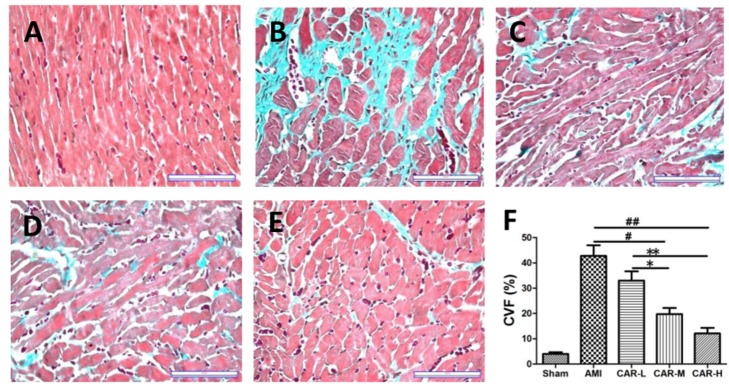
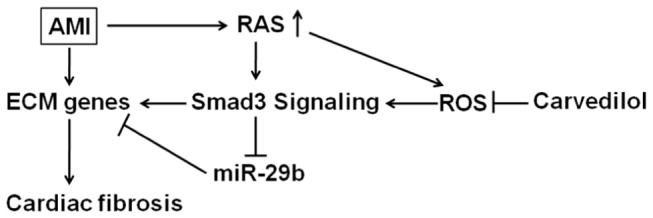
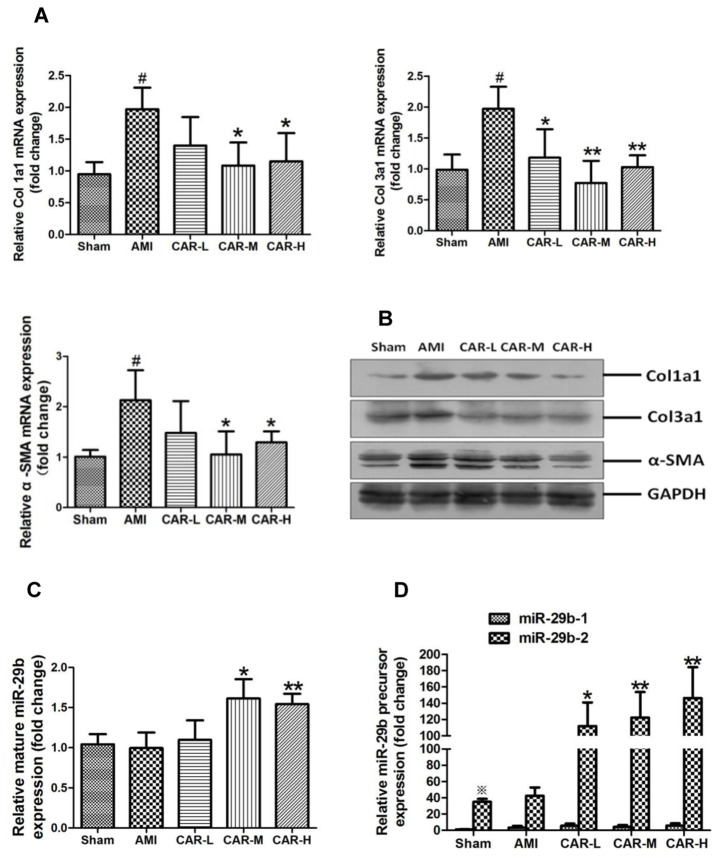
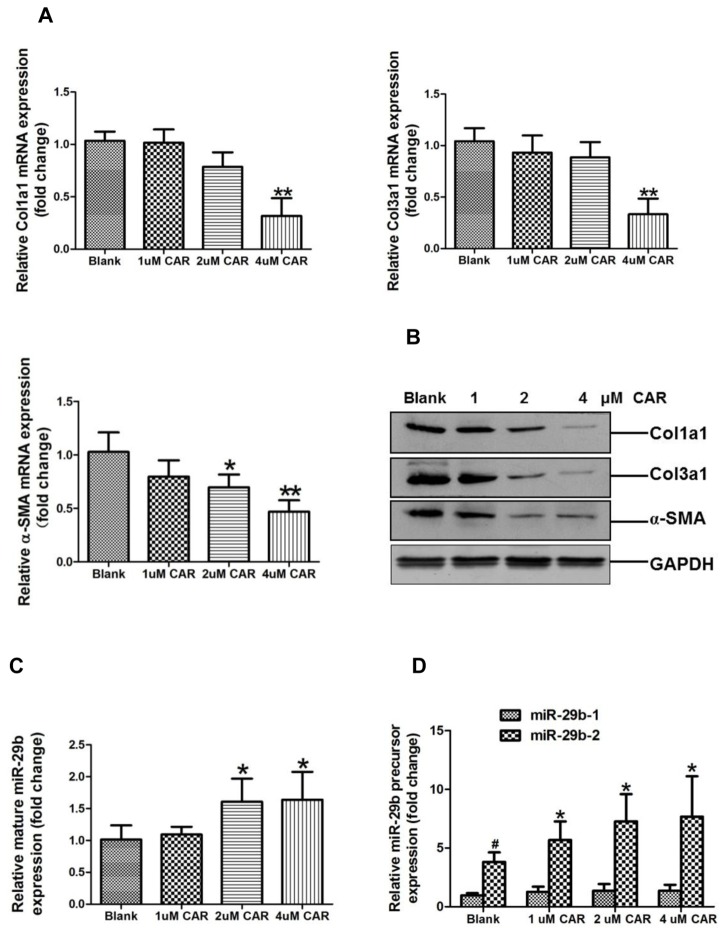
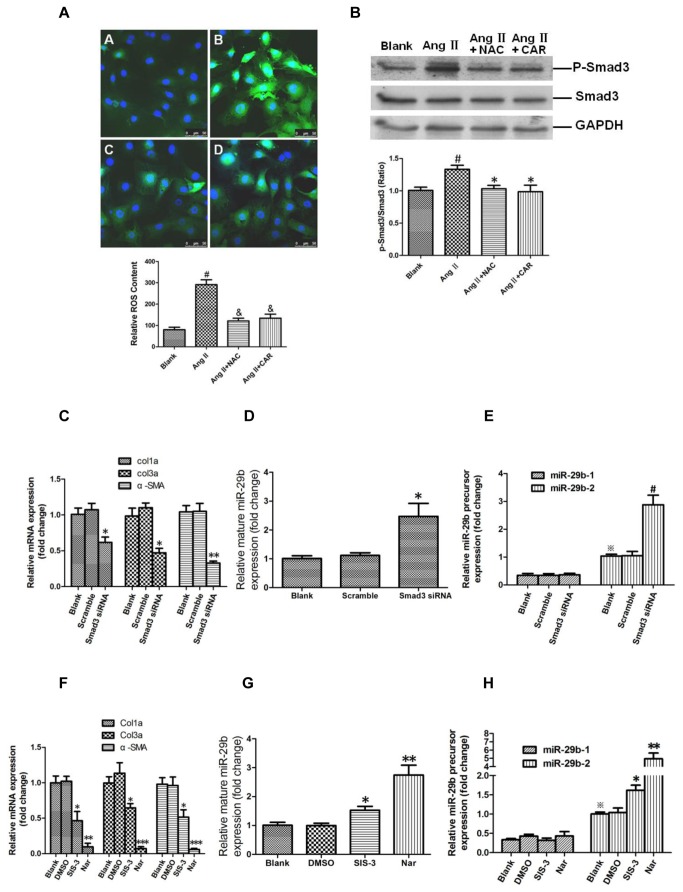
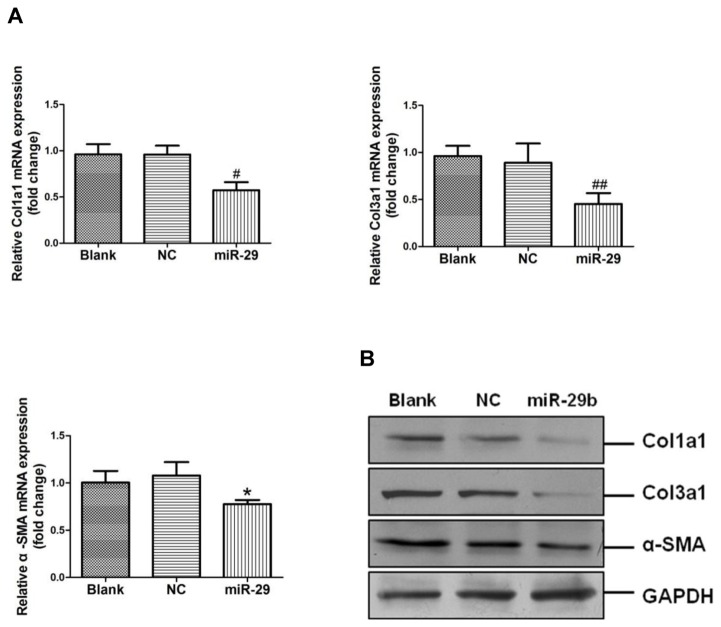
Carvedilol, a nonselective β-adrenoreceptor antagonist, protects against myocardial injury induced by acute myocardium infarction (AMI). The mechanisms underlying the anti-fibrotic effects of carvedilol are unknown. Recent studies have revealed the critical role of microRNAs (miRNAs) in a variety of cardiovascular diseases. This study investigated whether miR-29b is involved in the cardioprotective effect of carvedilol against AMI-induced myocardial fibrosis. Male SD rats were randomized into several groups: the sham surgery control, left anterior descending (LAD) surgery-AMI model, AMI plus low-dose carvedilol treatment (1 mg/kg per day, CAR-L), AMI plus medium-dose carvedilol treatment (5 mg/kg per day, CAR-M) and AMI plus high-dose carvedilol treatment (10 mg/kg per day, CAR-H). Cardiac remodeling and impaired heart function were observed 4 weeks after LAD surgery treatment; the observed cardiac remodeling, decreased ejection fraction, and fractional shortening were rescued in the CAR-M and CAR-H groups. The upregulated expression of Col1a1, Col3a1, and α-SMA mRNA was significantly reduced in the CAR-M and CAR-H groups. Moreover, the downregulated miR-29b was elevated in the CAR-M and CAR-H groups. The in vitro study showed that Col1a1, Col3a1, and α-SMA were downregulated and miR-29b was upregulated by carvedilol in a dose-dependent manner in rat cardiac fibroblasts. Inhibition of ROS-induced Smad3 activation by carvedilol resulted in downregulation of Col1a1, Col3a1, and α-SMA and upregulation of miR-29b derived from the miR-29b-2 precursor. Enforced expression of miR-29b significantly suppressed Col1a1, Col3a1, and α-SMA expression. Taken together, we found that smad3 inactivation and miR-29b upregulation contributed to the cardioprotective activity of carvedilol against AMI-induced myocardial fibrosis.
卡维地洛是一种非选择性β肾上腺素受体拮抗剂,可预防急性心肌梗死(AMI)引起的心肌损伤。卡维地洛抗纤维化作用的机制尚不清楚。最近的研究表明,microRNAs(miRNAs)在多种心血管疾病中起着关键作用。本研究探讨了 miR-29b 是否参与卡维地洛对 AMI 诱导的心肌纤维化的心脏保护作用。雄性 SD 大鼠随机分为几组:假手术对照组、左前降支(LAD)手术-AMI 模型组、AMI 加低剂量卡维地洛治疗组(1mg/kg/天,CAR-L)、AMI 加中剂量卡维地洛治疗组(5mg/kg/天,CAR-M)和 AMI 加高剂量卡维地洛治疗组(10mg/kg/天,CAR-H)。LAD 手术后 4 周观察心脏重构和心功能受损;在 CAR-M 和 CAR-H 组观察到心脏重构、射血分数降低和缩短分数降低得到挽救。Col1a1、Col3a1 和α-SMA mRNA 的上调表达在 CAR-M 和 CAR-H 组中显著降低。此外,CAR-M 和 CAR-H 组中下调的 miR-29b 升高。体外研究表明,卡维地洛以剂量依赖性方式下调大鼠心肌成纤维细胞中的 Col1a1、Col3a1 和α-SMA,并上调 miR-29b。卡维地洛抑制 ROS 诱导的 Smad3 激活导致 Col1a1、Col3a1 和α-SMA 的下调以及来自 miR-29b-2 前体的 miR-29b 的上调。miR-29b 的强制表达显著抑制 Col1a1、Col3a1 和α-SMA 的表达。总之,我们发现 smad3 失活和 miR-29b 上调有助于卡维地洛对抗 AMI 诱导的心肌纤维化的心脏保护作用。