Instituto de Bioquímica Médica, Universidade Federal do Rio de Janeiro, UFRJ, Rio de Janeiro, Rio de Janeiro, Brazil ; Departamento de Genética, Universidade Federal do Rio de Janeiro, UFRJ, Rio de Janeiro, Rio de Janeiro, Brazil.
PLoS One. 2013 Sep 25;8(9):e76321. doi: 10.1371/journal.pone.0076321. eCollection 2013.
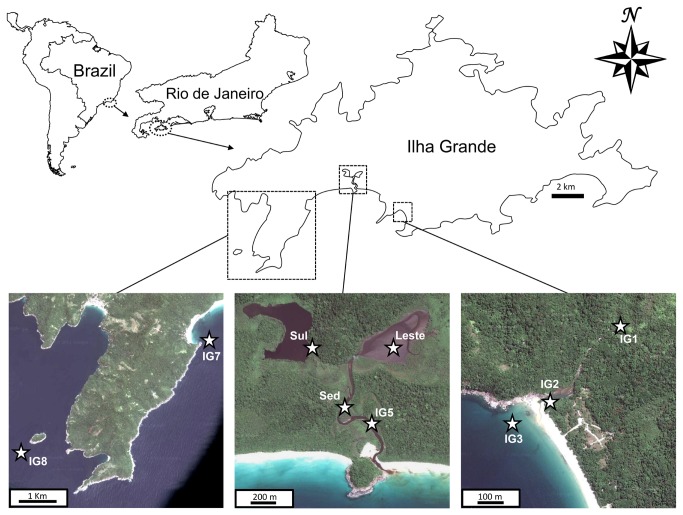
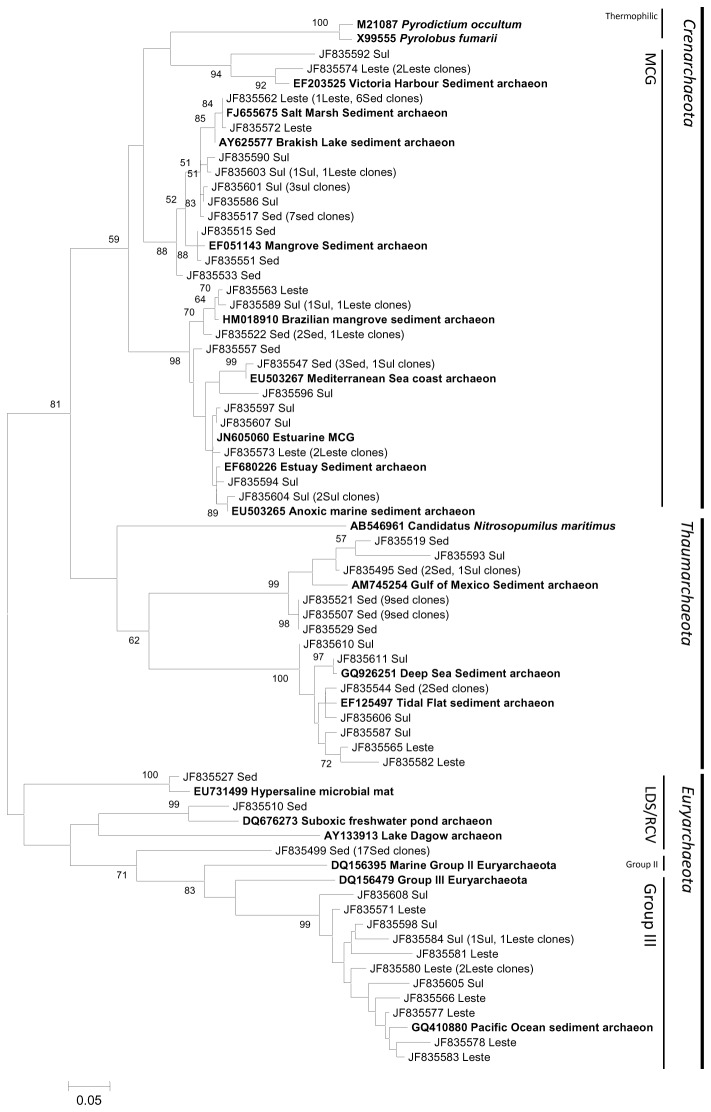
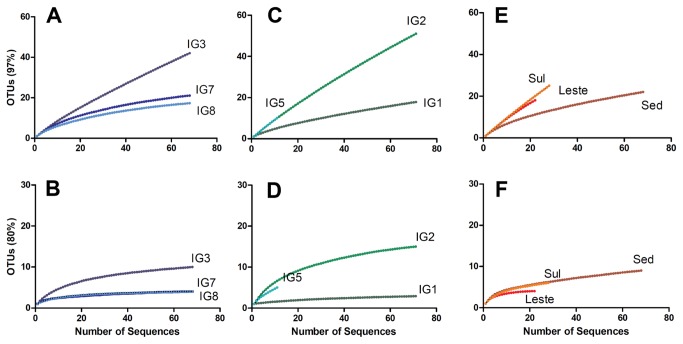
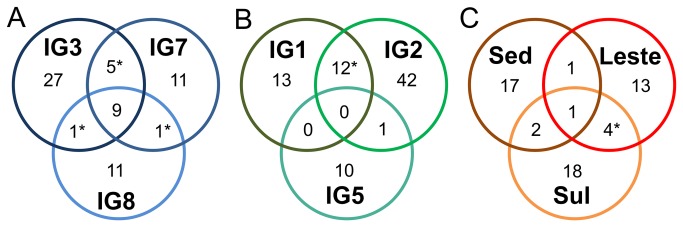
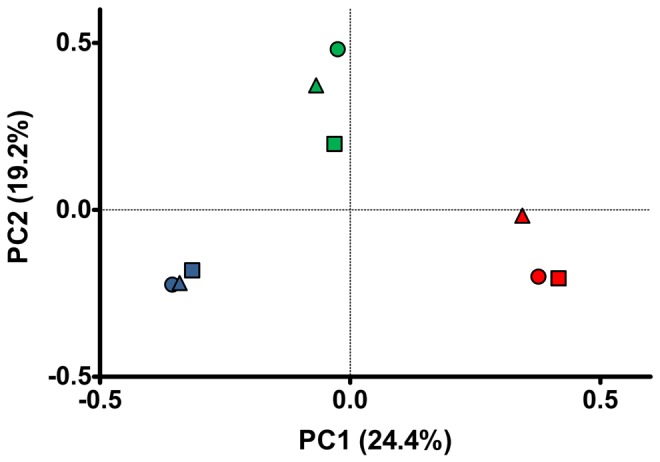
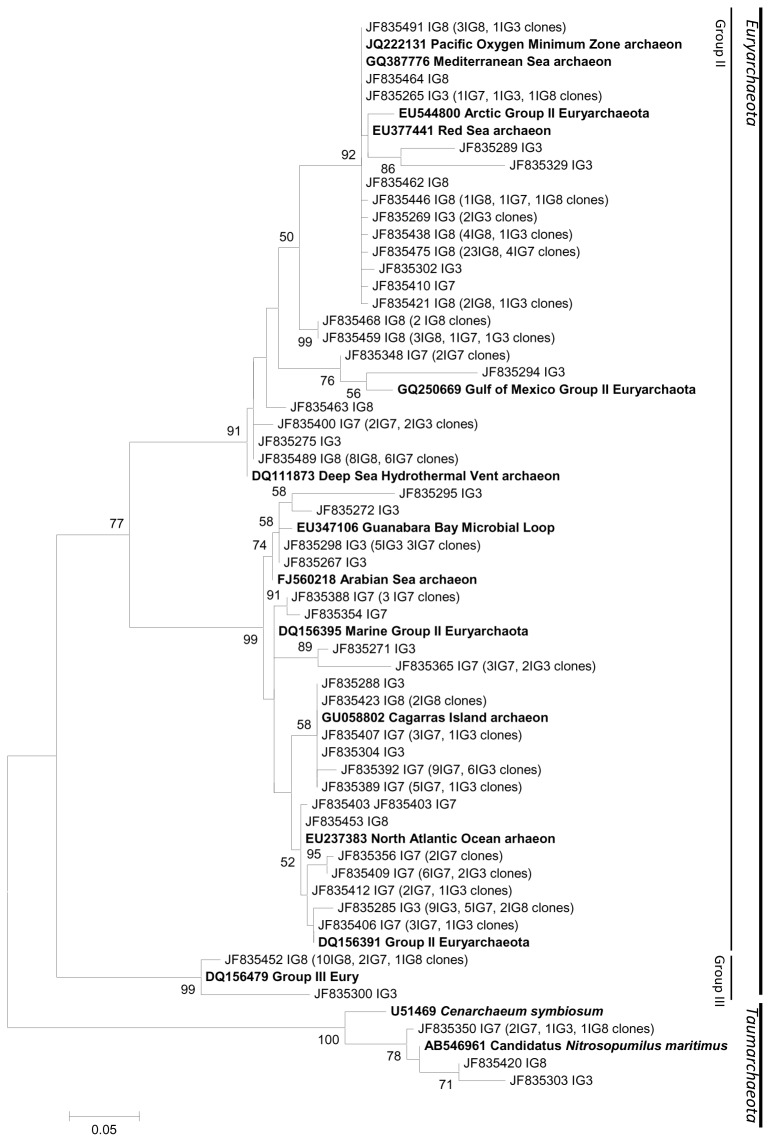
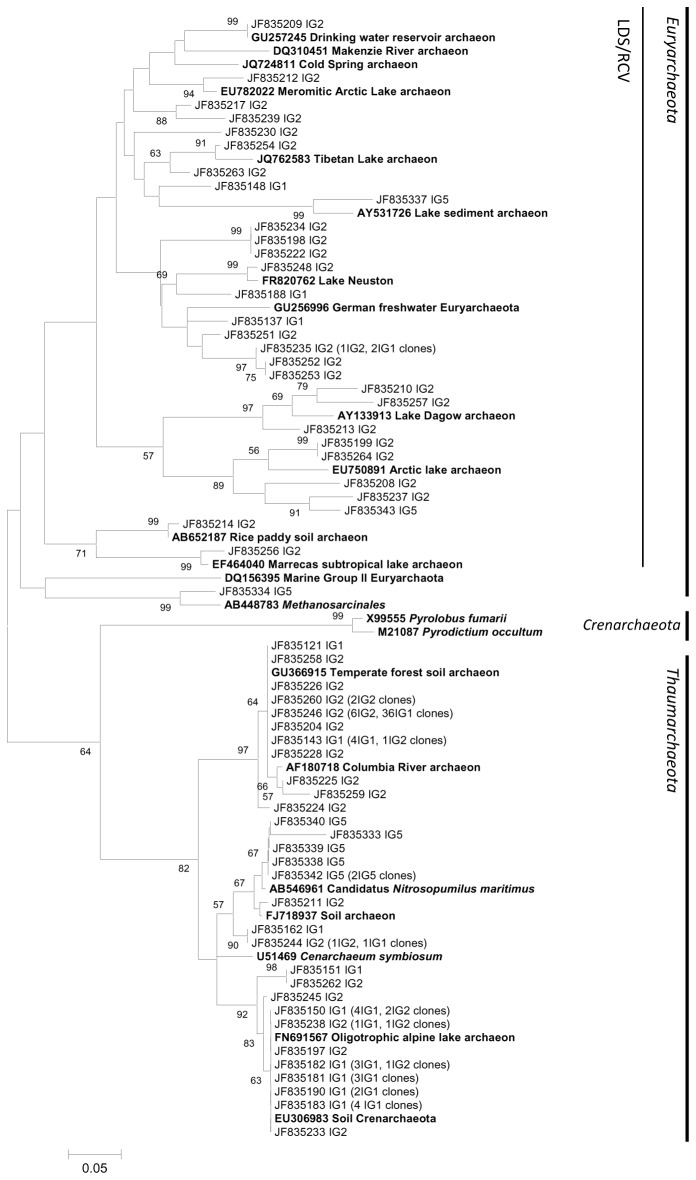
The Archaea domain is ubiquitously distributed and extremely diverse, however, environmental factors that shape archaeal community structure are not well known. Aquatic environments, including the water column and sediments harbor many new uncultured archaeal species from which metabolic and ecological roles remain elusive. Some environments are especially neglected in terms of archaeal diversity, as is the case of pristine tropical areas. Here we investigate the archaeal composition in marine and freshwater systems from Ilha Grande, a South Atlantic tropical environment. All sampled habitats showed high archaeal diversity. No OTUs were shared between freshwater, marine and mangrove sediment samples, yet these environments are interconnected and geographically close, indicating environment-specific community structuring. Group II Euryarchaeota was the main clade in marine samples, while the new putative phylum Thaumarchaeota and LDS/RCV Euryarchaeota dominated freshwaters. Group III Euryarchaeota, a rare clade, was also retrieved in reasonable abundance in marine samples. The archaeal community from mangrove sediments was composed mainly by members of mesophilic Crenarchaeota and by a distinct clade forming a sister-group to Crenarchaeota and Thaumarchaeota. Our results show strong environment-specific community structuring in tropical aquatic Archaea, as previously seen for Bacteria.
古菌域广泛分布且极其多样,但塑造古菌群落结构的环境因素还不太清楚。水生环境,包括水柱和沉积物,蕴藏着许多新的未培养古菌物种,其代谢和生态作用仍难以捉摸。一些环境在古菌多样性方面尤其被忽视,原始的热带地区就是这种情况。在这里,我们调查了南大西洋热带环境伊利亚格兰德岛的海洋和淡水系统中的古菌组成。所有采样的栖息地都表现出很高的古菌多样性。淡水、海洋和红树林沉积物样本之间没有共享的 OTU,但这些环境是相互连接且地理位置相近的,这表明存在特定于环境的群落结构。海洋样本中的主要类群是 II 组广古菌,而新的假定的泉古菌门和 LDS/RCV 广古菌则主导着淡水。在海洋样本中也以相当高的丰度回收了罕见的 III 组广古菌。红树林沉积物中的古菌群落主要由嗜中温的泉古菌门成员和一个与泉古菌门和泉古菌门形成姐妹群的独特分支组成。我们的结果表明,热带水生古菌存在强烈的特定于环境的群落结构,这与细菌之前的情况类似。