College of Life Sciences, Capital Normal University, Beijing 100048, China.
BMC Plant Biol. 2013 Oct 3;13:148. doi: 10.1186/1471-2229-13-148.
WRKY genes encode one of the most abundant groups of transcription factors in higher plants, and its members regulate important biological process such as growth, development, and responses to biotic and abiotic stresses. Although the soybean genome sequence has been published, functional studies on soybean genes still lag behind those of other species.
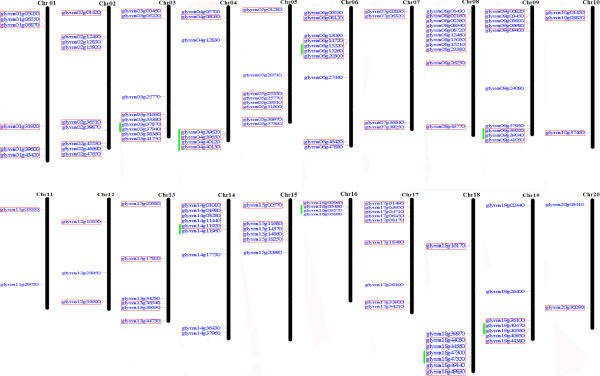
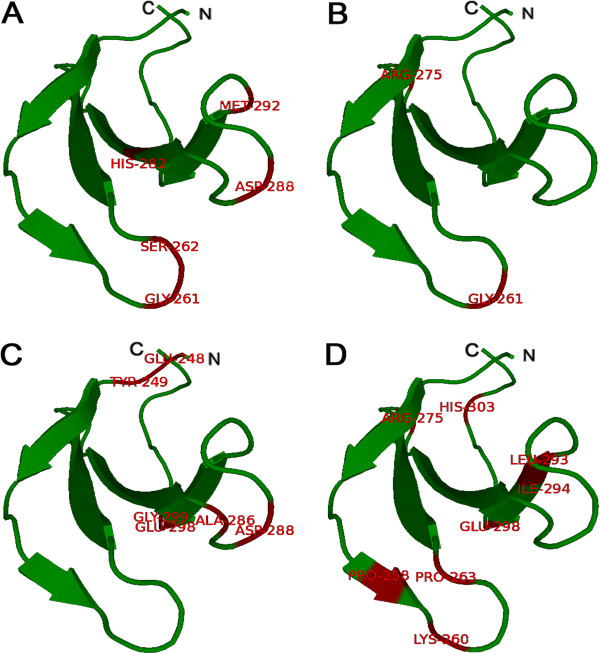
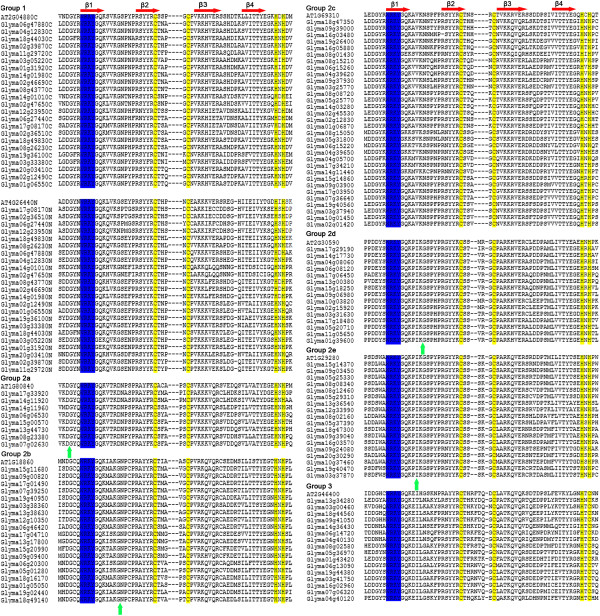
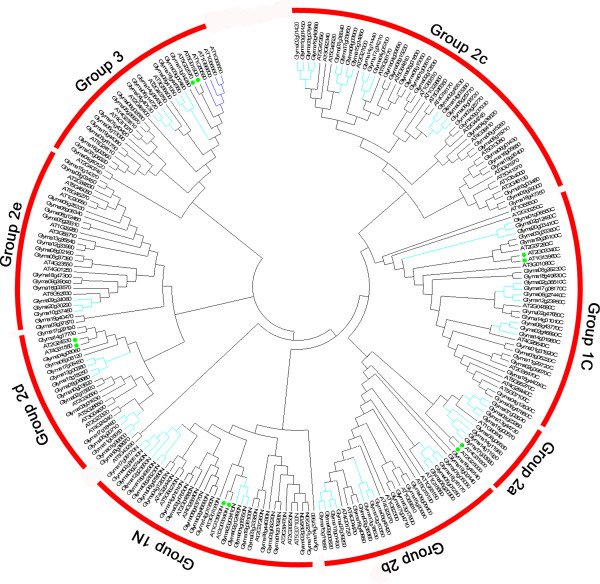
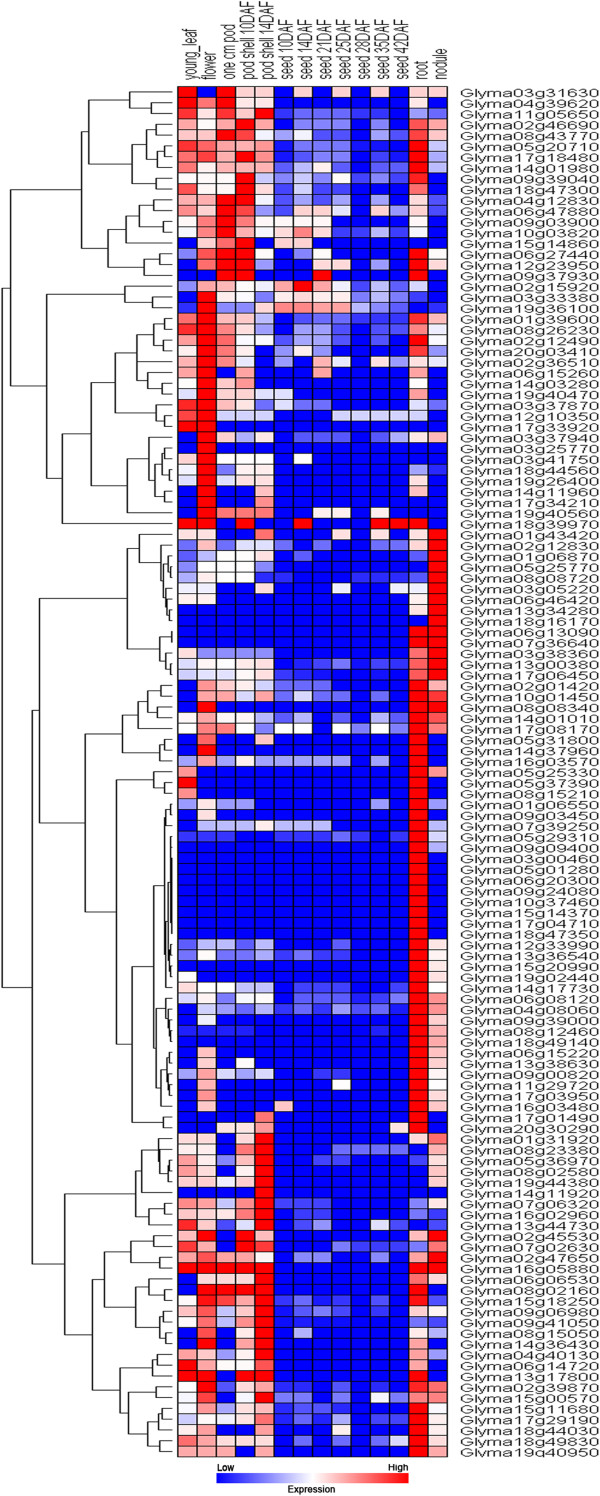
We identified a total of 133 WRKY members in the soybean genome. According to structural features of their encoded proteins and to the phylogenetic tree, the soybean WRKY family could be classified into three groups (groups I, II, and III). A majority of WRKY genes (76.7%; 102 of 133) were segmentally duplicated and 13.5% (18 of 133) of the genes were tandemly duplicated. This pattern was not apparent in Arabidopsis or rice. The transcriptome atlas revealed notable differential expression in either transcript abundance or in expression patterns under normal growth conditions, which indicated wide functional divergence in this family. Furthermore, some critical amino acids were detected using DIVERGE v2.0 in specific comparisons, suggesting that these sites have contributed to functional divergence among groups or subgroups. In addition, site model and branch-site model analyses of positive Darwinian selection (PDS) showed that different selection regimes could have affected the evolution of these groups. Sites with high probabilities of having been under PDS were found in groups I, II c, II e, and III. Together, these results contribute to a detailed understanding of the molecular evolution of the WRKY gene family in soybean.
In this work, all the WRKY genes, which were generated mainly through segmental duplication, were identified in the soybean genome. Moreover, differential expression and functional divergence of the duplicated WRKY genes were two major features of this family throughout their evolutionary history. Positive selection analysis revealed that the different groups have different evolutionary rates. Together, these results contribute to a detailed understanding of the molecular evolution of the WRKY gene family in soybean.
WRKY 基因编码高等植物中最丰富的转录因子之一,其成员调节生长、发育和对生物及非生物胁迫的反应等重要的生物学过程。尽管大豆基因组序列已经公布,但大豆基因的功能研究仍落后于其他物种。
我们在大豆基因组中总共鉴定出 133 个 WRKY 成员。根据其编码蛋白的结构特征和系统发育树,大豆 WRKY 家族可分为三组(I 组、II 组和 III 组)。大多数 WRKY 基因(76.7%;133 个中的 102 个)发生了片段复制,而 13.5%(133 个中的 18 个)的基因发生了串联复制。这种模式在拟南芥或水稻中并不明显。转录组图谱显示,在正常生长条件下,无论是转录丰度还是表达模式都存在显著差异,这表明该家族在功能上存在广泛的分化。此外,在特定比较中使用 DIVERGE v2.0 检测到一些关键氨基酸,表明这些位点对组间或亚组间的功能分化有贡献。此外,正达尔文选择(PDS)的位点模型和分支位点模型分析表明,不同的选择机制可能影响了这些组的进化。在 I 组、II c 组、II e 组和 III 组中发现了具有高概率经历正选择的位点。综上所述,这些结果有助于深入了解大豆 WRKY 基因家族的分子进化。
在这项工作中,主要通过片段复制产生的所有 WRKY 基因都在大豆基因组中被鉴定出来。此外,复制 WRKY 基因的差异表达和功能分化是该家族在其进化历史中的两个主要特征。正选择分析表明,不同的组具有不同的进化速率。综上所述,这些结果有助于深入了解大豆 WRKY 基因家族的分子进化。