Vyas Avani R, Singh Shivendra V
Department of Pharmacology and Chemical Biology, University of Pittsburgh School of Medicine, Pittsburgh, PA, USA.
Eur J Nutr. 2014 Apr;53(3):843-52. doi: 10.1007/s00394-013-0588-5. Epub 2013 Oct 4.
D,L-Sulforaphane (SFN) is a promising chemopreventive agent with in vivo efficacy against prostate cancer in experimental rodents. This study was undertaken to determine the role of vimentin and plasminogen activator inhibitor-1 (PAI-1) in anticancer effects of SFN.
Effect of SFN on levels of different proteins was determined by Western blotting or immunofluorescence microscopy. RNA interference of vimentin and PAI-1 was achieved by transient transfection. Apoptosis was quantified by flow cytometry. Transwell chambers were used to determine cell migration.
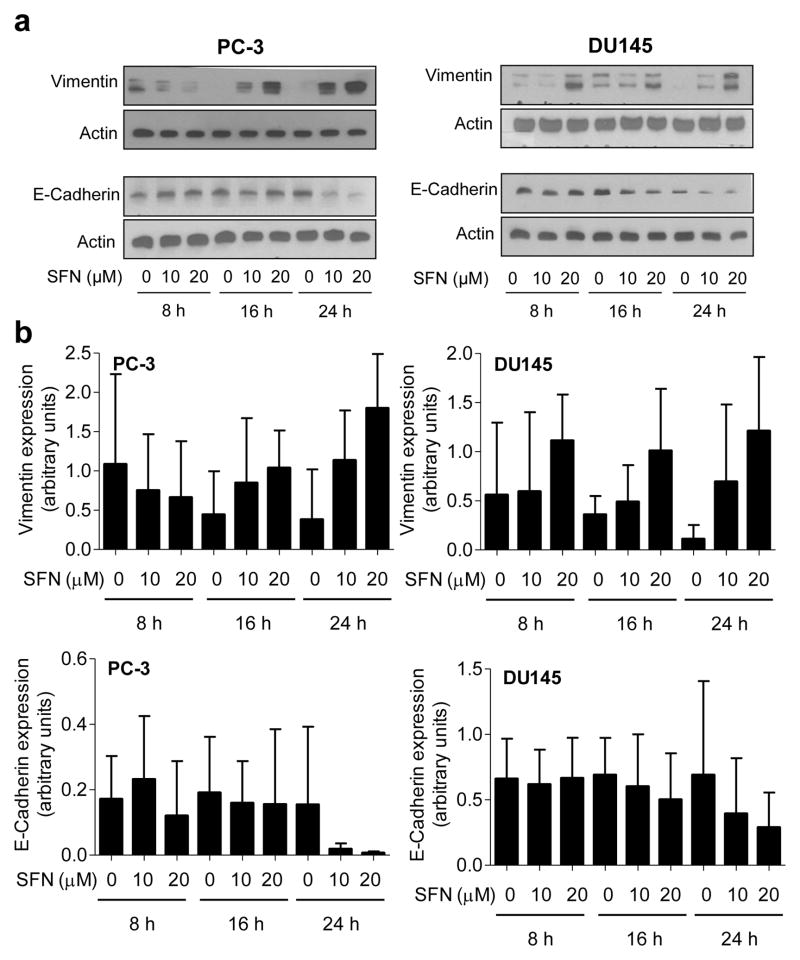
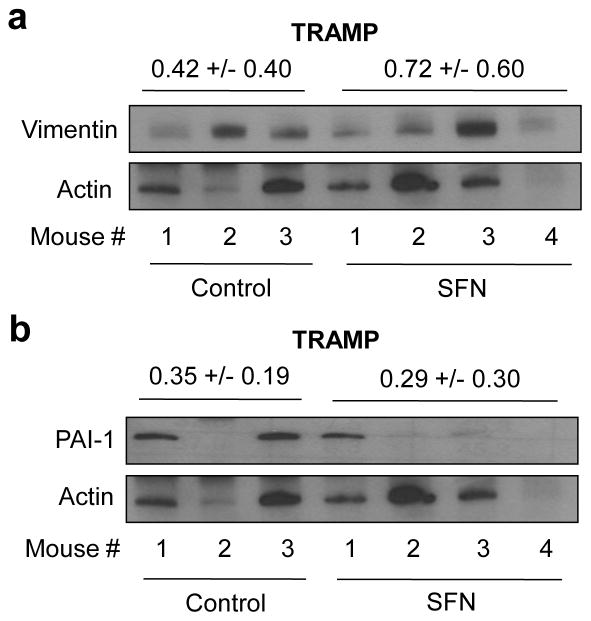
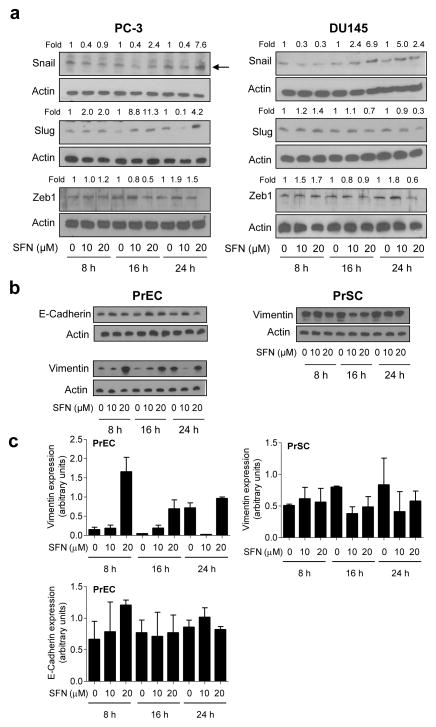
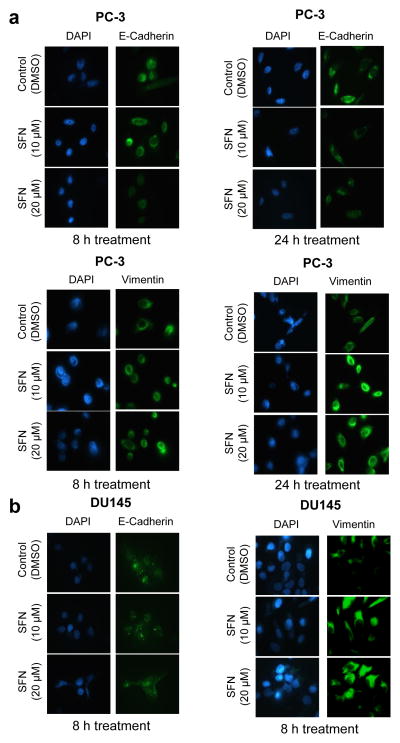
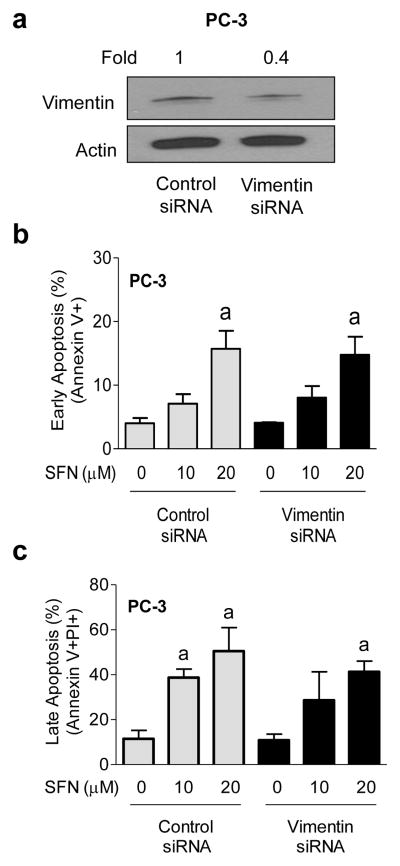
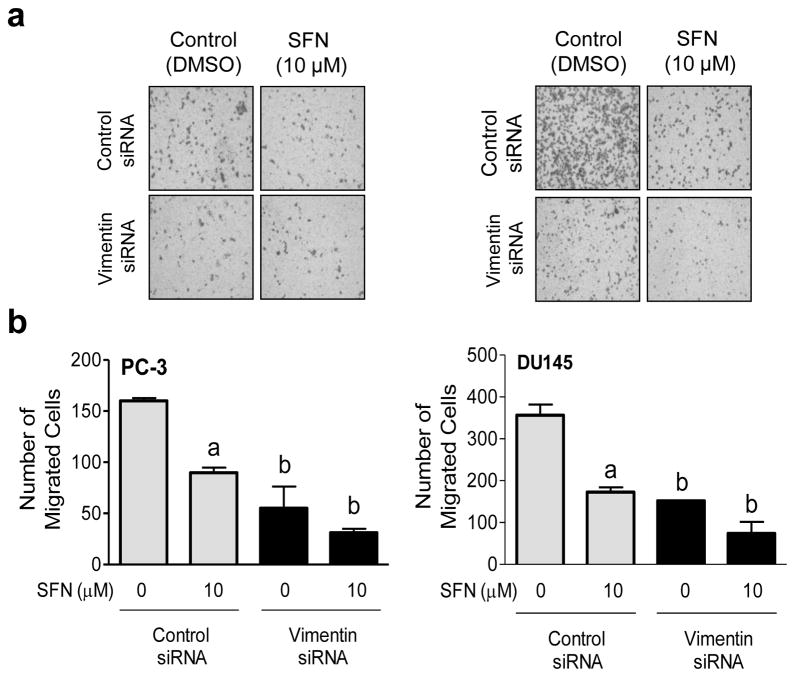
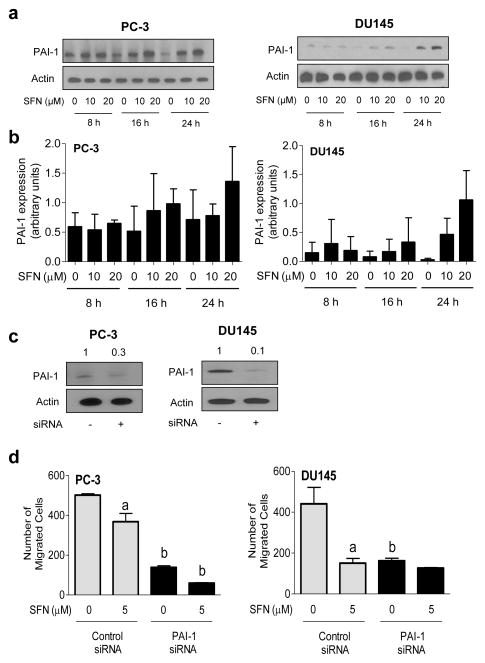
Exposure of PC-3 and DU145 human prostate cancer cells to SFN resulted in induction of vimentin protein, which was accompanied by down-regulation of E-cadherin protein expression. The SFN-mediated induction of vimentin was also observed in a normal human prostate epithelial cell line. RNA interference of vimentin did not have any appreciable effect on early or late apoptosis resulting from SFN exposure. On the other hand, SFN-mediated inhibition of PC-3 and DU145 cell migration was significantly augmented by knockdown of the vimentin protein. Knockdown of vimentin itself was inhibitory against cell migration. The SFN-treated cells also exhibited induction of PAI-1, which is an endogenous inhibitor of urokinase-type plasminogen activator system. Similar to vimentin, PAI-1 knockdown resulted in a modest augmentation of PC-3 cell migration inhibition by SFN. Tumors from SFN-treated transgenic adenocarcinoma of mouse prostate mice showed a 1.7-fold increase in vimentin protein level compared with control tumors.
The present study indicates that vimentin and PAI-1 inductions confer modest protection against SFN-mediated inhibition of prostate cancer cell migration.
D,L-萝卜硫素(SFN)是一种很有前景的化学预防剂,在实验啮齿动物体内对前列腺癌具有疗效。本研究旨在确定波形蛋白和纤溶酶原激活物抑制剂-1(PAI-1)在SFN抗癌作用中的作用。
通过蛋白质免疫印迹法或免疫荧光显微镜检测SFN对不同蛋白质水平的影响。通过瞬时转染实现波形蛋白和PAI-1的RNA干扰。通过流式细胞术对细胞凋亡进行定量分析。使用Transwell小室测定细胞迁移。
PC-3和DU145人前列腺癌细胞暴露于SFN会导致波形蛋白蛋白的诱导,同时伴有E-钙黏蛋白蛋白表达的下调。在正常人前列腺上皮细胞系中也观察到SFN介导的波形蛋白诱导。波形蛋白的RNA干扰对SFN暴露引起的早期或晚期凋亡没有任何明显影响。另一方面,波形蛋白蛋白的敲低显著增强了SFN介导的对PC-3和DU145细胞迁移的抑制作用。波形蛋白本身的敲低对细胞迁移具有抑制作用。经SFN处理的细胞还表现出PAI-1的诱导,PAI-1是尿激酶型纤溶酶原激活系统的内源性抑制剂。与波形蛋白类似,PAI-1的敲低导致SFN对PC-3细胞迁移抑制作用的适度增强。与对照肿瘤相比,经SFN处理的转基因小鼠前列腺腺癌小鼠的肿瘤中波形蛋白蛋白水平增加了1.7倍。
本研究表明,波形蛋白和PAI-1的诱导对SFN介导的前列腺癌细胞迁移抑制具有适度的保护作用。