Centre for International Mental Health, Melbourne School of Population and Global Health, The University of Melbourne, Melbourne, Australia.
Int J Ment Health Syst. 2013 Oct 7;7(1):23. doi: 10.1186/1752-4458-7-23.
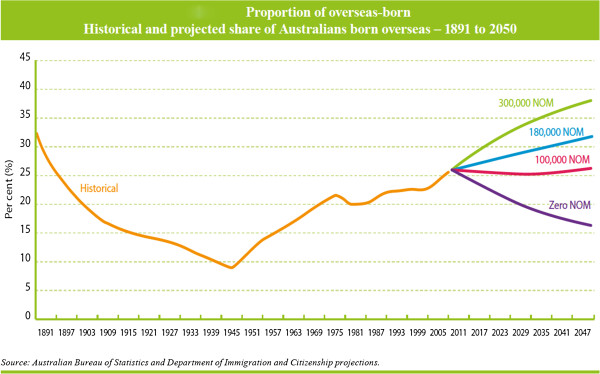
Cultural and linguistic diversity is a core feature of the Australian population and a valued element of national identity. The proportion of the population that will be overseas-born is projected to be 32% by 2050. While a very active process of mental health system reform has been occurring for more than two decades - at national and state and territory levels - the challenges presented by cultural and linguistic diversity have not been effectively met. A key area in which this is particularly an issue is in the collection, analysis and reporting of mental health data that reflect the reality of population diversity. The purpose of this study was to examine: what is known about the mental health of immigrant and refugee communities in Australia; whether Australian mental health research pays adequate attention to the fact of cultural and linguistic diversity in the Australian population; and whether national mental health data collections support evidence-informed mental health policy and practice and mental health reform in multicultural Australia.
The study consisted of three components - a brief review of what is known about mental health in, and mental health service use by, immigrant and refugee communities; an examination of national data collections to determine the extent to which relevant cultural variables are included in the collections; and an examination of Australian research to determine the extent to which immigrant and refugee communities are included as participants in such research.
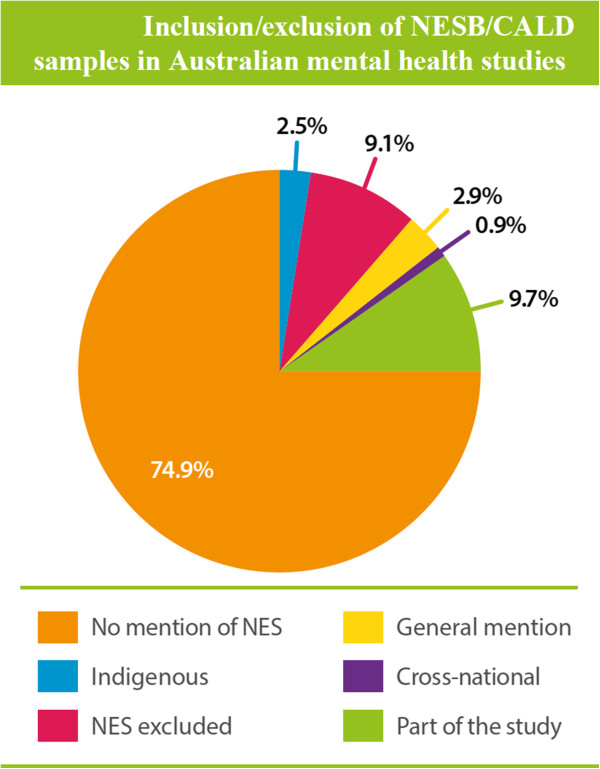
The review of Australian research on mental health of immigrant and refugee communities and their patterns of mental health service use generated findings that are highly variable. The work is fragmented and usually small-scale. There are multiple studies of some immigrant and refugee communities and there are no studies of others. Although there is a broadly consistent pattern of lower rates of utilisation of specialist public mental health services by immigrants and refugees the absence of adequate population epidemiological data prevents judgments about whether the observed patterns constitute under-utilisation. There are virtually no data on quality of service outcomes. The examination of national data collections revealed multiple gaps in these data collections. The review of papers published in four key Australian journals to determine whether immigrants and refugees are included in mental health research studies revealed a high rate (9.1%) of specific exclusion from studies (usually due to low English fluency) and a much higher rate of general neglect of the issue of population diversity in study design and reporting.
While there are many positive statements of policy intent in relation to immigrant and refugee communities in national mental health policies and strategies there is virtually no reporting by Commonwealth or State and Territory governments of whether policies that are relevant to immigrant and refugee communities are effectively implemented. It is not possible, on the basis of the data collected, to determine whether immigrant and refugee communities are benefiting from the mental health system reforms that are being actively carried out. The majority of Australian mental health research does not adequately include immigrant and refugee samples. On the basis of the findings of this study eight strategies have been recommended that will contribute to the development of a culture of inclusion of all Australians in the national mental health research enterprise.
文化和语言多样性是澳大利亚人口的核心特征,也是国家认同的一个有价值的元素。到 2050 年,预计将有 32%的人口是海外出生的。尽管国家和州及地区各级一直在积极进行精神卫生系统改革,但文化和语言多样性带来的挑战尚未得到有效应对。在收集、分析和报告反映人口多样性的精神卫生数据方面,这是一个特别存在问题的关键领域。本研究旨在探讨:澳大利亚移民和难民社区的精神卫生状况如何;澳大利亚精神卫生研究在多大程度上关注澳大利亚人口中的文化和语言多样性这一事实;以及国家精神卫生数据收集在多大程度上支持循证精神卫生政策和实践以及多元文化澳大利亚的精神卫生改革。
该研究由三个部分组成——简要回顾移民和难民社区的精神卫生状况以及他们对精神卫生服务的使用情况;检查国家数据收集,以确定相关文化变量在收集数据中的纳入程度;并检查澳大利亚的研究,以确定移民和难民社区在这些研究中作为参与者的纳入程度。
对澳大利亚关于移民和难民社区精神卫生状况及其精神卫生服务使用模式的研究进行的审查产生了结果,这些结果差异很大。这项工作是零散的,通常规模较小。一些移民和难民社区有多项研究,而另一些社区则没有研究。尽管移民和难民利用专业公共精神卫生服务的比例普遍较低,但由于缺乏足够的人口流行病学数据,无法判断观察到的模式是否构成利用不足。关于服务质量结果的数据几乎不存在。对国家数据收集的检查发现,这些数据收集存在多个空白。对在四个澳大利亚主要期刊上发表的论文进行审查,以确定移民和难民是否被纳入精神卫生研究,结果显示,由于英语流利程度低等原因,他们在研究中被明确排除在外的比例很高(9.1%),而在研究设计和报告中忽略人口多样性问题的比例则高得多。
尽管国家精神卫生政策和战略中有许多与移民和难民社区相关的积极政策意向声明,但联邦或州及地区政府几乎没有报告哪些与移民和难民社区相关的政策得到有效执行。根据收集的数据,无法确定移民和难民社区是否从正在积极进行的精神卫生系统改革中受益。大多数澳大利亚精神卫生研究没有充分纳入移民和难民样本。基于本研究的发现,提出了八项战略,这将有助于在国家精神卫生研究事业中形成一种包容所有澳大利亚人的文化。