State Key Laboratory of Tree Genetics and Breeding (Northeast Forestry University), 26 Hexing Road, 150040 Harbin, China.
BMC Plant Biol. 2013 Oct 4;13:151. doi: 10.1186/1471-2229-13-151.
Tamarix spp. are woody halophyte, which are very tolerant to abiotic stresses such as salinity and drought, but little is known about their specific stress response systems. Basic leucine zipper proteins (bZIPs) play important roles in the ability of plants to withstand adverse environmental conditions. However, their exact roles in abiotic stress tolerance are still not fully known. In the current study, we functionally characterized a bZIP gene (ThbZIP1) from Tamarix hispida in response to abiotic stresses.
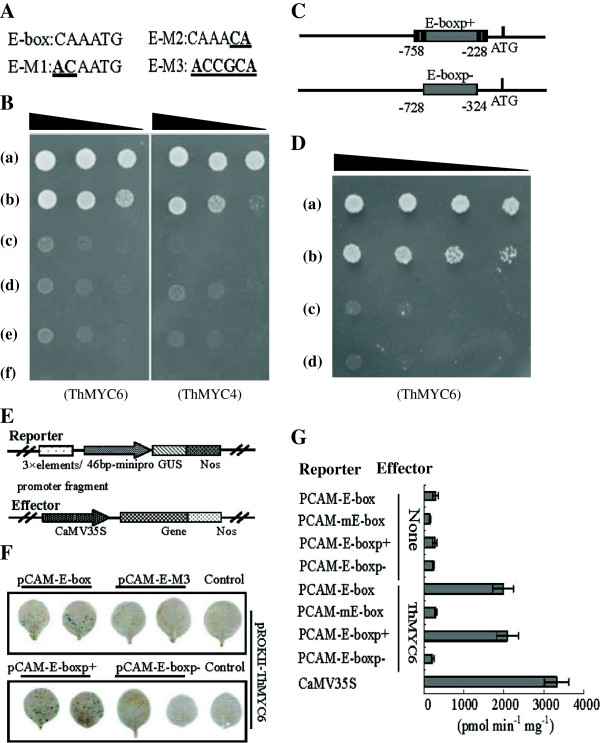
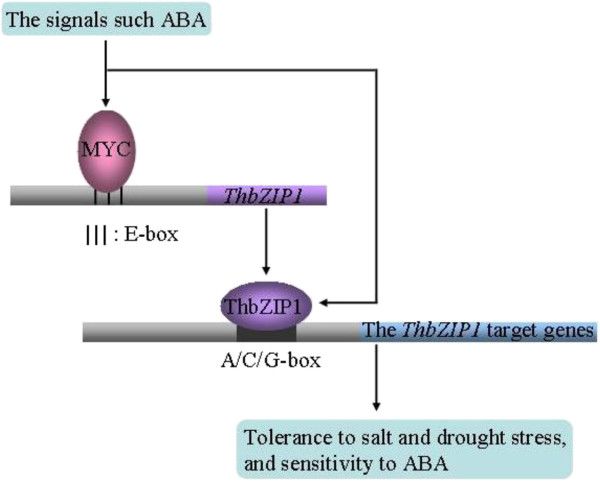
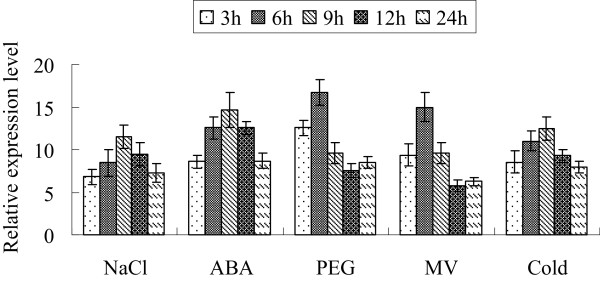
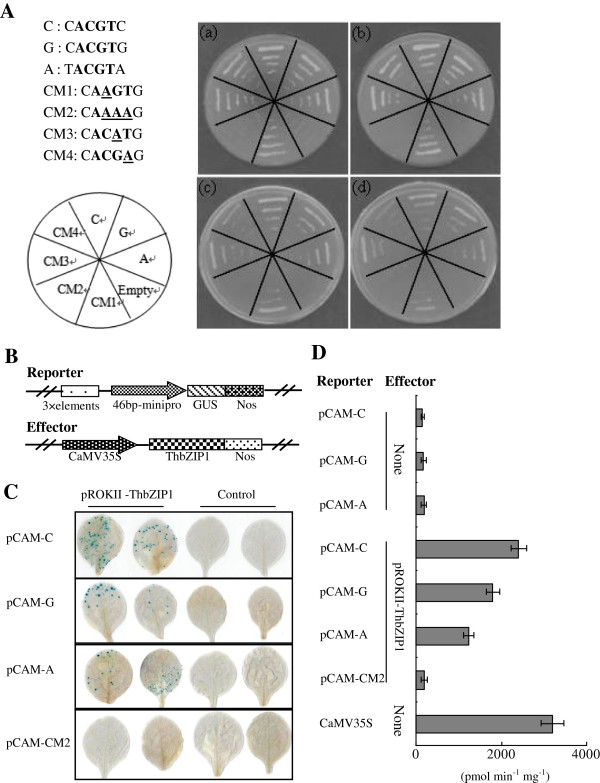
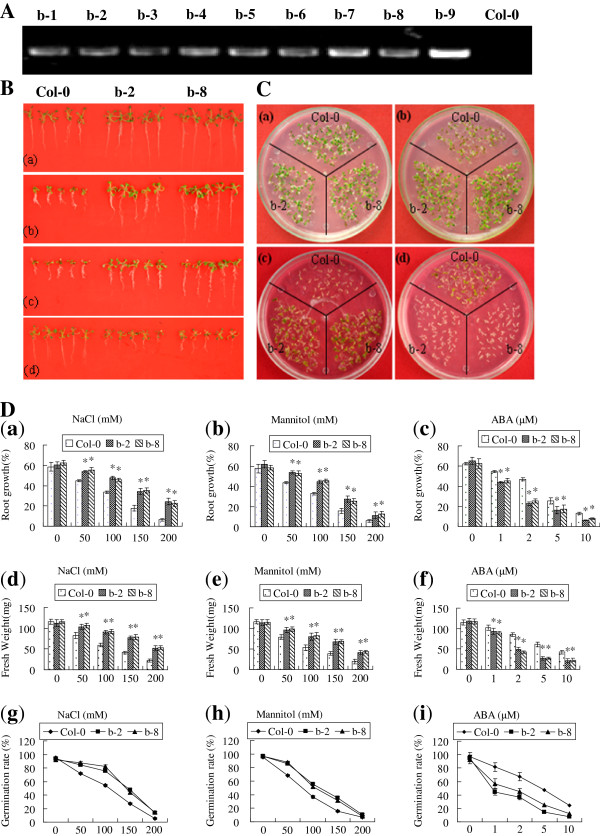
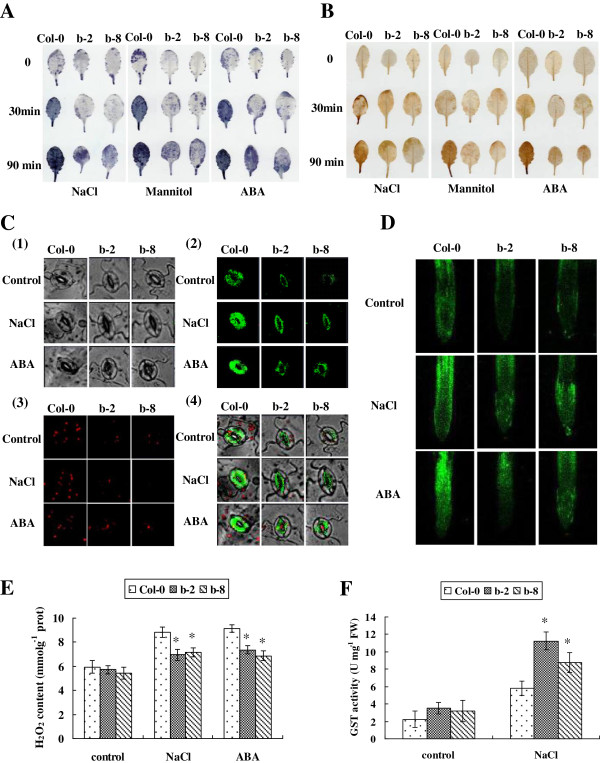
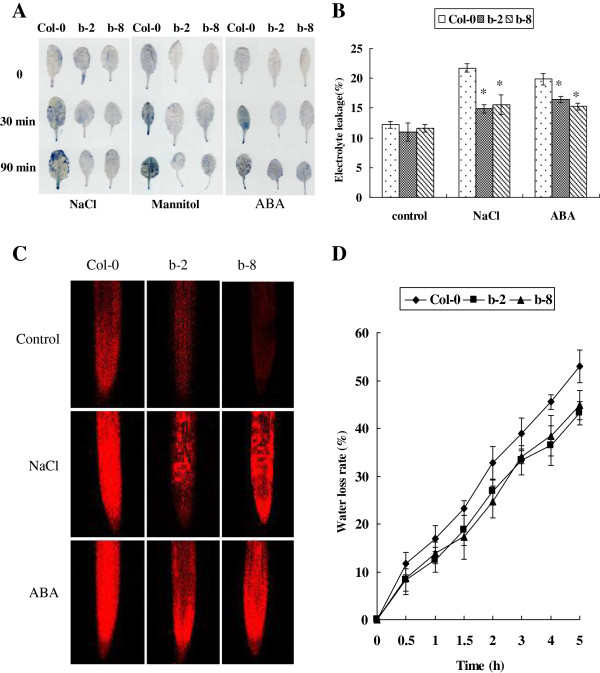
We addressed the regulatory network of ThbZIP1 in three levels, i.e. its upstream regulators, the cis-acting elements recognized by ThbZIP1, and its downstream target genes. Two MYCs were found to bind to E-box, in the promoter of ThbZIP1 to activate its expression. Expression of ThbZIP1 is induced by ABA, salt, drought, methyl viologen and cold. ThbZIP1 can specifically bind to ACGT elements, with the highest binding affinity to the C-box, followed by the G-box and lastly the A-box. Compared with wild-type (Col-0) Arabidopsis, transgenic plants expressing ThbZIP1 had an increased tolerance to drought and salt, but had an increased sensitivity to ABA during seed germination and root growth; meanwhile, ROS level, cell death and water loss rate in transgenic plants were significantly reduced. Microarray analyses showed that many ROS scavenging genes were up-regulated by ThbZIP1 under salt stress conditions.
Based on these data, we suggest that ThbZIP1 confers abiotic stress tolerance through activating stress tolerance genes to modulate ROS scavenging ability and other physiological changes involved in stress tolerance, and plays an important role in the ABA-mediated stress response of T. hispida.
柽柳属植物是木本盐生植物,对盐度和干旱等非生物胁迫具有很强的耐受性,但它们的特定胁迫响应系统知之甚少。碱性亮氨酸拉链蛋白(bZIP)在植物适应不利环境条件的能力中发挥着重要作用。然而,它们在非生物胁迫耐受性中的确切作用仍不完全清楚。在本研究中,我们从柽柳中鉴定了一个 bZIP 基因(ThbZIP1),并研究了其对非生物胁迫的响应。
我们从三个水平上研究了 ThbZIP1 的调控网络,即其上游调节因子、ThbZIP1 识别的顺式作用元件及其下游靶基因。发现两个 MYC 结合到 E-box 上,激活了 ThbZIP1 的表达。ThbZIP1 的表达受 ABA、盐、干旱、甲基紫精和冷胁迫诱导。ThbZIP1 可以特异性地结合到 ACGT 元件上,与 C-box 的结合亲和力最高,其次是 G-box,最后是 A-box。与野生型(Col-0)拟南芥相比,表达 ThbZIP1 的转基因植物在干旱和盐胁迫下具有更高的耐受性,但在种子萌发和根生长过程中对 ABA 更为敏感;同时,转基因植物的 ROS 水平、细胞死亡和失水量显著降低。微阵列分析表明,在盐胁迫条件下,许多 ROS 清除基因被 ThbZIP1 上调。
基于这些数据,我们认为 ThbZIP1 通过激活耐逆基因来调节 ROS 清除能力和其他与耐逆相关的生理变化,从而赋予植物非生物胁迫耐受性,在柽柳的 ABA 介导的胁迫响应中发挥重要作用。