Smith Wade D, Miller Jessica A, Heppell Selina S
Department of Fisheries and Wildlife, Hatfield Marine Science Center, Oregon State University, Newport, Oregon, United States of America.
PLoS One. 2013 Oct 1;8(10):e62423. doi: 10.1371/journal.pone.0062423. eCollection 2013.
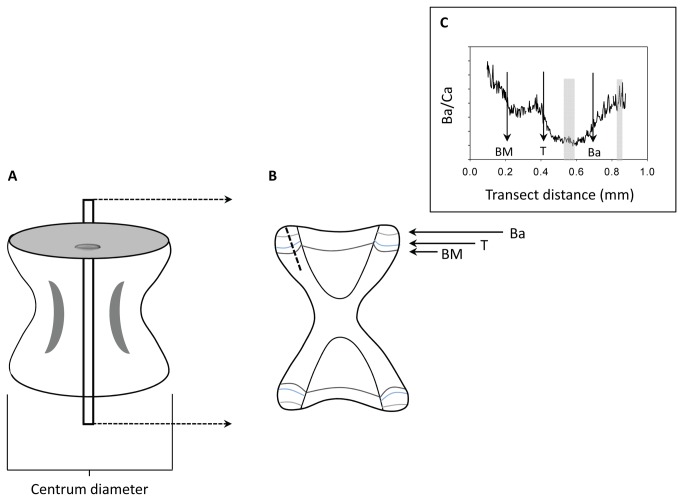
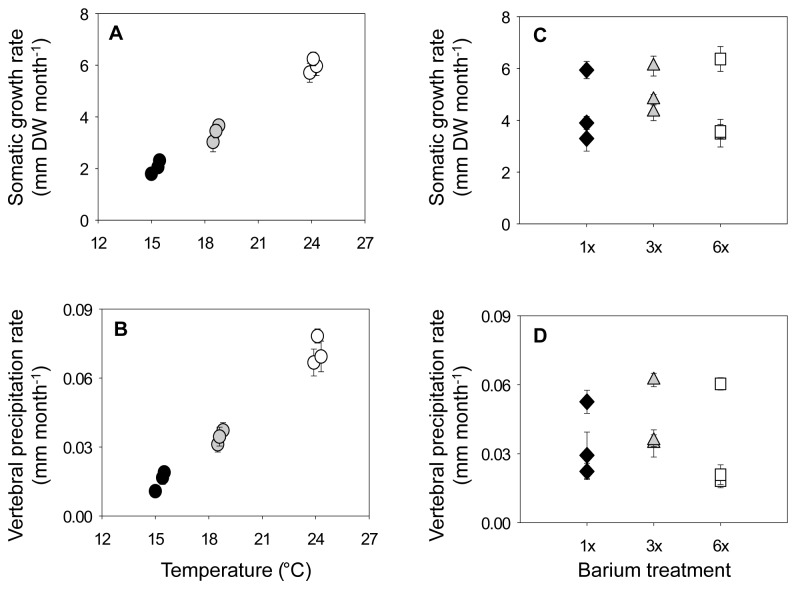
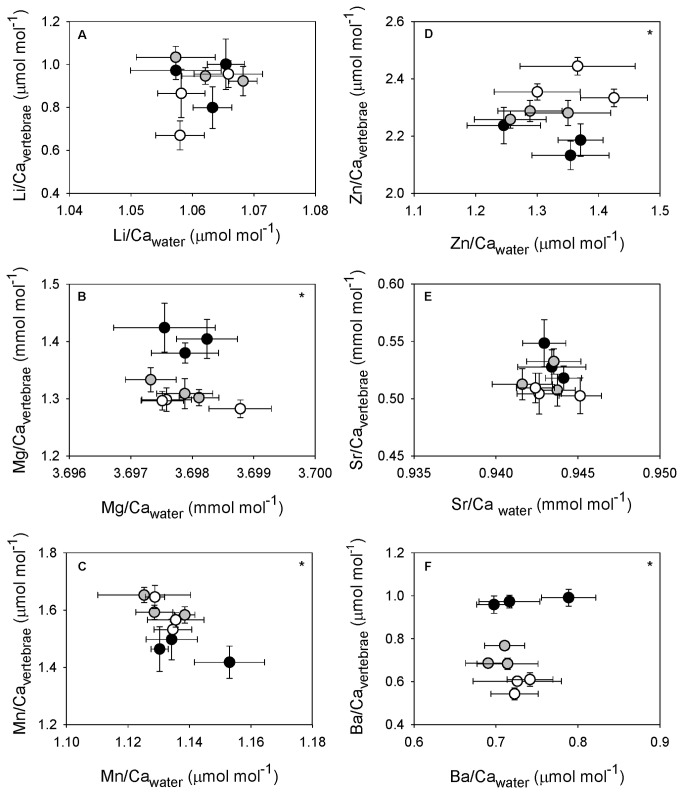
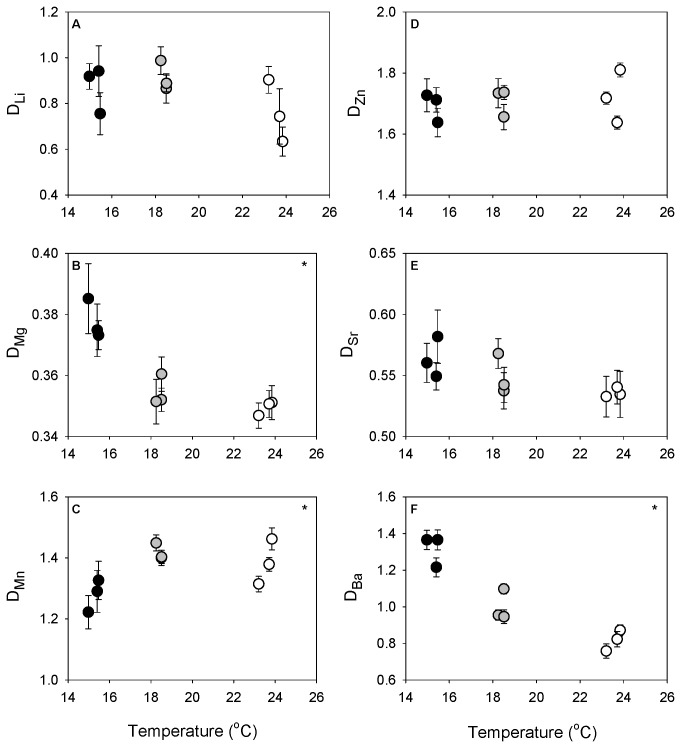
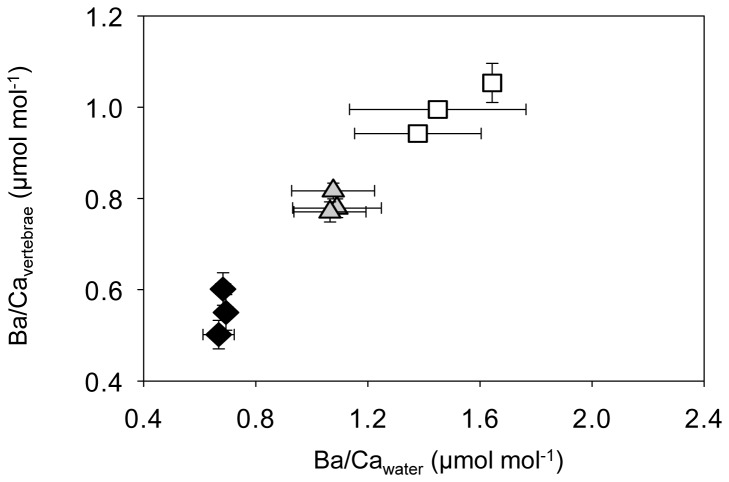
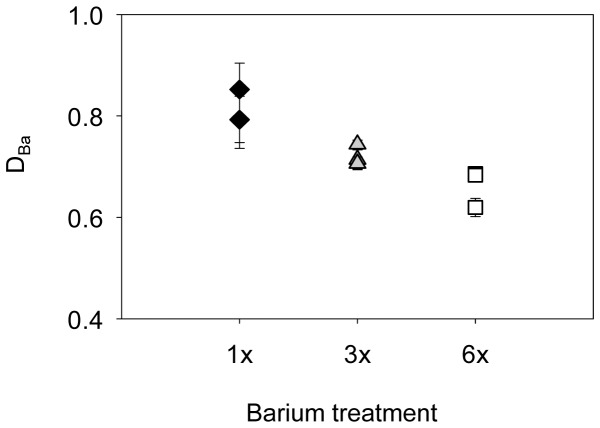
Differences in the chemical composition of calcified skeletal structures (e.g. shells, otoliths) have proven useful for reconstructing the environmental history of many marine species. However, the extent to which ambient environmental conditions can be inferred from the elemental signatures within the vertebrae of elasmobranchs (sharks, skates, rays) has not been evaluated. To assess the relationship between water and vertebral elemental composition, we conducted two laboratory studies using round stingrays, Urobatis halleri, as a model species. First, we examined the effects of temperature (16°, 18°, 24°C) on vertebral elemental incorporation (Li/Ca, Mg/Ca, Mn/Ca, Zn/Ca, Sr/Ca, Ba/Ca). Second, we tested the relationship between water and subsequent vertebral elemental composition by manipulating dissolved barium concentrations (1x, 3x, 6x). We also evaluated the influence of natural variation in growth rate on elemental incorporation for both experiments. Finally, we examined the accuracy of classifying individuals to known environmental histories (temperature and barium treatments) using vertebral elemental composition. Temperature had strong, negative effects on the uptake of magnesium (DMg) and barium (DBa) and positively influenced manganese (DMn) incorporation. Temperature-dependent responses were not observed for lithium and strontium. Vertebral Ba/Ca was positively correlated with ambient Ba/Ca. Partition coefficients (DBa) revealed increased discrimination of barium in response to increased dissolved barium concentrations. There were no significant relationships between elemental incorporation and somatic growth or vertebral precipitation rates for any elements except Zn. Relationships between somatic growth rate and DZn were, however, inconsistent and inconclusive. Variation in the vertebral elemental signatures of U. halleri reliably distinguished individual rays from each treatment based on temperature (85%) and Ba exposure (96%) history. These results support the assumption that vertebral elemental composition reflects the environmental conditions during deposition and validates the use of vertebral elemental signatures as natural markers in an elasmobranch. Vertebral elemental analysis is a promising tool for the study of elasmobranch population structure, movement, and habitat use.
钙化骨骼结构(如贝壳、耳石)的化学成分差异已被证明有助于重建许多海洋物种的环境历史。然而,从软骨鱼类(鲨鱼、鳐鱼、魟)椎骨内的元素特征推断周围环境条件的程度尚未得到评估。为了评估水与椎骨元素组成之间的关系,我们以圆斑魟(Urobatis halleri)作为模式物种进行了两项实验室研究。首先,我们研究了温度(16°、18°、24°C)对椎骨元素掺入(锂/钙、镁/钙、锰/钙、锌/钙、锶/钙、钡/钙)的影响。其次,我们通过控制溶解钡浓度(1倍、3倍、6倍)来测试水与随后椎骨元素组成之间的关系。我们还评估了两个实验中生长速率的自然变化对元素掺入的影响。最后,我们使用椎骨元素组成来检验将个体分类到已知环境历史(温度和钡处理)的准确性。温度对镁(Δ镁)和钡(Δ钡)的摄取有强烈的负面影响,对锰(Δ锰)的掺入有正面影响。未观察到锂和锶的温度依赖性反应。椎骨钡/钙与周围环境钡/钙呈正相关。分配系数(Δ钡)显示,随着溶解钡浓度的增加,钡的区分度增加。除锌外,任何元素的元素掺入与体细胞生长或椎骨沉淀速率之间均无显著关系。然而,体细胞生长速率与Δ锌之间的关系并不一致且无定论。基于温度(85%)和钡暴露(96%)历史,圆斑魟椎骨元素特征的变化能够可靠地区分各处理组中的个体魟。这些结果支持了椎骨元素组成反映沉积过程中环境条件的假设,并验证了使用椎骨元素特征作为软骨鱼类自然标记的有效性。椎骨元素分析是研究软骨鱼类种群结构、运动和栖息地利用的一种有前景的工具。