HGF MPG Group for Deep Sea Ecology and Technology, Max Planck Institute for Marine Microbiology, Bremen, Germany ; Department of Molecular Ecology, Max Planck Institute for Marine Microbiology, Bremen, Germany.
PLoS One. 2013 Sep 30;8(9):e72627. doi: 10.1371/journal.pone.0072627. eCollection 2013.
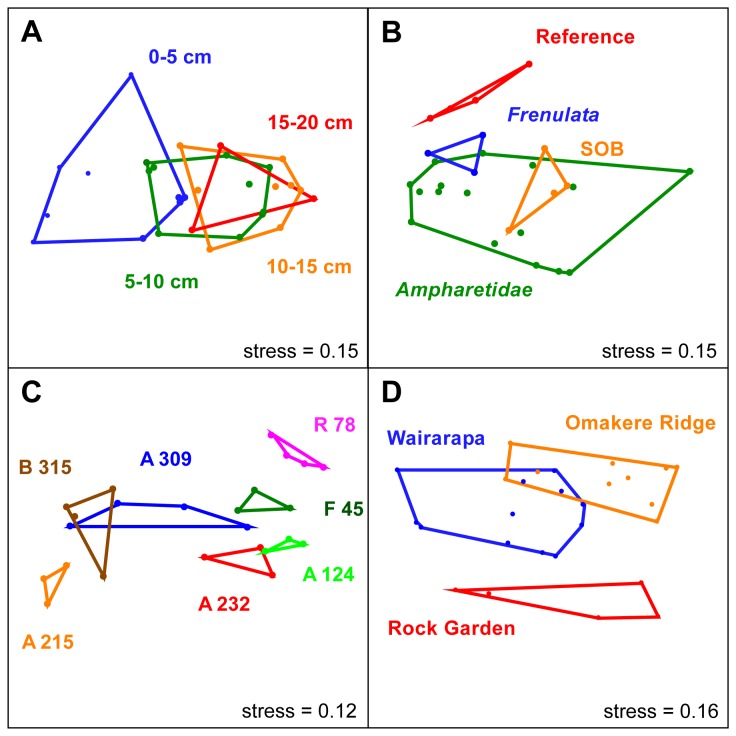
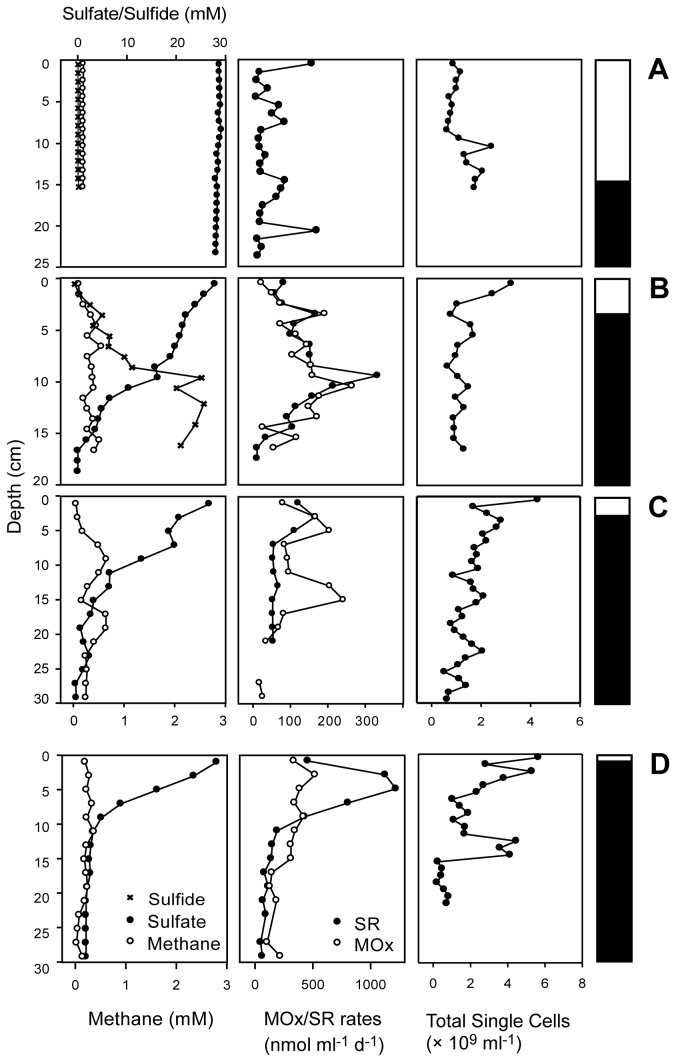
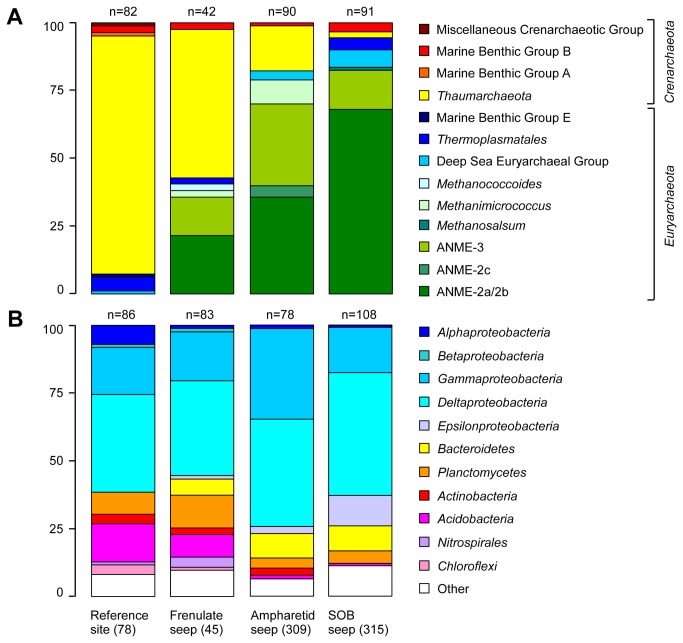
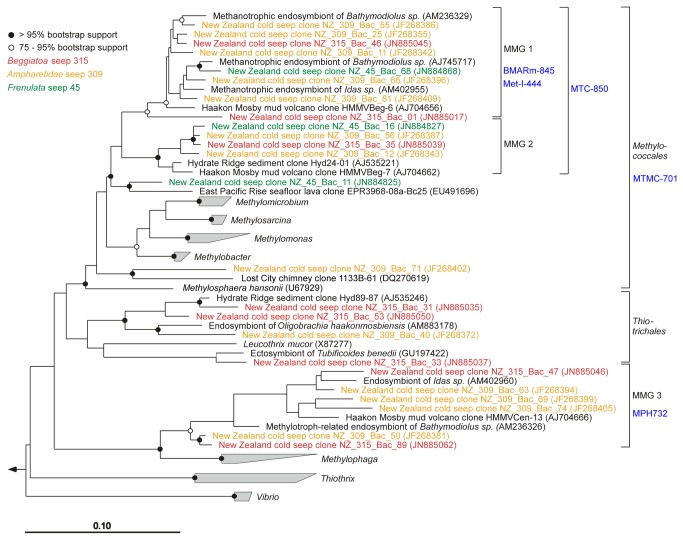
The methane-emitting cold seeps of Hikurangi margin (New Zealand) are among the few deep-sea chemosynthetic ecosystems of the Southern Hemisphere known to date. Here we compared the biogeochemistry and microbial communities of a variety of Hikurangi cold seep ecosystems. These included highly reduced seep habitats dominated by bacterial mats, partially oxidized habitats populated by heterotrophic ampharetid polychaetes and deeply oxidized habitats dominated by chemosynthetic frenulate tubeworms. The ampharetid habitats were characterized by a thick oxic sediment layer that hosted a diverse and biomass-rich community of aerobic methanotrophic Gammaproteobacteria. These bacteria consumed up to 25% of the emanating methane and clustered within three deep-branching groups named Marine Methylotrophic Group (MMG) 1-3. MMG1 and MMG2 methylotrophs belong to the order Methylococcales, whereas MMG3 methylotrophs are related to the Methylophaga. Organisms of the groups MMG1 and MMG3 are close relatives of chemosynthetic endosymbionts of marine invertebrates. The anoxic sediment layers of all investigated seeps were dominated by anaerobic methanotrophic archaea (ANME) of the ANME-2 clade and sulfate-reducing Deltaproteobacteria. Microbial community analysis using Automated Ribosomal Intergenic Spacer Analysis (ARISA) showed that the different seep habitats hosted distinct microbial communities, which were strongly influenced by the seep-associated fauna and the geographic location. Despite outstanding features of Hikurangi seep communities, the organisms responsible for key ecosystem functions were similar to those found at seeps worldwide. This suggests that similar types of biogeochemical settings select for similar community composition regardless of geographic distance. Because ampharetid polychaetes are widespread at cold seeps the role of aerobic methanotrophy may have been underestimated in seafloor methane budgets.
豪卡雷兰边缘(新西兰)的甲烷排放冷渗流是目前已知的南半球少数几个深海化能合成生态系统之一。在这里,我们比较了各种豪卡雷兰冷渗流生态系统的生物地球化学和微生物群落。这些生态系统包括高度还原的渗流生境,主要由细菌垫主导;部分氧化的生境,由异养的 ampharetid 多毛类动物占据;以及由化能合成 frenulate 管蠕虫主导的深度氧化生境。ampharetid 生境的特点是有一层厚厚的含氧沉积物,其中栖息着多种多样且生物量丰富的好氧甲烷营养型γ变形菌群落。这些细菌消耗了排放出的甲烷的 25%,并聚类为三个深分枝群,分别命名为 Marine Methylotrophic Group (MMG) 1-3。MMG1 和 MMG2 甲基营养菌属于甲基球菌目,而 MMG3 甲基营养菌与甲基噬菌目有关。这些 MMG1 和 MMG3 群体的生物体是海洋无脊椎动物化能共生内共生体的近亲。所有调查的冷渗流的缺氧沉积物层主要由 ANME-2 分支的厌氧甲烷营养型古菌 (ANME) 和硫酸盐还原的 δ变形菌门 (Deltaproteobacteria) 主导。使用自动核糖体基因间隔区分析 (ARISA) 的微生物群落分析表明,不同的渗流生境拥有独特的微生物群落,这些群落受到渗流相关动物群和地理位置的强烈影响。尽管豪卡雷兰渗流群落具有显著特征,但负责关键生态系统功能的生物体与在全球范围内发现的渗流生物相似。这表明,无论地理距离如何,类似的生物地球化学环境选择了相似的群落组成。由于 ampharetid 多毛类动物在冷渗流中广泛存在,因此好氧甲烷营养作用的作用可能在海底甲烷预算中被低估了。