Scanlan Leona D, Reed Robert B, Loguinov Alexandre V, Antczak Philipp, Tagmount Abderrahmane, Aloni Shaul, Nowinski Daniel Thomas, Luong Pauline, Tran Christine, Karunaratne Nadeeka, Pham Don, Lin Xin Xin, Falciani Francesco, Higgins Christopher P, Ranville James F, Vulpe Chris D, Gilbert Benjamin
Department of Nutritional Sciences and Toxicology, University of California Berkeley , 119 Morgan Hall, Berkeley, California 94720, United States.
ACS Nano. 2013 Dec 23;7(12):10681-94. doi: 10.1021/nn4034103. Epub 2013 Dec 5.
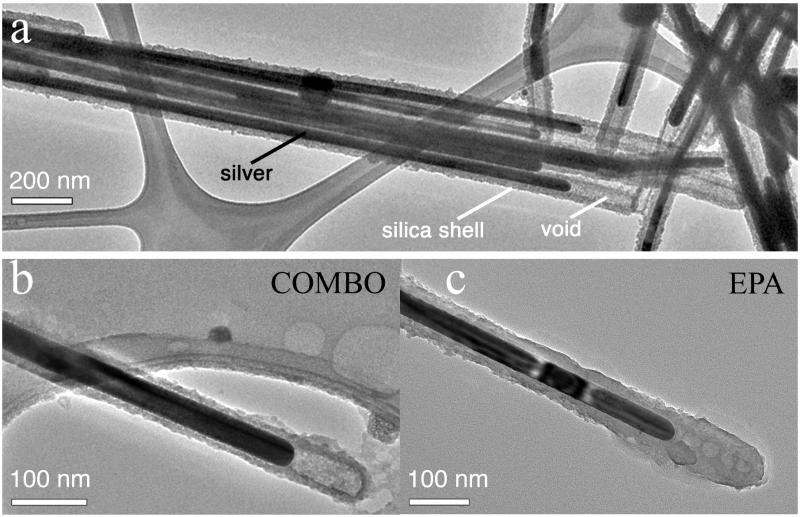
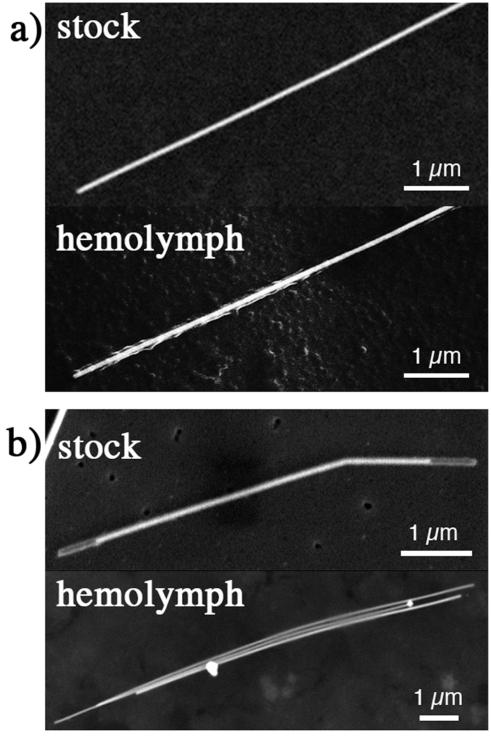
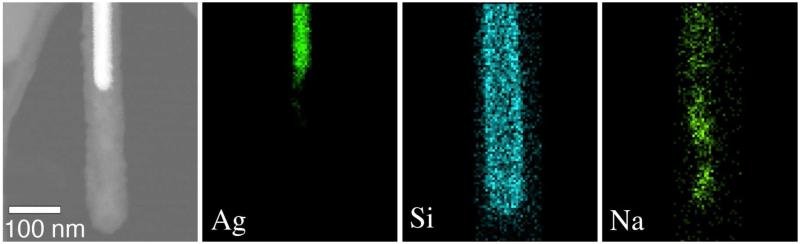
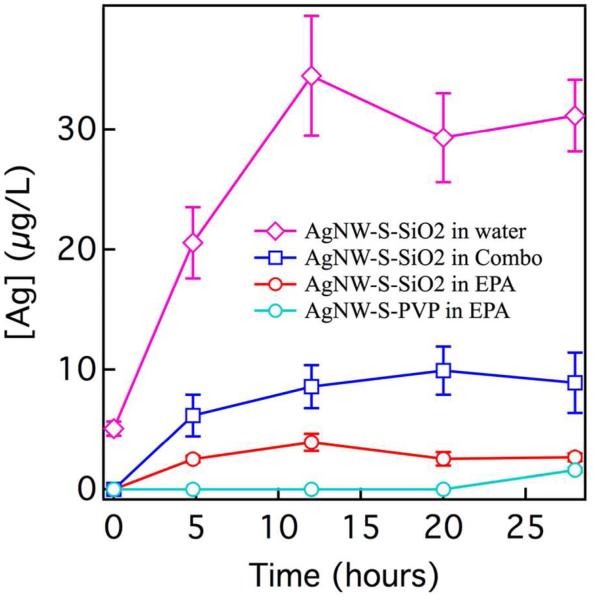
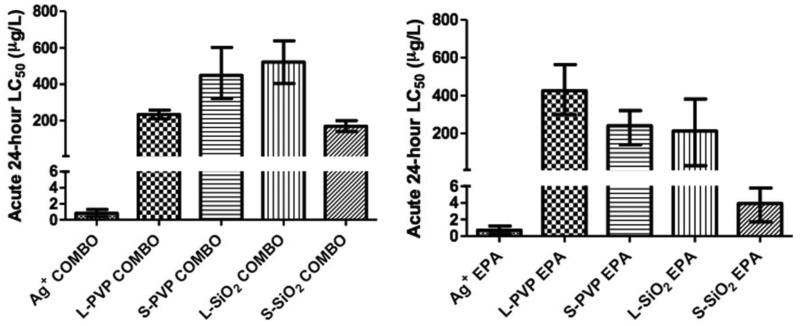
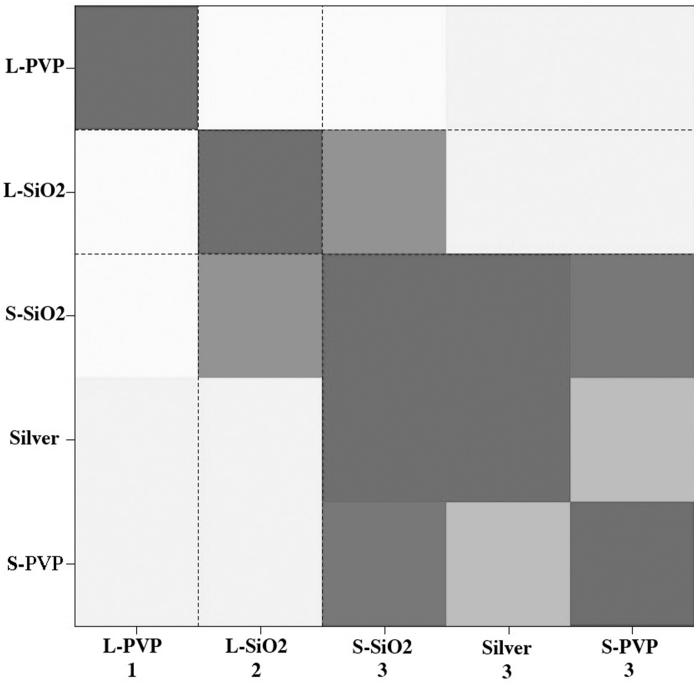
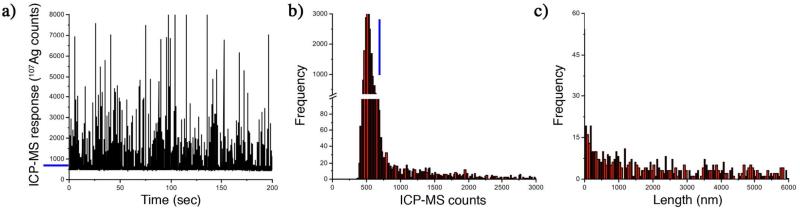
Nanowires (NWs), high-aspect-ratio nanomaterials, are increasingly used in technological materials and consumer products and may have toxicological characteristics distinct from nanoparticles. We carried out a comprehensive evaluation of the physicochemical stability of four silver nanowires (AgNWs) of two sizes and coatings and their toxicity to Daphnia magna . Inorganic aluminum-doped silica coatings were less effective than organic poly(vinyl pyrrolidone) coatings at preventing silver oxidation or Ag(+) release and underwent a significant morphological transformation within 1 h following addition to low ionic strength Daphnia growth media. All AgNWs were highly toxic to D. magna but less toxic than ionic silver. Toxicity varied as a function of AgNW dimension, coating, and solution chemistry. Ag(+) release in the media could not account for observed AgNW toxicity. Single-particle inductively coupled plasma mass spectrometry distinguished and quantified dissolved and nanoparticulate silver in microliter-scale volumes of Daphnia magna hemolymph with a limit of detection of approximately 10 ppb. The silver levels within the hemolymph of Daphnia exposed to both Ag(+) and AgNW met or exceeded the initial concentration in the growth medium, indicating effective accumulation during filter feeding. Silver-rich particles were the predominant form of silver in hemolymph following exposure to both AgNWs and Ag(+). Scanning electron microscopy imaging of dried hemolymph found both AgNWs and silver precipitates that were not present in the AgNW stock or the growth medium. Both organic and inorganic coatings on the AgNW were transformed during ingestion or absorption. Pathway, gene ontology, and clustering analyses of gene expression response indicated effects of AgNWs distinct from ionic silver on Daphnia magna .
纳米线(NWs)作为高纵横比的纳米材料,在技术材料和消费品中的应用日益广泛,其毒理学特性可能与纳米颗粒不同。我们对两种尺寸和涂层的四种银纳米线(AgNWs)的物理化学稳定性及其对大型溞的毒性进行了全面评估。在防止银氧化或银离子(Ag(+))释放方面,无机铝掺杂二氧化硅涂层的效果不如有机聚乙烯吡咯烷酮涂层,并且在添加到低离子强度的大型溞生长培养基中1小时内会发生显著的形态转变。所有AgNWs对大型溞都具有高毒性,但毒性低于离子银。毒性随AgNW尺寸、涂层和溶液化学性质而变化。培养基中的Ag(+)释放不能解释观察到的AgNW毒性。单颗粒电感耦合等离子体质谱法能够区分和定量微升规模的大型溞血淋巴中的溶解态和纳米颗粒态银,检测限约为10 ppb。暴露于Ag(+)和AgNW的大型溞血淋巴中的银含量达到或超过了生长培养基中的初始浓度,表明在滤食过程中有效积累。暴露于AgNWs和Ag(+)后,富含银的颗粒是血淋巴中银的主要形式。对干燥血淋巴的扫描电子显微镜成像发现了AgNWs和银沉淀物,这些在AgNW储备液或生长培养基中并不存在。AgNW上的有机和无机涂层在摄入或吸收过程中都会发生转变。基因表达反应的通路、基因本体和聚类分析表明,AgNWs对大型溞的影响与离子银不同。