
构建从水生纳米毒理学通向设计型银纳米颗粒安全性的桥梁。
Building the Bridge From Aquatic Nanotoxicology to Safety by Design Silver Nanoparticles.
作者信息
Corsi Ilaria, Desimone Martin Federico, Cazenave Jimena
机构信息
Department of Physical, Earth and Environmental Sciences, University of Siena, Siena, Italy.
Universidad de Buenos Aires, Consejo Nacional de Investigaciones Científicas y Técnicas (CONICET), Instituto de Química y Metabolismo del Fármaco (IQUIMEFA), Facultad de Farmacia y Bioquímica, Buenos Aires, Argentina.
出版信息
Front Bioeng Biotechnol. 2022 Mar 8;10:836742. doi: 10.3389/fbioe.2022.836742. eCollection 2022.
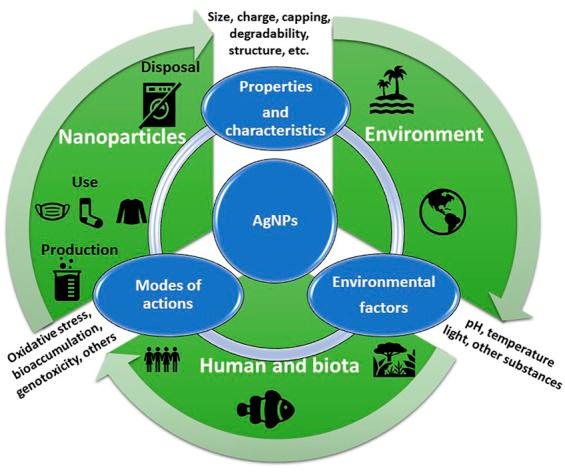
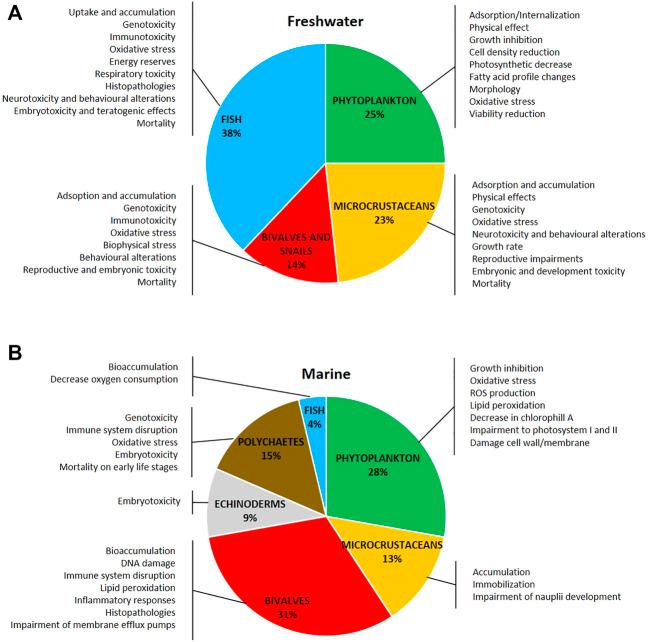
Nanotechnologies have rapidly grown, and they are considered the new industrial revolution. However, the augmented production and wide applications of engineered nanomaterials (ENMs) and nanoparticles (NPs) inevitably lead to environmental exposure with consequences on human and environmental health. Engineered nanomaterial and nanoparticle (ENM/P) effects on humans and the environment are complex and largely depend on the interplay between their peculiar properties such as size, shape, coating, surface charge, and degree of agglomeration or aggregation and those of the receiving media/body. These rebounds on ENM/P safety and newly developed concepts such as the are gaining importance in the field of sustainable nanotechnologies. This article aims to review the critical characteristics of the ENM/Ps that need to be addressed in the process to develop ENM/Ps with the ablility to reduce/minimize any potential toxicological risks for living beings associated with their exposure. Specifically, we focused on silver nanoparticles (AgNPs) due to an increasing number of nanoproducts containing AgNPs, as well as an increasing knowledge about these nanomaterials (NMs) and their effects. We review the ecotoxicological effects documented on freshwater and marine species that demonstrate the importance of the relationship between the ENM/P design and their biological outcomes in terms of environmental safety.
纳米技术发展迅速,被视为新的工业革命。然而,工程纳米材料(ENM)和纳米颗粒(NP)产量的增加及其广泛应用不可避免地导致了环境暴露,对人类和环境健康产生影响。工程纳米材料和纳米颗粒(ENM/P)对人类和环境的影响是复杂的,很大程度上取决于它们的特殊性质(如尺寸、形状、涂层、表面电荷以及团聚或聚集程度)与接收介质/机体的性质之间的相互作用。这些对ENM/P安全性产生影响,并且诸如 等新发展的概念在可持续纳米技术领域正变得越来越重要。本文旨在综述在开发具有降低/最小化与生物体暴露相关的任何潜在毒理学风险能力的ENM/P过程中需要考虑的ENM/P的关键特性。具体而言,由于含银纳米颗粒(AgNP)的纳米产品数量不断增加,以及对这些纳米材料(NM)及其影响的了解不断增多,我们重点关注了银纳米颗粒。我们综述了记录在淡水和海洋物种上的生态毒理效应,这些效应证明了就环境安全而言,ENM/P设计与其生物学结果之间关系的重要性。

 Zotero 插件