Department of Physiology, Zhongshan School of Medicine, Sun Yat-sen University, Guangzhou, People's Republic of China.
BMC Neurosci. 2013 Oct 7;14:115. doi: 10.1186/1471-2202-14-115.
Emotion-related attentional bias is implicated in the aetiology and maintenance of anxiety disorders. Electroencephalogram (EEG) biofeedback can obviously improve the anxiety disorders and reduce stress level, and can also enhance attention performance in healthy subjects. The present study examined the effects and mechanisms of EEG biofeedback training on the attentional bias of high trait anxiety (HTA) individuals toward negative stimuli.
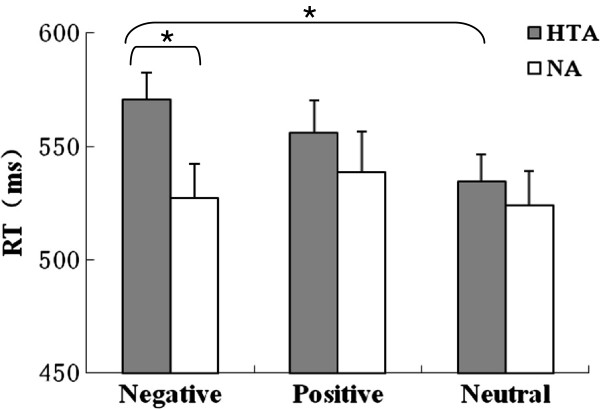
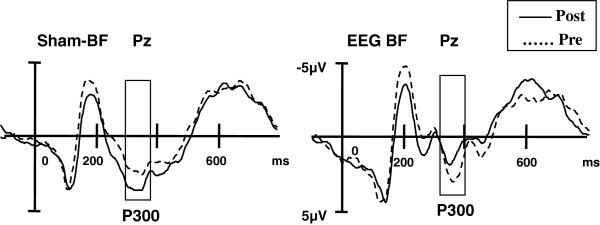
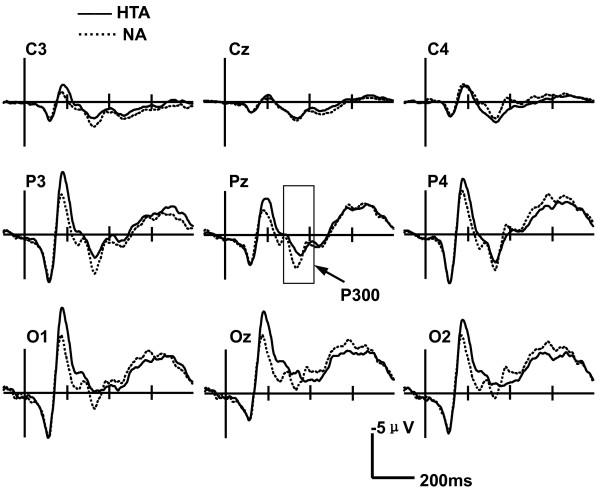
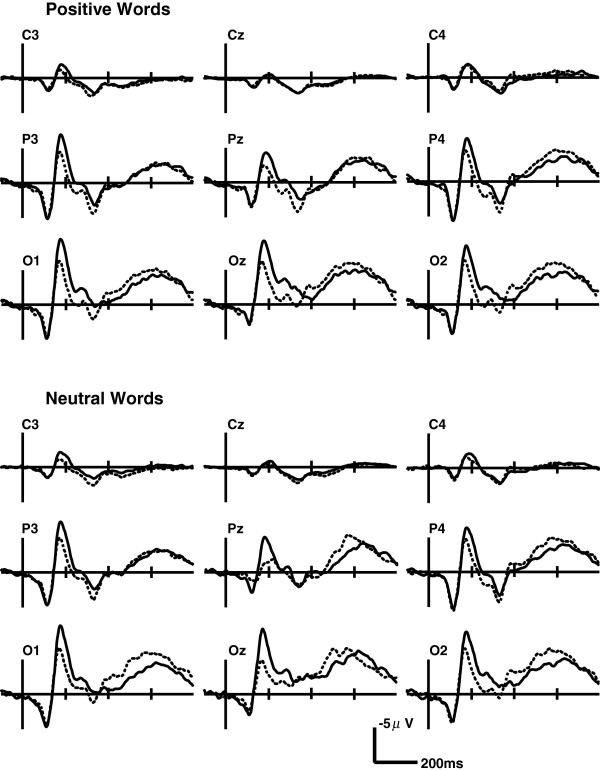
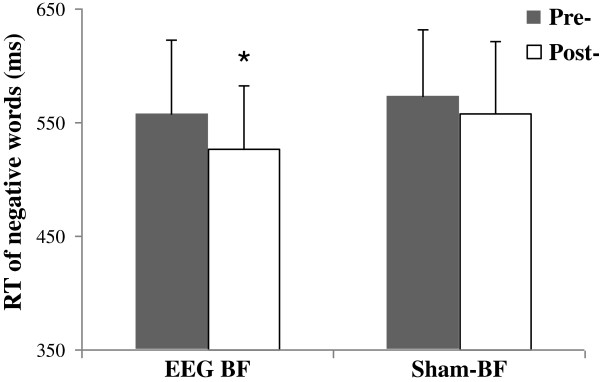
Event-related potentials were recorded while HTA (n=24) and nonanxious (n=21) individuals performed the color-word emotional Stroop task. During the emotional Stroop task, HTA participants showed longer reaction times and P300 latencies induced by negative words, compared to nonanxious participants.The EEG biofeedback significantly decreased the trait anxiety inventory score and reaction time in naming the color of negative words in the HTA group. P300 latencies evoked by negative stimuli in the EEG biofeedback group were significantly reduced after the alpha training, while no significant changes were observed in the sham biofeedback group after the intervention.
The prolonged P300 latency is associated with attentional bias to negative stimuli in the HTA group. EEG biofeedback training demonstrated a significant improvement of negative emotional attentional bias in HTA individuals, which may be due to the normalization of P300 latency.
情绪相关的注意偏向与焦虑障碍的病因和维持有关。脑电生物反馈(EEG biofeedback)明显可以改善焦虑障碍,降低压力水平,还可以提高健康受试者的注意力表现。本研究探讨了 EEG 生物反馈训练对高特质焦虑(HTA)个体对负性刺激的注意偏向的影响和机制。
HTA(n=24)和非焦虑(n=21)个体进行颜色-词语情绪 Stroop 任务时记录了事件相关电位。在情绪 Stroop 任务中,与非焦虑个体相比,HTA 参与者对负性词语表现出更长的反应时间和 P300 潜伏期。EEG 生物反馈显著降低了 HTA 组特质焦虑量表评分和命名负性词语的反应时间。在 alpha 训练后,EEG 生物反馈组的负性刺激诱发的 P300 潜伏期明显缩短,而在假生物反馈组干预后则没有明显变化。
在 HTA 组,P300 潜伏期延长与对负性刺激的注意偏向有关。EEG 生物反馈训练显著改善了 HTA 个体的负性情绪注意偏向,这可能是由于 P300 潜伏期的正常化。