Department of Anesthesiology and Pain Medicine, Wonkwang University School of Medicine, 460 Iksandae-ro, Iksan 570-749, Republic of Korea.
Oxid Med Cell Longev. 2013;2013:639541. doi: 10.1155/2013/639541. Epub 2013 Sep 11.
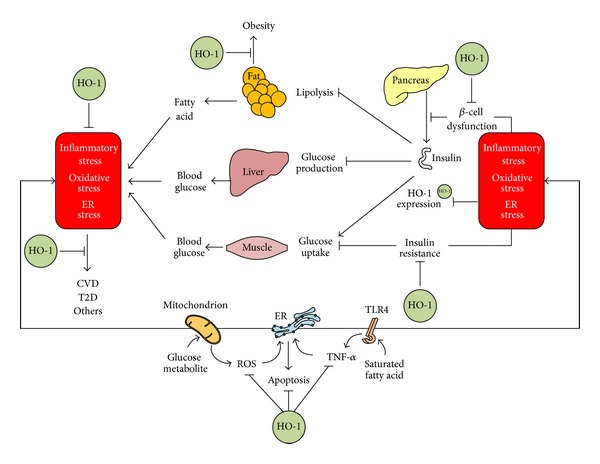
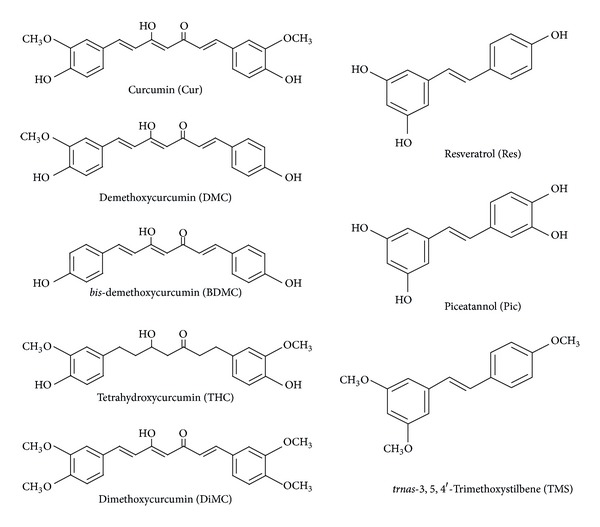
Metabolic diseases, such as insulin resistance, type II diabetes, and obesity, are associated with a low-grade chronic inflammation (inflammatory stress), oxidative stress, and endoplasmic reticulum (ER) stress. Because the integration of these stresses is critical to the pathogenesis of metabolic diseases, agents and cellular molecules that can modulate these stress responses are emerging as potential targets for intervention and treatment of metabolic diseases. It has been recognized that heme oxygenase-1 (HO-1) plays an important role in cellular protection. Because HO-1 can reduce inflammatory stress, oxidative stress, and ER stress, in part by exerting antioxidant, anti-inflammatory, and antiapoptotic effects, HO-1 has been suggested to play important roles in pathogenesis of metabolic diseases. In the present review, we will explore our current understanding of the protective mechanisms of HO-1 in metabolic diseases and present some emerging therapeutic options for HO-1 expression in treating metabolic diseases, together with the therapeutic potential of curcumin and resveratrol analogues that have their ability to induce HO-1 expression.
代谢性疾病,如胰岛素抵抗、II 型糖尿病和肥胖症,与低度慢性炎症(炎症应激)、氧化应激和内质网(ER)应激有关。由于这些应激的整合对于代谢性疾病的发病机制至关重要,因此能够调节这些应激反应的药物和细胞分子正在成为代谢性疾病干预和治疗的潜在靶点。已经认识到血红素加氧酶-1(HO-1)在细胞保护中发挥重要作用。由于 HO-1 可以通过发挥抗氧化、抗炎和抗细胞凋亡作用来减轻炎症应激、氧化应激和 ER 应激,因此 HO-1 被认为在代谢性疾病的发病机制中发挥重要作用。在本综述中,我们将探讨我们对 HO-1 在代谢性疾病中的保护机制的现有认识,并提出一些新兴的 HO-1 表达治疗选择,以及姜黄素和白藜芦醇类似物的治疗潜力,这些物质具有诱导 HO-1 表达的能力。