Departments of Internal Medicine, Biochemistry and Cell Biology, Research Institute of Aging and Metabolism and World Class University Program, Kyungpook National University School of Medicine, Daegu, Korea.
Diabetes Metab J. 2013 Apr;37(2):106-12. doi: 10.4093/dmj.2013.37.2.106.
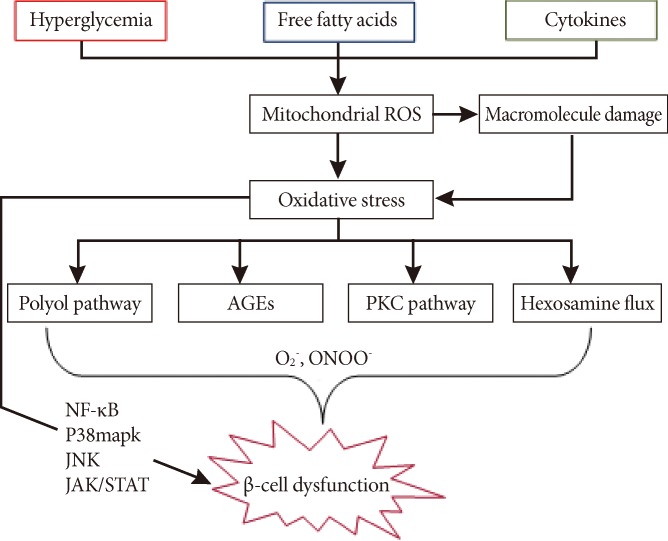
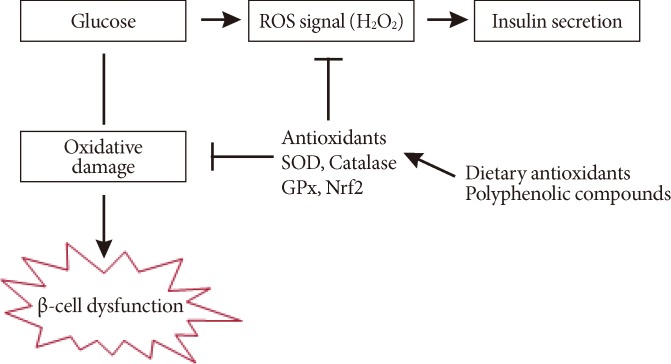
A growing body of evidence suggests that hyperglycemia-induced oxidative stress plays an important role in diabetic complications, especially β-cell dysfunction and failure. Under physiological conditions, reactive oxygen species serve as second messengers that facilitate signal transduction and gene expression in pancreatic β-cells. However, under pathological conditions, an imbalance in redox homeostasis leads to aberrant tissue damage and β-cell death due to a lack of antioxidant defense systems. Taking into account the vulnerability of islets to oxidative damage, induction of endogenous antioxidant enzymes or exogenous antioxidant administration has been proposed as a way to protect β-cells against diabetic insults. Here, we consider recent insights into how the redox response becomes deregulated under diabetic conditions, as well as the therapeutic benefits of antioxidants, which may provide clues for developing strategies aimed at the treatment or prevention of diabetes associated with β-cell failure.
越来越多的证据表明,高血糖引起的氧化应激在糖尿病并发症中起着重要作用,尤其是β细胞功能障碍和衰竭。在生理条件下,活性氧作为第二信使,促进胰腺β细胞中的信号转导和基因表达。然而,在病理条件下,氧化还原平衡的失衡导致抗氧化防御系统缺乏,导致组织损伤和β细胞死亡。考虑到胰岛对氧化损伤的脆弱性,诱导内源性抗氧化酶或外源性抗氧化剂的给药已被提议作为一种保护β细胞免受糖尿病损伤的方法。在这里,我们考虑了最近关于在糖尿病条件下氧化还原反应如何失调的见解,以及抗氧化剂的治疗益处,这可能为开发旨在治疗或预防与β细胞衰竭相关的糖尿病的策略提供线索。