Department of Chemical and Systems Biology, Stanford University School of Medicine, Stanford, 94305, CA.
J Am Heart Assoc. 2013 Oct 8;2(5):e000461. doi: 10.1161/JAHA.113.000461.
Ischemia and reperfusion (IR) injury remains a major cause of morbidity and mortality and multiple molecular and cellular pathways have been implicated in this injury. We determined whether acute inhibition of excessive mitochondrial fission at the onset of reperfusion improves mitochondrial dysfunction and cardiac contractility postmyocardial infarction in rats.
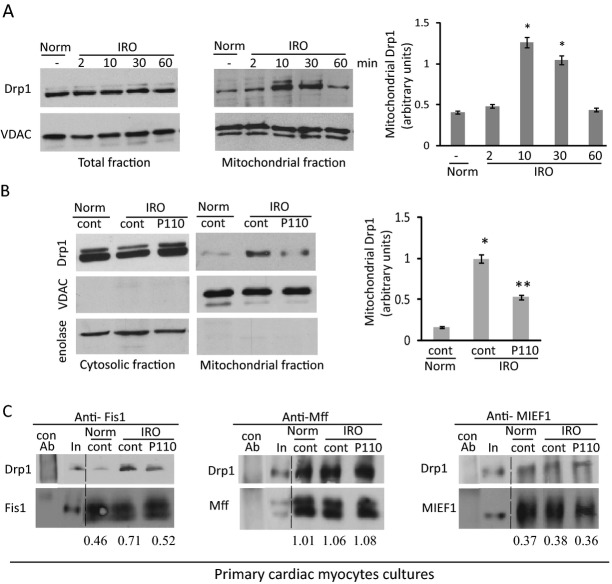
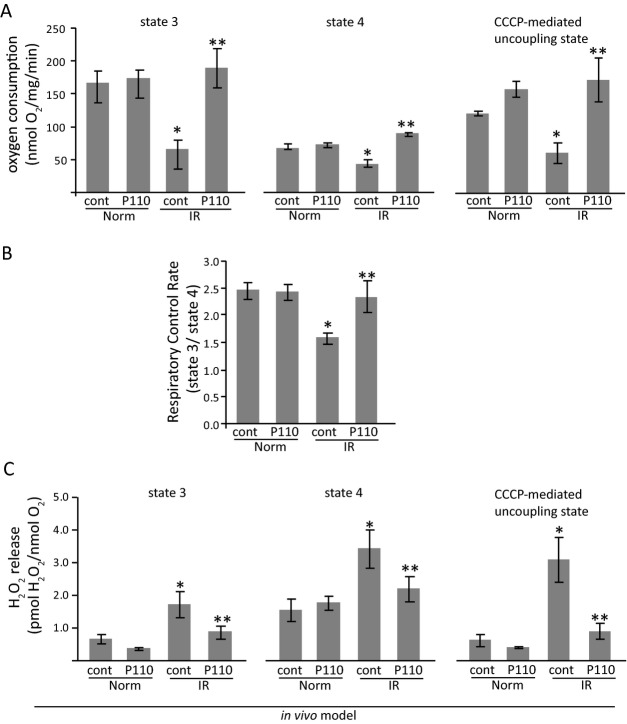
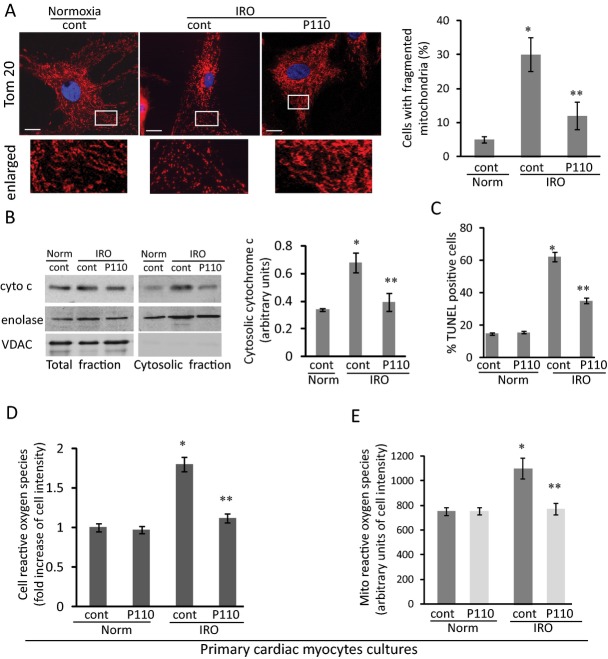
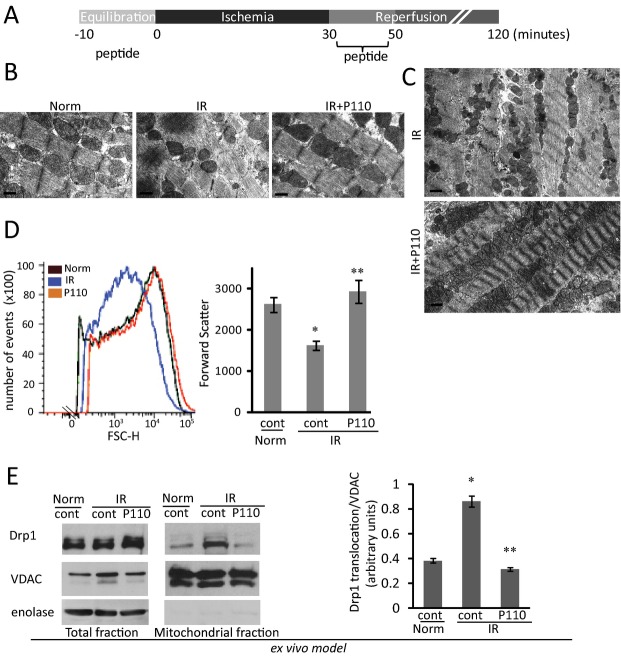
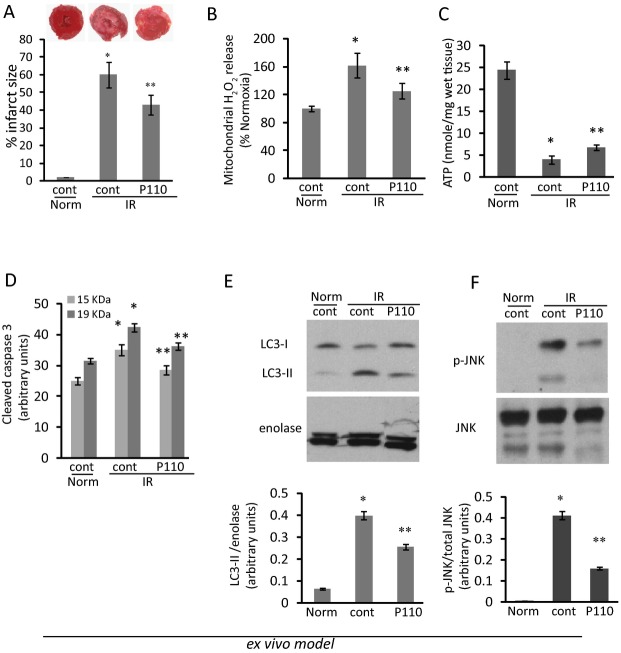
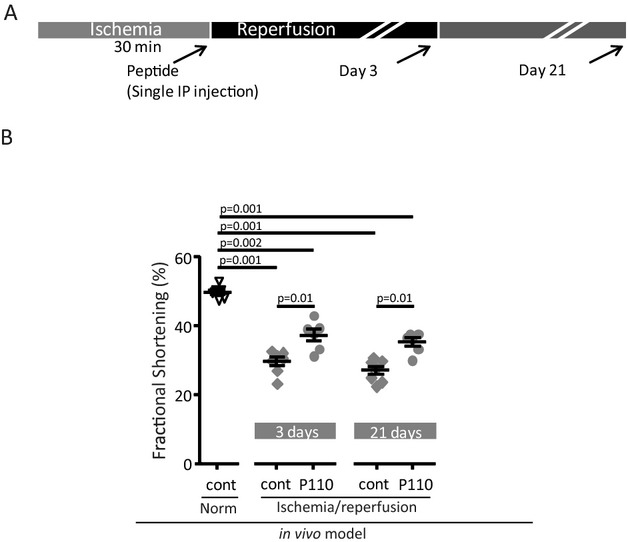
We used a selective inhibitor of the fission machinery, P110, which we have recently designed. P110 treatment inhibited the interaction of fission proteins Fis1/Drp1, decreased mitochondrial fission, and improved bioenergetics in three different rat models of IR, including primary cardiomyocytes, ex vivo heart model, and an in vivo myocardial infarction model. Drp1 transiently bound to the mitochondria following IR injury and P110 treatment blocked this Drp1 mitochondrial association. Compared with control treatment, P110 (1 μmol/L) decreased infarct size by 28 ± 2% and increased adenosine triphosphate levels by 70+1% after IR relative to control IR in the ex vivo model. Intraperitoneal injection of P110 (0.5 mg/kg) at the onset of reperfusion in an in vivo model resulted in improved mitochondrial oxygen consumption by 68% when measured 3 weeks after ischemic injury, improved cardiac fractional shortening by 35%, reduced mitochondrial H2O2 uncoupling state by 70%, and improved overall mitochondrial functions.
Together, we show that excessive mitochondrial fission at reperfusion contributes to long-term cardiac dysfunction in rats and that acute inhibition of excessive mitochondrial fission at the onset of reperfusion is sufficient to result in long-term benefits as evidenced by inhibiting cardiac dysfunction 3 weeks after acute myocardial infarction.
缺血再灌注(IR)损伤仍然是发病率和死亡率的主要原因,多种分子和细胞途径与此损伤有关。我们确定了再灌注开始时急性抑制过度线粒体裂变是否可以改善心肌梗死后大鼠的线粒体功能障碍和心脏收缩力。
我们使用了一种新设计的分裂机制的选择性抑制剂 P110。P110 处理抑制了分裂蛋白 Fis1/Drp1 的相互作用,减少了线粒体裂变,并改善了三种不同的 IR 大鼠模型中的生物能学,包括原代心肌细胞、离体心脏模型和体内心肌梗死模型。DRP1 在 IR 损伤后短暂与线粒体结合,P110 处理阻止了这种 DRP1 与线粒体的结合。与对照处理相比,P110(1 μmol/L)在离体模型中使再灌注后的梗死面积减少 28±2%,并使三磷酸腺苷水平增加 70+1%。在体内模型中,再灌注开始时腹腔注射 P110(0.5mg/kg),可使缺血损伤 3 周后测量的线粒体耗氧量增加 68%,心脏缩短分数增加 35%,线粒体 H2O2 解偶联状态减少 70%,整体线粒体功能改善。
综上所述,我们表明再灌注时过度的线粒体裂变导致大鼠长期心脏功能障碍,而再灌注开始时急性抑制过度的线粒体裂变足以产生长期益处,这表现在急性心肌梗死后 3 周抑制心脏功能障碍。