The Department of Microbiology, Ohio State University, 484 W, 12th Ave,, Columbus, OH 43210, USA.
BMC Genomics. 2013 Oct 10;14:695. doi: 10.1186/1471-2164-14-695.
The dimorphic fungus Histoplasma capsulatum causes respiratory and systemic disease in mammalian hosts by expression of factors that enable survival within phagocytic cells of the immune system. Histoplasma's dimorphism is distinguished by growth either as avirulent mycelia or as pathogenic yeast. Geographically distinct strains of Histoplasma differ in their relative virulence in mammalian hosts and in production of and requirement for specific virulence factors. The close similarity in the genome sequences of these diverse strains suggests that phenotypic variations result from differences in gene expression rather than gene content. To provide insight into how the transcriptional program translates into morphological variation and the pathogenic lifestyle, we compared the transcriptional profile of the pathogenic yeast phase and the non-pathogenic mycelial phase of two clinical isolates of Histoplasma.
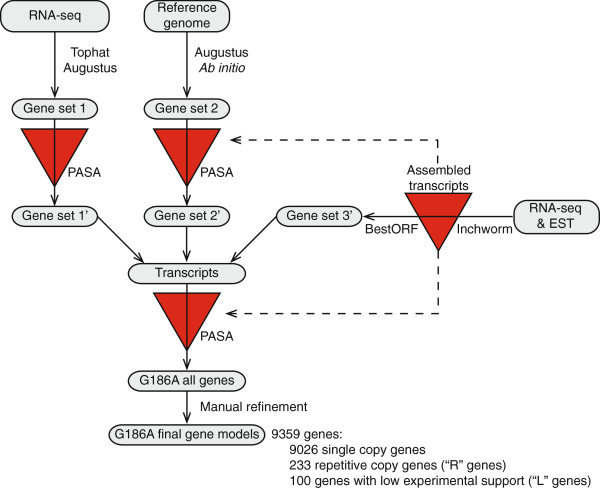
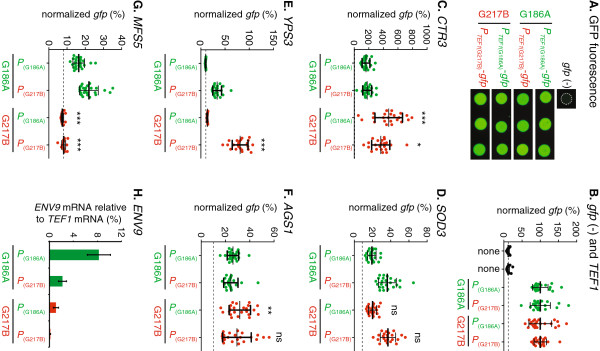
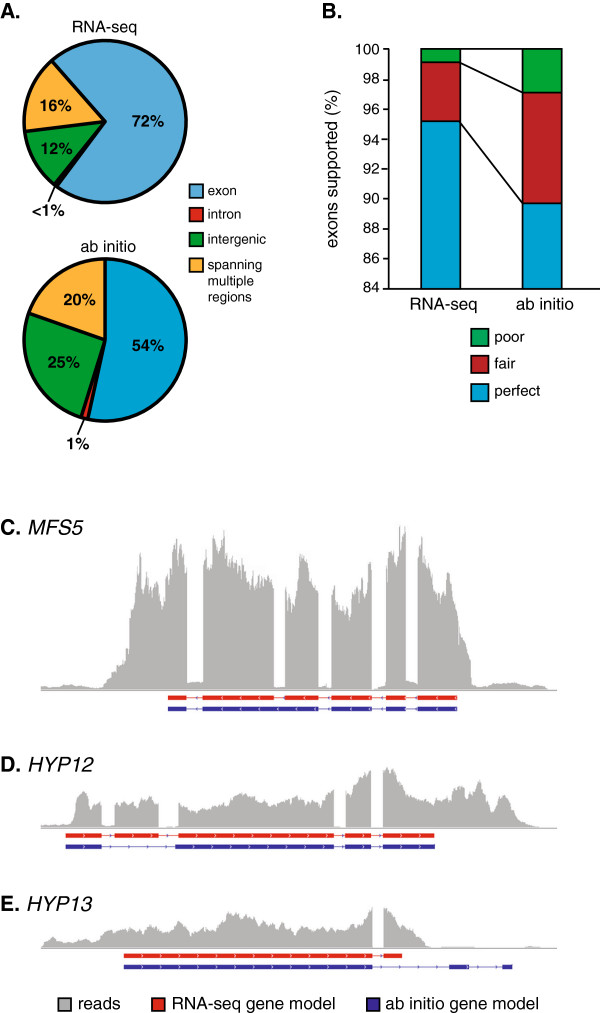
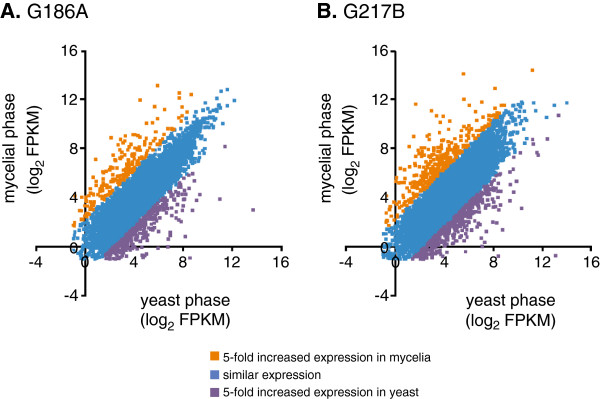
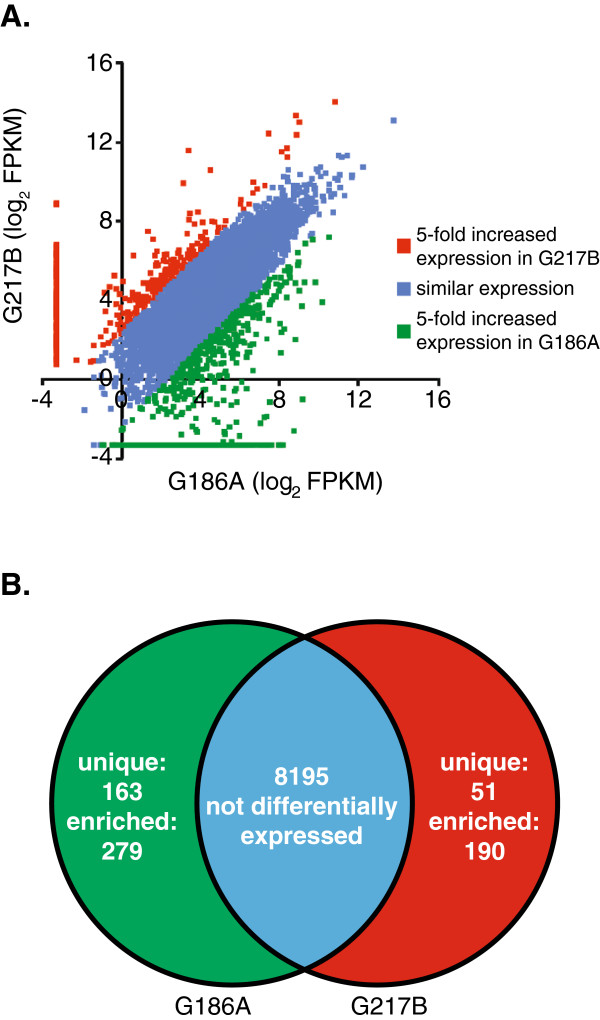
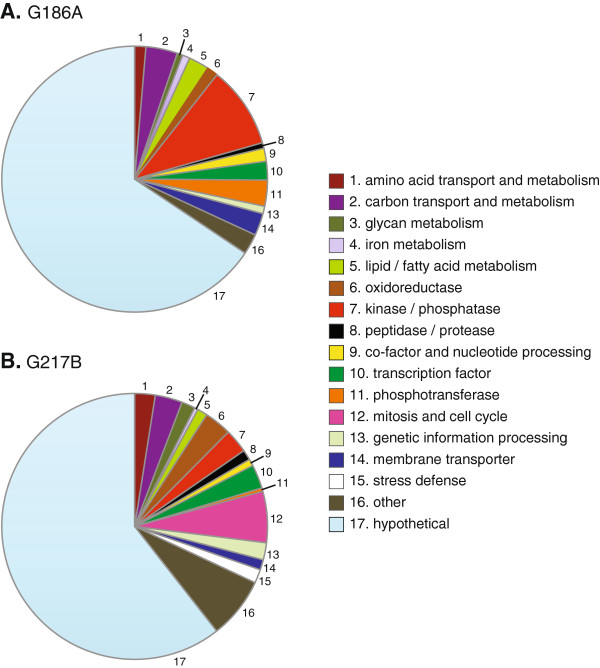
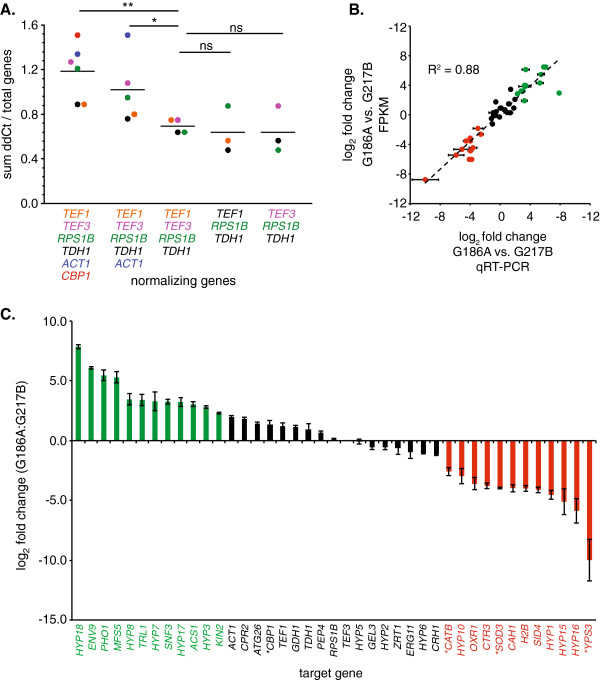
To overcome inaccuracies in ab initio genome annotation of the Histoplasma genome, we used RNA-seq methodology to generate gene structure models based on experimental evidence. Quantitative analyses of the sequencing reads revealed 6% to 9% of genes are differentially regulated between the two phases. RNA-seq-based mRNA quantitation was strongly correlated with gene expression levels determined by quantitative RT-PCR. Comparison of the yeast-phase transcriptomes between strains showed 7.6% of all genes have lineage-specific expression differences including genes contributing, or potentially related, to pathogenesis. GFP-transcriptional fusions and their introduction into both strain backgrounds revealed that the difference in transcriptional activity of individual genes reflects both variations in the cis- and trans-acting factors between Histoplasma strains.
Comparison of the yeast and mycelial transcriptomes highlights genes encoding virulence factors as well as those involved in protein glycosylation, alternative metabolism, lipid remodeling, and cell wall glycanases that may contribute to Histoplasma pathogenesis. These studies lay an essential foundation for understanding how gene expression variations contribute to the strain- and phase-specific virulence differences of Histoplasma.
双相真菌荚膜组织胞浆菌通过表达使其在免疫系统的吞噬细胞内生存的因子,在哺乳动物宿主中引起呼吸道和全身疾病。荚膜组织胞浆菌的双相性通过生长为无毒菌丝或致病性酵母来区分。地理位置不同的荚膜组织胞浆菌菌株在哺乳动物宿主中的相对毒力以及特定毒力因子的产生和需求方面存在差异。这些不同菌株的基因组序列非常相似,表明表型变异是由于基因表达的差异,而不是基因含量的差异。为了深入了解转录程序如何转化为形态变异和致病生活方式,我们比较了两种临床分离株荚膜组织胞浆菌的致病性酵母相和非致病性菌丝相的转录谱。
为了克服荚膜组织胞浆菌基因组从头基因组注释的不准确性,我们使用 RNA-seq 方法基于实验证据生成基因结构模型。对测序reads 的定量分析显示,两个相中约有 6%至 9%的基因存在差异表达。基于 RNA-seq 的 mRNA 定量与定量 RT-PCR 确定的基因表达水平高度相关。对两个菌株之间的酵母相转录组进行比较显示,所有基因中有 7.6%具有谱系特异性表达差异,包括与致病作用有关或潜在相关的基因。GFP-转录融合及其引入两个菌株背景下均表明,单个基因的转录活性差异既反映了荚膜组织胞浆菌菌株之间顺式和反式作用因子的差异。
比较酵母和菌丝体转录组突出了编码毒力因子的基因,以及参与蛋白糖基化、替代代谢、脂质重塑和细胞壁糖酶的基因,这些基因可能有助于荚膜组织胞浆菌的发病机制。这些研究为了解基因表达变化如何导致荚膜组织胞浆菌的菌株和相特异性毒力差异奠定了重要基础。