1] Tumor Immunology and Gene Therapy Center, Eastern Hepatobiliary Surgery Hospital, the Second Military Medical University, Shanghai, China [2] Department of Pharmacy, Changhai Hospital, The Second Military Medical University, Shanghai, China.
Cell Death Dis. 2013 Oct 10;4(10):e844. doi: 10.1038/cddis.2013.338.
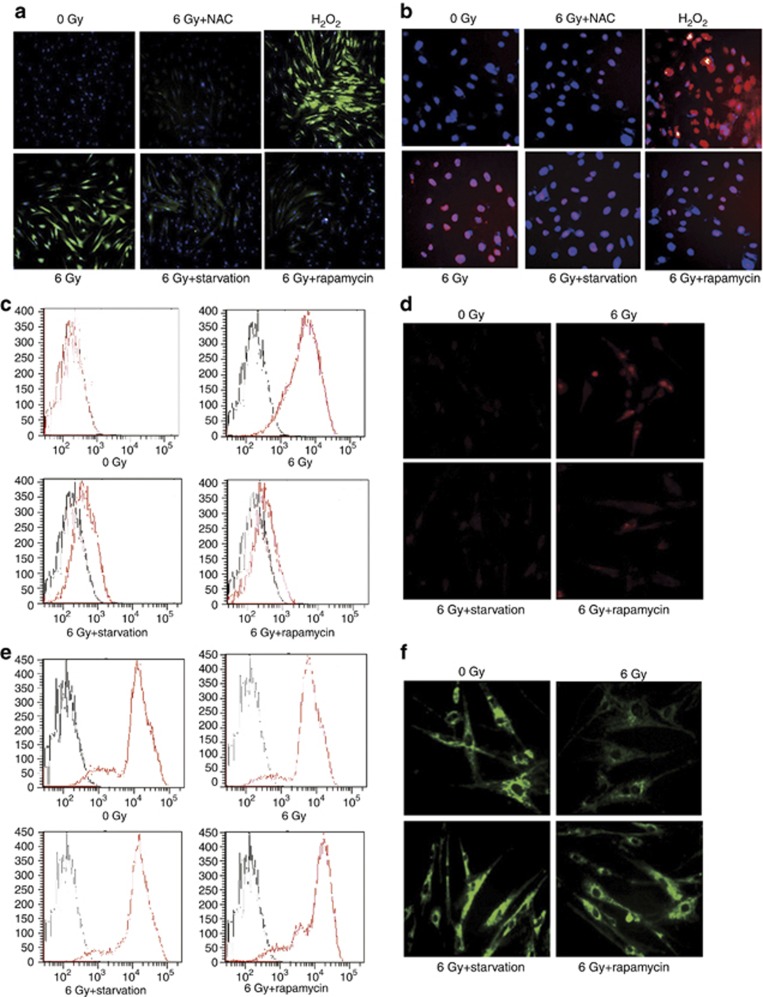
Stem cells were characterized by their stemness: self-renewal and pluripotency. Mesenchymal stem cells (MSCs) are a unique type of adult stem cells that have been proven to be involved in tissue repair, immunoloregulation and tumorigenesis. Irradiation is a well-known factor that leads to functional obstacle in stem cells. However, the mechanism of stemness maintenance in human MSCs exposed to irradiation remains unknown. We demonstrated that irradiation could induce reactive oxygen species (ROS) accumulation that resulted in DNA damage and stemness injury in MSCs. Autophagy induced by starvation or rapamycin can reduce ROS accumulation-associated DNA damage and maintain stemness in MSCs. Further, inhibition of autophagy leads to augment of ROS accumulation and DNA damage, which results in the loss of stemness in MSCs. Our results indicate that autophagy may have an important role in protecting stemness of MSCs from irradiation injury.
自我更新和多能性。间充质干细胞(MSCs)是一种独特的成体干细胞,已被证明参与组织修复、免疫调节和肿瘤发生。辐照是导致干细胞功能障碍的已知因素。然而,暴露于辐照下的人 MSCs 中干性维持的机制尚不清楚。我们证明辐照可以诱导活性氧(ROS)的积累,导致 MSCs 中的 DNA 损伤和干性损伤。饥饿或雷帕霉素诱导的自噬可以减少与 ROS 积累相关的 DNA 损伤并维持 MSCs 的干性。此外,自噬的抑制导致 ROS 积累和 DNA 损伤的增加,从而导致 MSCs 干性的丧失。我们的结果表明,自噬可能在保护 MSCs 的干性免受辐照损伤方面发挥重要作用。