Single Molecule Study Laboratory, College of Engineering and Nanoscale Science and Engineering Center, University of Georgia, Athens, GA 30602, USA.
Biotechnol Biofuels. 2013 Oct 11;6(1):147. doi: 10.1186/1754-6834-6-147.
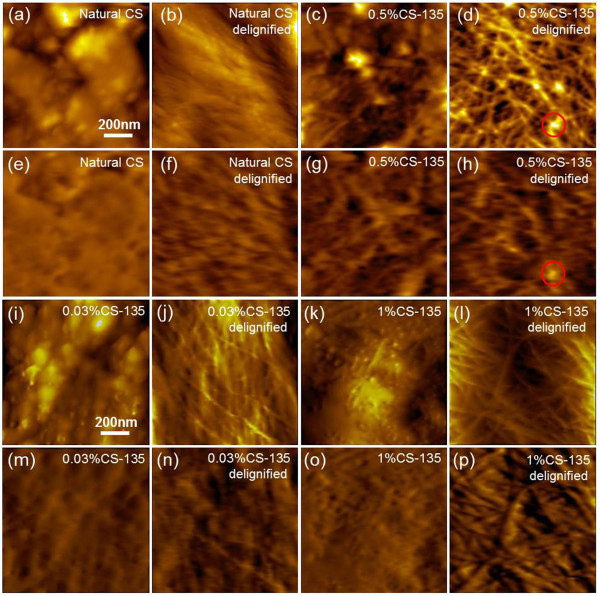
Enzymatic hydrolysis of lignocellulosic biomass (mainly plant cell walls) is a critical process for biofuel production. This process is greatly hindered by the natural complexity of plant cell walls and limited accessibility of surface cellulose by enzymes. Little is known about the plant cell wall structural and molecular level component changes after pretreatments, especially on the outer surface. Therefore, a more profound understanding of surface cellulose distributions before and after pretreatments at single-molecule level is in great need. In this study, we determined the structural changes, specifically on crystalline cellulose, of natural, dilute sulfuric acid pretreated and delignified cell wall surfaces of poplar, switchgrass, and corn stover using single molecular atomic force microscopy (AFM) recognition imaging.
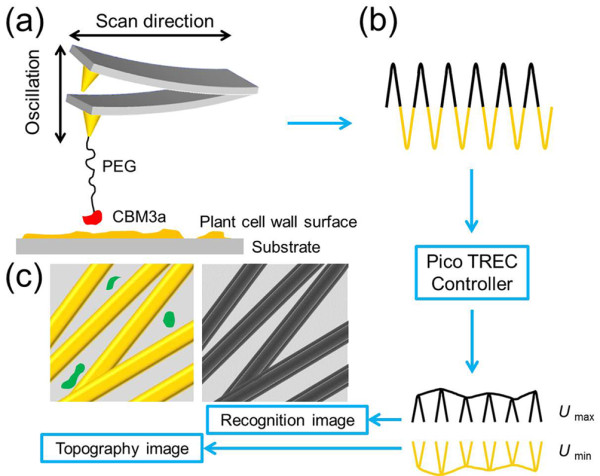
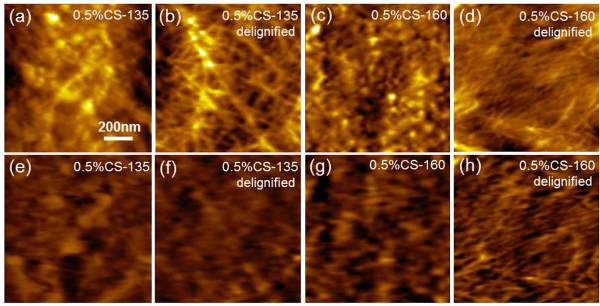
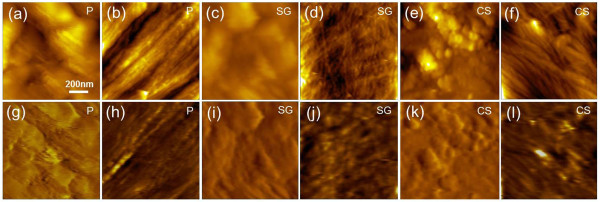
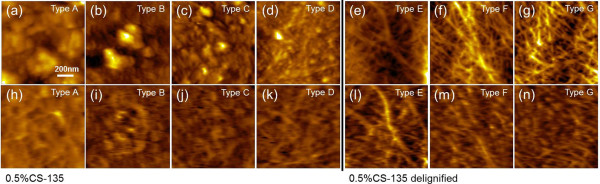
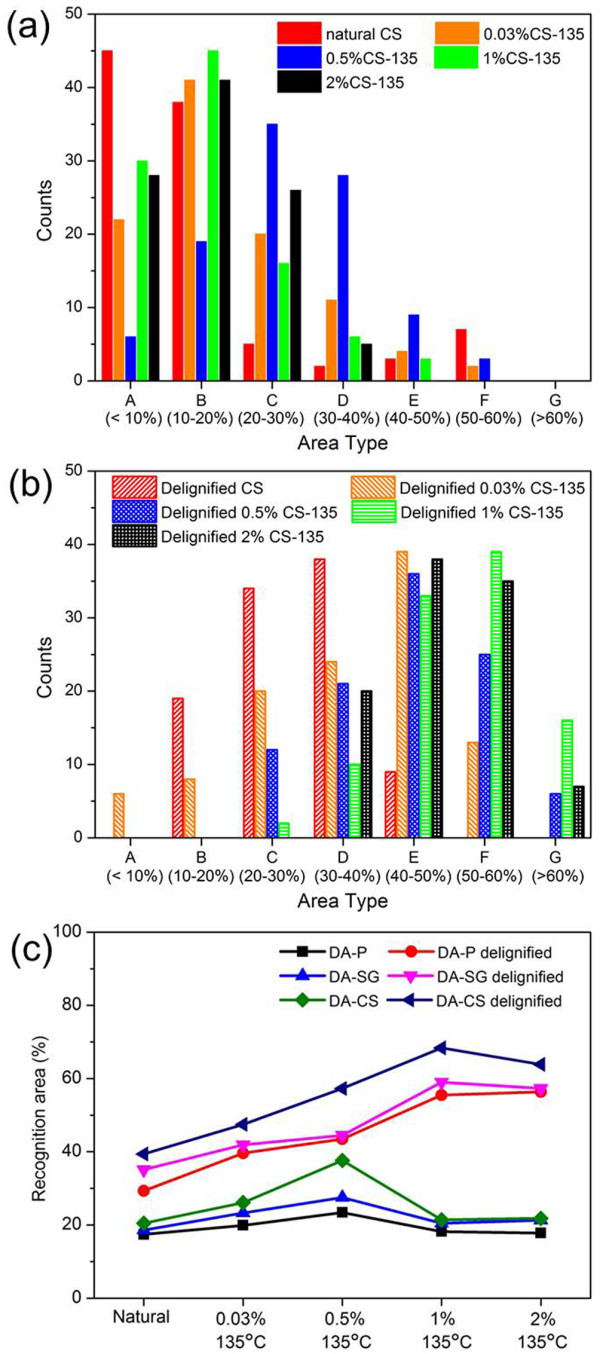
The AFM tip was first functionalized by a family 3 carbohydrate-binding module (CBM3a) (Clostridium thermocellum Scaffoldin) which specifically recognizes crystalline cellulose by selectively binding to it. The surface structural changes were studied at single molecule level based on the recognition area percentage (RAP) of exposed crystalline cellulose over the imaged cell wall surface. Our results show that the cell wall surface crystalline cellulose coverage increased from 17-20% to 18-40% after dilute acid pretreatment at 135°C under different acid concentrations and reached to 40-70% after delignification. Pretreated with 0.5% sulfuric acid, the crystalline cellulose surface distributions of 23% on poplar, 28% on switchgrass and, 38% on corn stover were determined as an optimized result. Corn stover cell walls also show less recalcitrance due to more effective pretreatments and delignification compared to poplar and switchgrass.
The dilute acid pretreatment can effectively increase the cellulose accessibility on plant cell wall surfaces. The optimal acid concentration was determined to be 0.5% acid at 135°C, especially for corn stover. This study provides a better understanding of surface structural changes after pretreatment such as lignin relocation, re-precipitation, and crystalline cellulose distribution, and can lead to potential improvements of biomass pretreatment.
木质纤维素生物质(主要是植物细胞壁)的酶解是生物燃料生产的关键过程。该过程受到植物细胞壁天然复杂性和酶对表面纤维素有限可及性的极大阻碍。预处理后植物细胞壁结构和分子水平成分变化知之甚少,特别是在表面。因此,非常需要在单分子水平上更深入地了解预处理前后表面纤维素的分布。在这项研究中,我们使用单分子原子力显微镜(AFM)识别成像,确定了杨树、柳枝稷和玉米秸秆的天然、稀酸预处理和脱木质素细胞壁表面的结构变化,特别是结晶纤维素。
首先通过家族 3 碳水化合物结合模块(CBM3a)(产热梭菌 Scaffoldin)功能化 AFM 尖端,该模块通过选择性结合来特异性识别结晶纤维素。根据成像细胞壁表面上暴露的结晶纤维素的识别面积百分比(RAP),在单分子水平上研究了表面结构变化。我们的结果表明,在不同酸浓度下,135°C 下稀酸预处理后,细胞壁表面结晶纤维素覆盖率从 17-20%增加到 18-40%,脱木质素后达到 40-70%。用 0.5%硫酸预处理,确定了杨树结晶纤维素表面分布为 23%,柳枝稷为 28%,玉米秸秆为 38%,为最佳结果。与杨树和柳枝稷相比,玉米秸秆细胞壁由于预处理和脱木质素更为有效,因此表现出较低的抗降解性。
稀酸预处理可以有效增加植物细胞壁表面的纤维素可及性。确定最佳酸浓度为 135°C 时 0.5%的酸,特别是对于玉米秸秆。这项研究提供了对预处理后表面结构变化的更好理解,如木质素迁移、再沉淀和结晶纤维素分布,并可以为生物质预处理的潜在改进提供依据。