Center of Immunity and Immunotherapies, Seattle Children's Research Institute, Seattle, 98101 Washington, USA, Program in Molecular and Cellular Biology, University of Washington, Seattle, 98195 Washington, USA, Department of Immunology, University of Washington, Seattle, 98195 Washington, USA and Department of Biochemistry, University of Washington, Seattle, 98195 Washington, USA.
Nucleic Acids Res. 2014 Jan;42(1):e4. doi: 10.1093/nar/gkt872. Epub 2013 Oct 10.
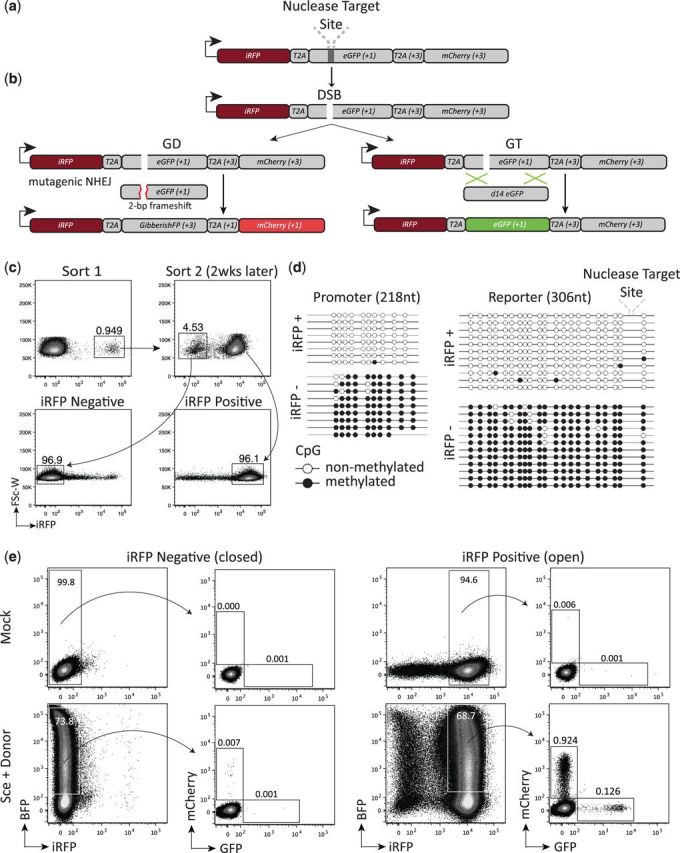
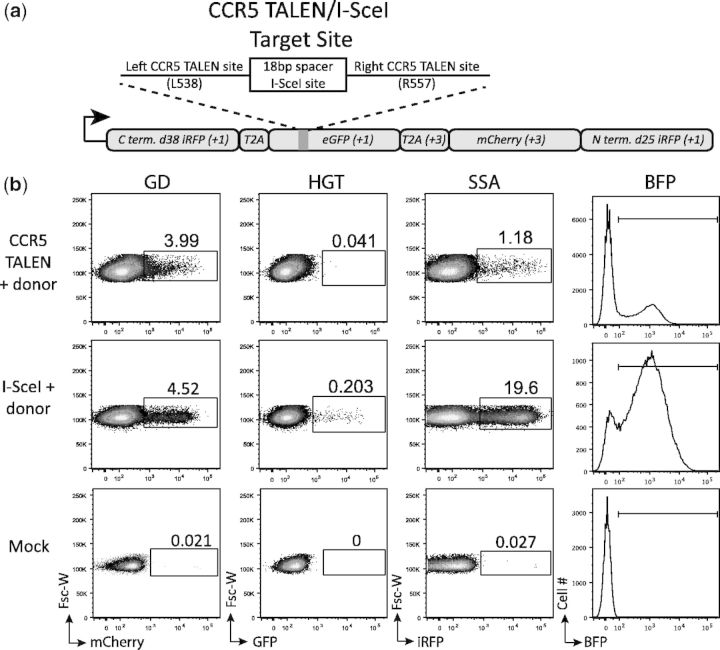
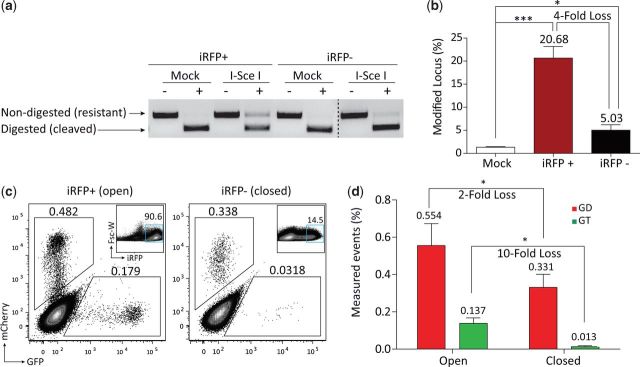
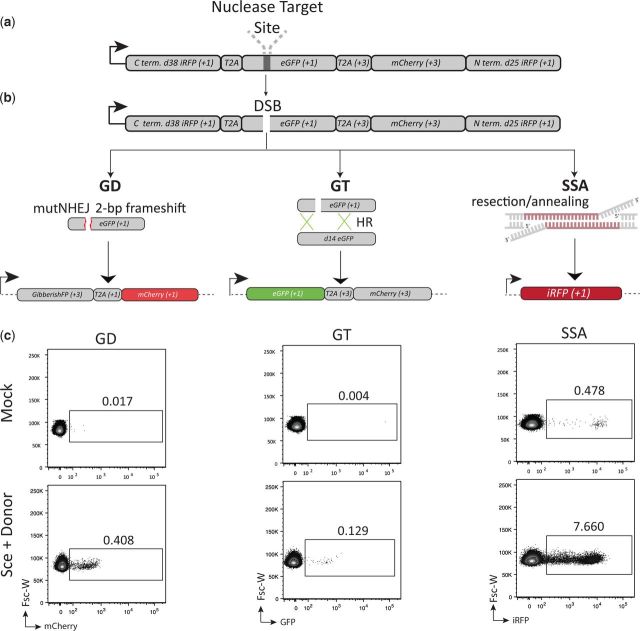
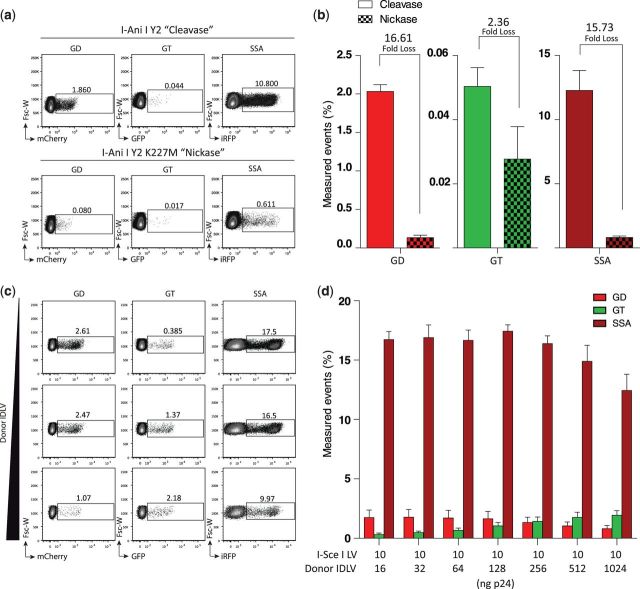
The creation of a DNA break at a specific locus by a designer endonuclease can be harnessed to edit a genome. However, DNA breaks may engage one of several competing repair pathways that lead to distinct types of genomic alterations. Therefore, understanding the contribution of different repair pathways following the introduction of a targeted DNA break is essential to further advance the safety and efficiency of nuclease-induced genome modification. To gain insight into the role of different DNA repair pathways in resolving nuclease-induced DNA breaks into genome editing outcomes, we previously developed a fluorescent-based reporter system, designated the Traffic Light Reporter, which provides a readout of gene targeting and gene disruption downstream of a targeted DNA double-strand break. Here we describe two related but novel reporters that extend this technology: one that allows monitoring of the transcriptional activity at the reporter locus, and thus can be applied to interrogate break resolution at active and repressed loci; and a second that reads out single-strand annealing in addition to gene targeting and gene disruption. Application of these reporters to assess repair pathway usage in several common gene editing contexts confirms the importance that chromatin status and initiation of end resection have on the resolution of nuclease-induced breaks.
通过设计的内切酶在特定位置产生 DNA 断裂,可以用来编辑基因组。然而,DNA 断裂可能会引发几种不同的竞争修复途径,从而导致不同类型的基因组改变。因此,了解靶向 DNA 断裂引入后不同修复途径的贡献对于进一步提高核酸酶诱导的基因组修饰的安全性和效率至关重要。为了深入了解不同的 DNA 修复途径在将核酸酶诱导的 DNA 断裂转化为基因组编辑结果方面的作用,我们之前开发了一种基于荧光的报告系统,命名为“交通灯报告器”,它提供了靶向 DNA 双链断裂下游的基因靶向和基因缺失的读出。在这里,我们描述了两种相关但新颖的报告器,扩展了这项技术:一种可以监测报告器基因座的转录活性,因此可以用于研究活性和抑制性基因座的断裂分辨率;另一种除了基因靶向和基因缺失之外,还可以读取单链退火。将这些报告器应用于评估几种常见的基因编辑情况下的修复途径利用情况,证实了染色质状态和末端切除起始对核酸酶诱导的断裂的分辨率的重要性。