Department of Medical Oncology, University Medical Center Groningen, Hanzeplein 1, 9713GZ Groningen, The Netherlands.
Biochem Soc Trans. 2022 Aug 31;50(4):1105-1118. doi: 10.1042/BST20220049.
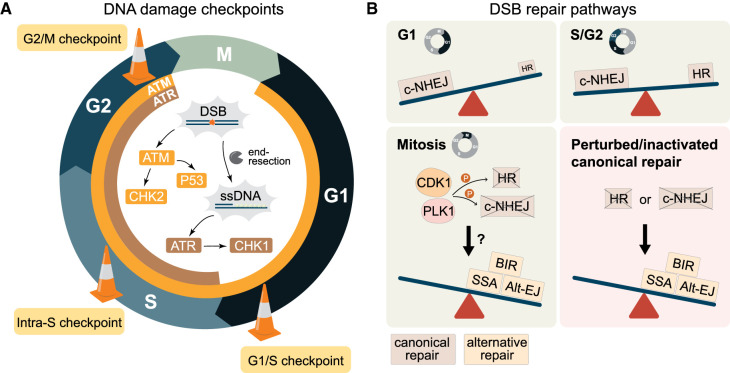
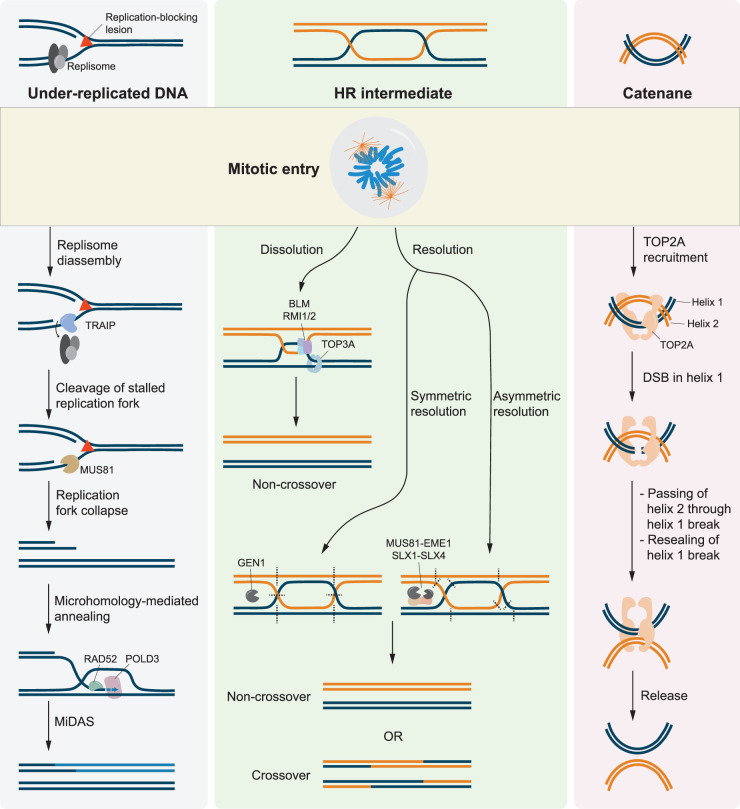
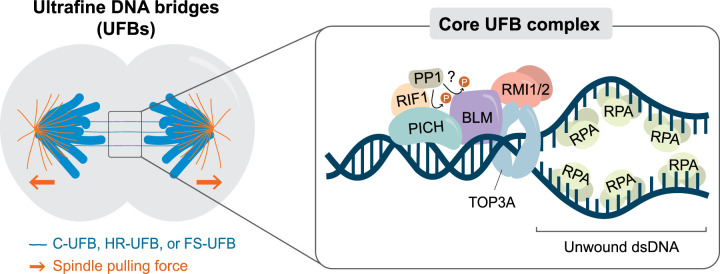
Failure of cells to process toxic double-strand breaks (DSBs) constitutes a major intrinsic source of genome instability, a hallmark of cancer. In contrast with interphase of the cell cycle, canonical repair pathways in response to DSBs are inactivated in mitosis. Although cell cycle checkpoints prevent transmission of DNA lesions into mitosis under physiological condition, cancer cells frequently display mitotic DNA lesions. In this review, we aim to provide an overview of how mitotic cells process lesions that escape checkpoint surveillance. We outline mechanisms that regulate the mitotic DNA damage response and the different types of lesions that are carried over to mitosis, with a focus on joint DNA molecules arising from under-replication and persistent recombination intermediates, as well as DNA catenanes. Additionally, we discuss the processing pathways that resolve each of these lesions in mitosis. Finally, we address the acute and long-term consequences of unresolved mitotic lesions on cellular fate and genome stability.
细胞无法处理有毒的双链断裂(DSB)是基因组不稳定的主要内在来源,这是癌症的一个标志。与细胞周期的间期间相比,针对 DSB 的经典修复途径在有丝分裂中失活。尽管细胞周期检查点可防止在生理条件下将 DNA 损伤传递到有丝分裂中,但癌细胞经常显示有丝分裂 DNA 损伤。在这篇综述中,我们旨在概述有丝分裂细胞如何处理逃避检查点监测的损伤。我们概述了调节有丝分裂 DNA 损伤反应的机制以及传递到有丝分裂的不同类型的损伤,重点是由复制不足和持续重组中间体以及 DNA 连环体引起的联合 DNA 分子。此外,我们讨论了解决有丝分裂中每种损伤的处理途径。最后,我们讨论了未解决的有丝分裂损伤对细胞命运和基因组稳定性的急性和长期后果。