Wood Spencer A, Guerry Anne D, Silver Jessica M, Lacayo Martin
1] Natural Capital Project, School of Environmental and Forest Sciences, University of Washington, Seattle, WA, USA [2] Natural Capital Project, Woods Institute for the Environment, Stanford University, Stanford, CA, USA.
Sci Rep. 2013 Oct 17;3:2976. doi: 10.1038/srep02976.
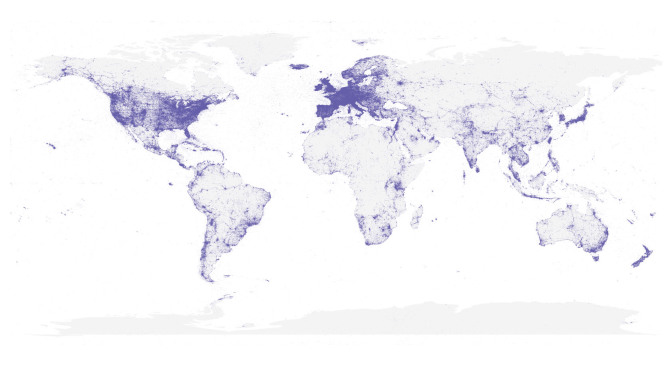
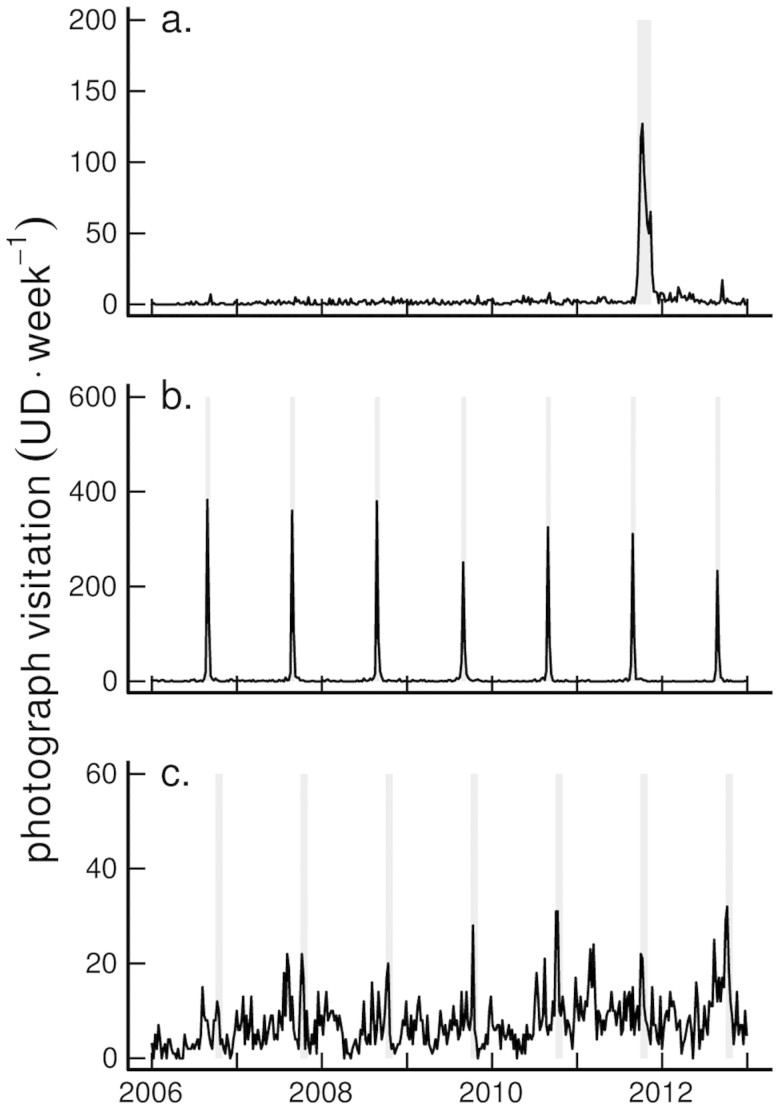
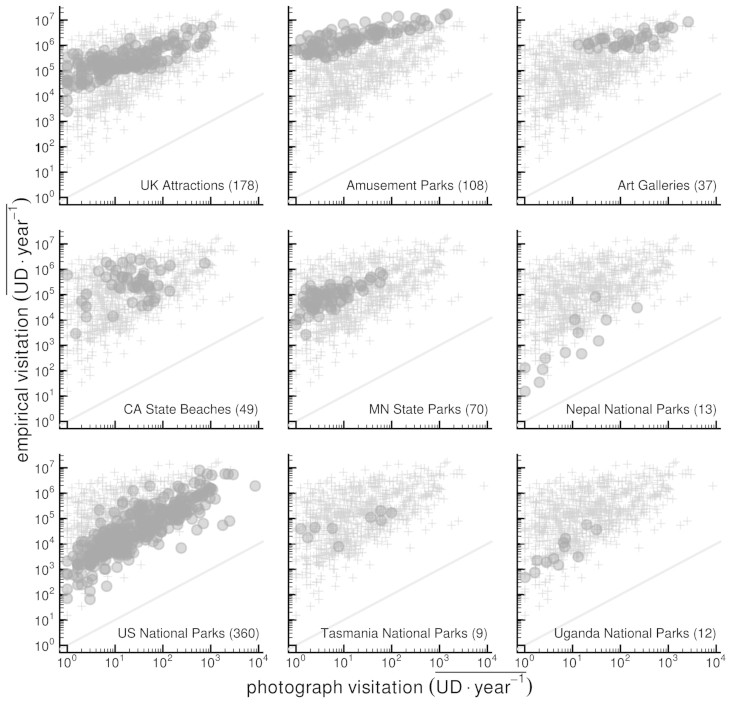
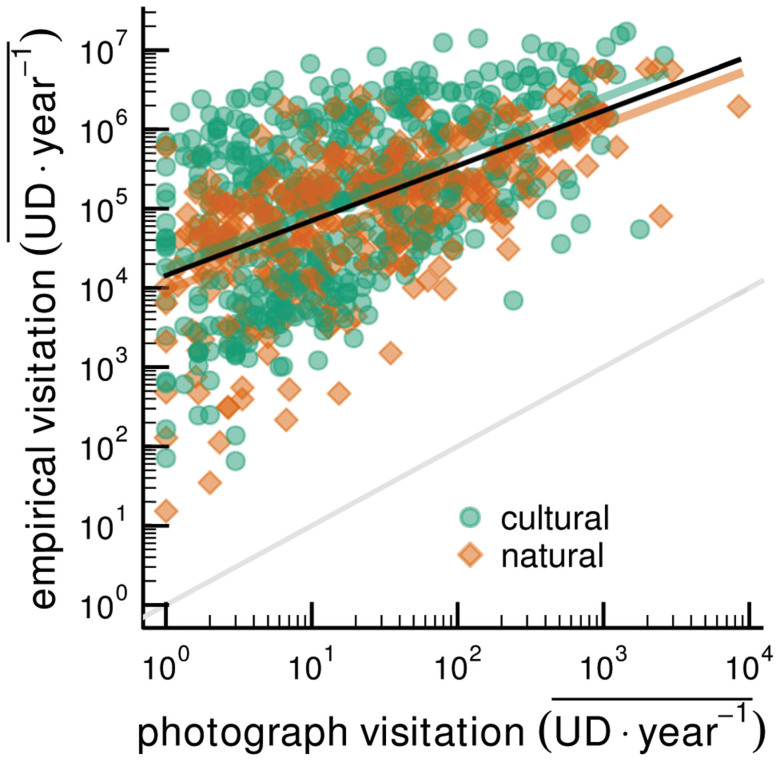
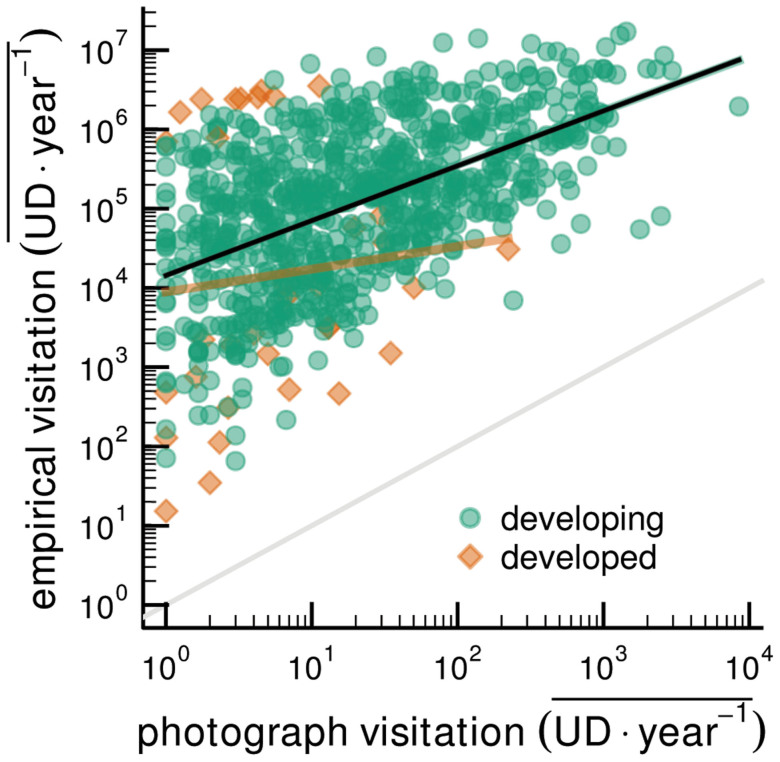
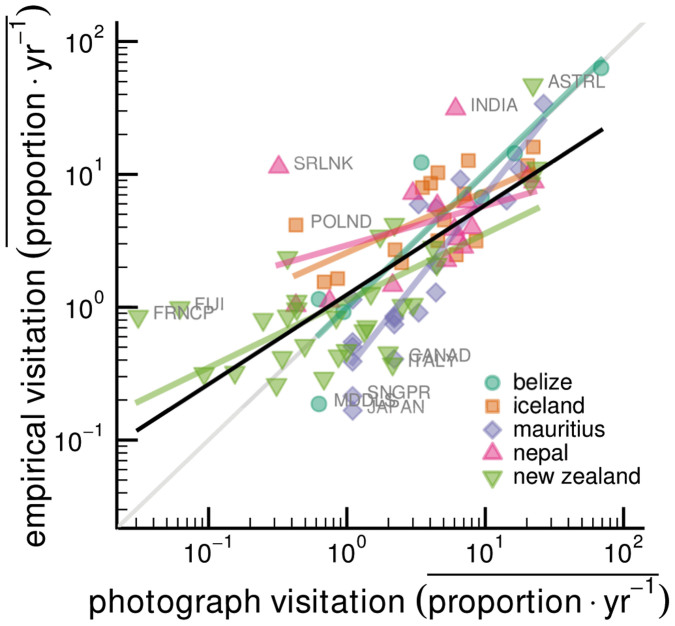
Scientists have traditionally studied recreation in nature by conducting surveys at entrances to major attractions such as national parks. This method is expensive and provides limited spatial and temporal coverage. A new source of information is available from online social media websites such as flickr. Here, we test whether this source of "big data" can be used to approximate visitation rates. We use the locations of photographs in flickr to estimate visitation rates at 836 recreational sites around the world, and use information from the profiles of the photographers to derive travelers' origins. We compare these estimates to empirical data at each site and conclude that the crowd-sourced information can indeed serve as a reliable proxy for empirical visitation rates. This new approach offers opportunities to understand which elements of nature attract people to locations around the globe, and whether changes in ecosystems will alter visitation rates.
传统上,科学家们通过在国家公园等主要景点的入口处进行调查来研究自然休闲活动。这种方法成本高昂,且提供的时空覆盖范围有限。在线社交媒体网站(如Flickr)提供了一种新的信息来源。在此,我们测试这种“大数据”来源是否可用于估算游客到访率。我们利用Flickr上照片的位置来估算全球836个休闲景点的游客到访率,并利用摄影师资料中的信息来确定游客的来源地。我们将这些估算结果与每个景点的实证数据进行比较,得出结论:众包信息确实可以作为实证到访率的可靠替代指标。这种新方法为了解自然的哪些元素吸引人们前往全球各地的地点,以及生态系统的变化是否会改变到访率提供了机会。