Gan Jianting, Li Ping, Wang Zhengdong, Chen Jian, Liang Xiangwen, Liu Ming, Xie Wenchao, Yin Ruixing, Huang Feng
Department of Cardiology, Sixth Affiliated Hospital of Guangxi Medical University, Yulin, Guangxi 537000;
Exp Ther Med. 2013 Oct;6(4):899-903. doi: 10.3892/etm.2013.1265. Epub 2013 Aug 20.
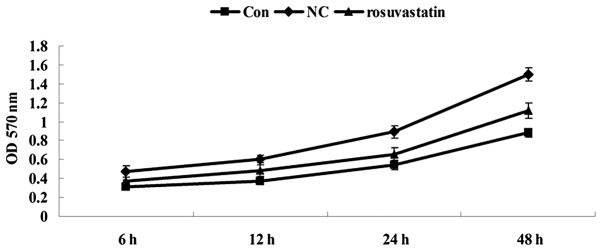
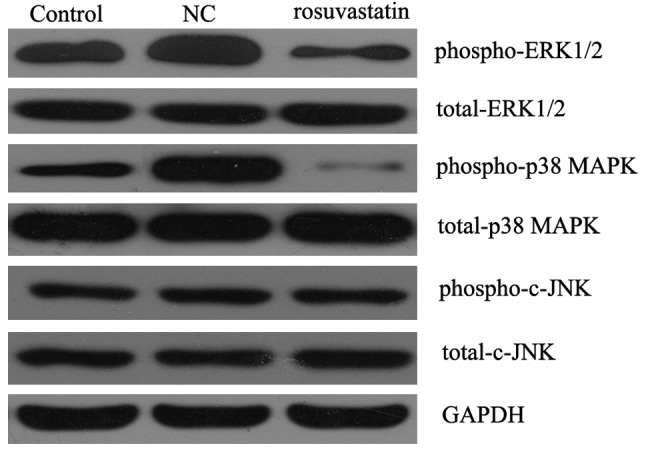
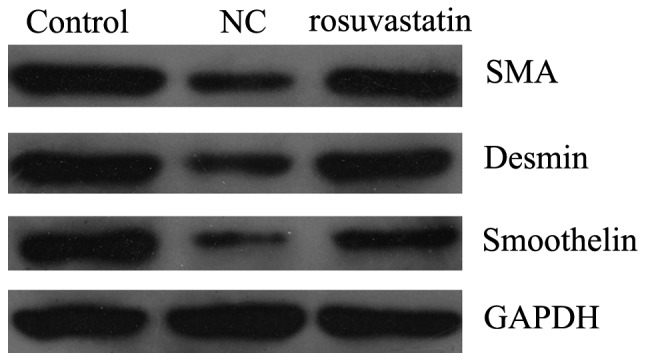
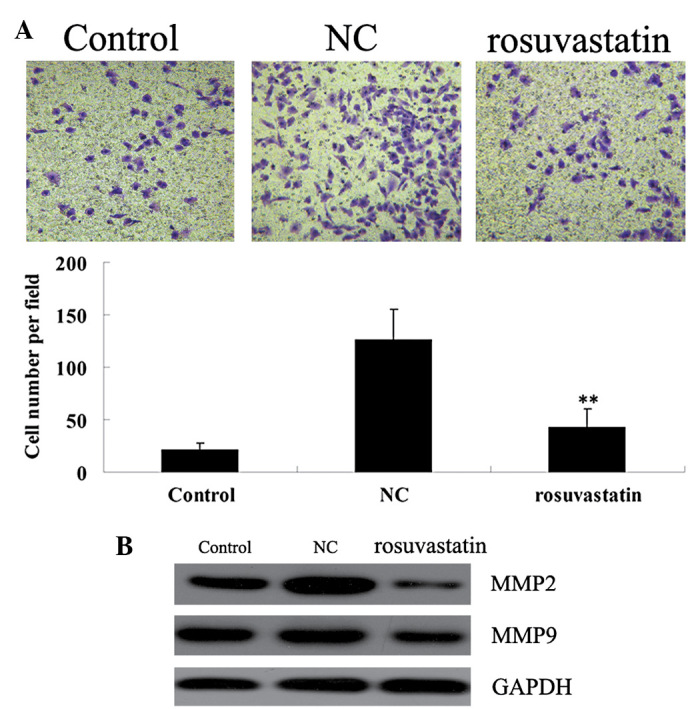
An imbalance in the proliferation and migration of vascular smooth muscle cells (VSMCs) is significant in the onset and progression of vascular diseases, including arteriosclerosis and restenosis subsequent to vein grafting or coronary intervention. Rosuvastatin, a selective inhibitor of hydroxymethylglutaryl coenzyme A (HMG-CoA) reductase, has pharmacological properties including the ability to reduce low-density lipoprotein-cholesterol (LDL-C) and very low-density lipoprotein-cholesterol (VLDL-C) levels, slow atherosclerosis progression and improve coronary heart disease outcomes. However, little is known concerning the molecular mechanism by which rosuvastatin affects vascular cell dynamics. In this study, we studied the inhibitory role of rosuvastatin on platelet-derived growth factor-BB (PDGF-BB)-induced VSMC proliferation and migration, as well as the molecular mechanisms involved. MTT data showed that rosuvastatin markedly inhibited the proliferation of PDGF-BB-induced VSMCs in a time-dependent manner. VSMCs are able to dedifferentiate into a proliferative phenotype in response to PDGF-BB stimulation; however, rosuvastatin effectively attenuated this phenotype switching. Moreover, we also showed that rosuvastatin significantly suppressed PDGF-BB-induced VSMC migration, which may be a result of its inhibitory effect on the protein expression of matrix metalloproteinase-2 (MMP2) and MMP9. Investigation into the molecular mechanisms involved revealed that rosuvastatin inhibited the mitogen-activated protein kinase (MAPK) signaling pathway by downregulating extracellular signal-regulated kinase (ERK) and p38 MAPK, although the phosphorylation level of c-Jun N-terminal kinase (c-JNK) was not altered following rosuvastatin treatment. In conclusion, the present study showed that rosuvastatin suppressed PDGF-BB-induced VSMC proliferation and migration, indicating that rosuvastatin has the potential to become a promising therapeutic agent for the treatment of atherosclerosis and restenosis.
血管平滑肌细胞(VSMC)增殖和迁移的失衡在包括动脉硬化以及静脉移植或冠状动脉介入术后再狭窄等血管疾病的发生和发展过程中具有重要意义。瑞舒伐他汀是一种羟甲基戊二酰辅酶A(HMG-CoA)还原酶的选择性抑制剂,具有降低低密度脂蛋白胆固醇(LDL-C)和极低密度脂蛋白胆固醇(VLDL-C)水平、减缓动脉粥样硬化进展以及改善冠心病预后等药理特性。然而,关于瑞舒伐他汀影响血管细胞动态的分子机制却知之甚少。在本研究中,我们研究了瑞舒伐他汀对血小板衍生生长因子-BB(PDGF-BB)诱导的VSMC增殖和迁移的抑制作用及其相关分子机制。MTT数据表明,瑞舒伐他汀能以时间依赖性方式显著抑制PDGF-BB诱导的VSMC增殖。VSMC能够响应PDGF-BB刺激而发生去分化,转变为增殖表型;然而,瑞舒伐他汀能有效减弱这种表型转换。此外,我们还发现瑞舒伐他汀能显著抑制PDGF-BB诱导的VSMC迁移,这可能是其对基质金属蛋白酶-2(MMP2)和MMP9蛋白表达具有抑制作用的结果。对相关分子机制的研究表明,瑞舒伐他汀通过下调细胞外信号调节激酶(ERK)和p38丝裂原活化蛋白激酶(MAPK)来抑制丝裂原活化蛋白激酶(MAPK)信号通路,尽管瑞舒伐他汀处理后c-Jun氨基末端激酶(c-JNK)的磷酸化水平未发生改变。总之,本研究表明瑞舒伐他汀可抑制PDGF-BB诱导的VSMC增殖和迁移,这表明瑞舒伐他汀有潜力成为治疗动脉粥样硬化和再狭窄的一种有前景的治疗药物。