Department of Gynecology, Hospital de Cruces, 48903 Barakaldo, Spain.
BMC Womens Health. 2013 Oct 20;13:38. doi: 10.1186/1472-6874-13-38.
Understanding contraception from the perspective of the user may help to improve compliance. The aim of this project was to determine the factors that influence the noncompliance in young women that use combined hormonal contraceptives (pill, patch or vaginal ring).
A nationwide cross-sectional multicenter epidemiology study. Physicians [obstetricians/gynecologists]) recorded socio-demographic, clinical and current contraception data of 8,762 women. Women completed a self-administered questionnaire on compliance. After the assessment of self-administrated questionnaire, the physicians reported on their recommendations on the possibility of changing the contraceptive.
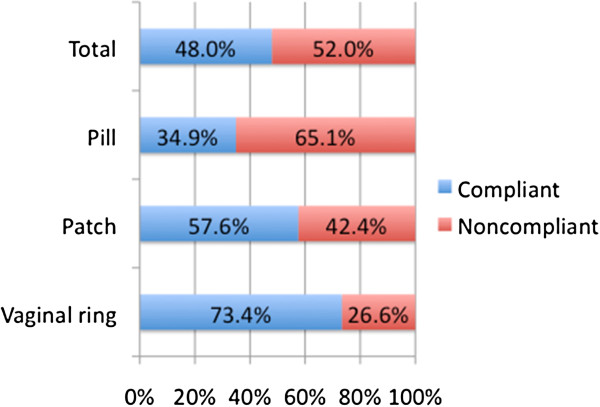
Fifty-two percent of women were noncompliant, mainly because of simple forgetfulness (pill, 74.9%; patch, 47.8%; vaginal ring, 69.1%). The percentage of noncompliant women was lower in vaginal ring users (26.6%) than in patch users (42.4%) or pill users (65.1%) (p < 0.0001). The most common course of action after noncompliance was to take/use the contraceptive as soon as possible. In the multiple logistic regression analysis, the use of the pill increased the probability of noncompliance compared with the patch and the vaginal ring (odds ratio [IC95%]: 2.53 (2.13-3.02) and 4.17 (3.68-4.73, respectively), and using the patch compared with the vaginal ring (1.65 (1.36-1.99)). Others factors associated with noncompliance were: high treatment duration, low degree of information on the contraceptive method, understanding of instructions on the contraceptive method, indifference to becoming pregnant, lack of partner support, not participation in selecting the method, not having a routine for taking treatment and difficulties remembering use the contraceptive method. Switching contraceptive method was proposed by the physicians to 43.2% of women (51.8% of pill users, 58.2% of patch users and 19.4% of vaginal ring users).
More than 50% of combined hormonal contraceptive users did not comply with the treatment regimen. The percentage of noncompliant women was lower between vaginal ring users. Understanding user's reasons for noncompliance by the clinician and encouraging a collaborative approach can go a long way to improving compliance.
从使用者的角度理解避孕方法可能有助于提高依从性。本项目旨在确定影响年轻女性使用复方激素避孕药(避孕药、贴片或阴道环)时不依从的因素。
一项全国性的横断面多中心流行病学研究。医生(妇产科医生)记录了 8762 名女性的社会人口统计学、临床和当前避孕数据。女性完成了一份关于依从性的自我管理问卷。在评估自我管理问卷后,医生报告了他们关于改变避孕方法可能性的建议。
52%的女性不依从,主要是因为简单的健忘(避孕药 74.9%;贴片 47.8%;阴道环 69.1%)。与贴片使用者(42.4%)或避孕药使用者(65.1%)相比,阴道环使用者中不依从的女性比例较低(26.6%)(p<0.0001)。不依从后的最常见措施是尽快服用/使用避孕药。在多因素逻辑回归分析中,与贴片和阴道环相比,使用避孕药增加了不依从的可能性(比值比[95%CI]:2.53(2.13-3.02)和 4.17(3.68-4.73)),而使用贴片与阴道环相比(1.65(1.36-1.99))。其他与不依从相关的因素包括:治疗时间长、对避孕方法信息了解程度低、对避孕方法说明书的理解、对怀孕的漠不关心、缺乏伴侣支持、未参与选择避孕方法、未养成服用治疗药物的常规、以及难以记住使用避孕方法。医生建议 43.2%的女性更换避孕方法(避孕药使用者 51.8%、贴片使用者 58.2%、阴道环使用者 19.4%)。
超过 50%的复方激素避孕药使用者未遵守治疗方案。阴道环使用者中不依从的女性比例较低。临床医生了解使用者不依从的原因并鼓励采取合作的方法,可以大大提高依从性。