Higgins Denice, Kaidonis John, Townsend Grant, Hughes Toby, Austin Jeremy J
Australian Centre for Ancient DNA, School of Earth and Environmental Sciences and Environment Institute, University of Adelaide, South Australia 5005, Australia.
Investig Genet. 2013 Oct 18;4(1):18. doi: 10.1186/2041-2223-4-18.
Teeth are a valuable source of DNA for identification of fragmented and degraded human remains. While the value of dental pulp as a source of DNA is well established, the quantity and presentation of DNA in the hard dental tissues has not been extensively studied. Without this knowledge common decontamination, sampling and DNA extraction techniques may be suboptimal. Targeted sampling of specific dental tissues could maximise DNA profiling success, while minimising the need for laborious sampling protocols and DNA extraction techniques, thus improving workflows and efficiencies. We aimed to determine the location of cellular DNA in non-degraded human teeth to quantify the yield of nuclear DNA from cementum, the most accessible and easily sampled dental tissue, and to investigate the effect of a common decontamination method, treatment with sodium hypochlorite (bleach).We examined teeth histologically and subsequently quantified the yield of nuclear DNA from the cementum of 66 human third molar teeth. We also explored the effects of bleach (at varying concentrations and exposure times) on nuclear DNA within teeth, using histological and quantitative PCR methods.
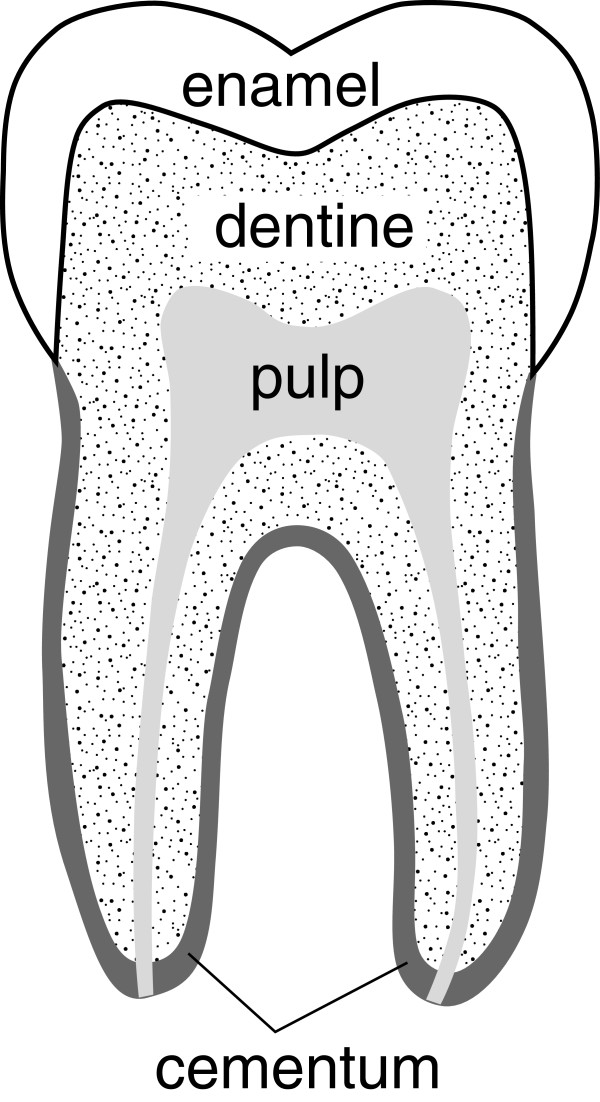
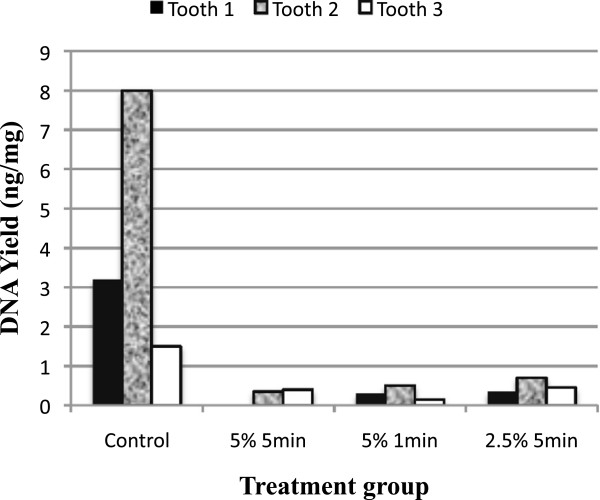
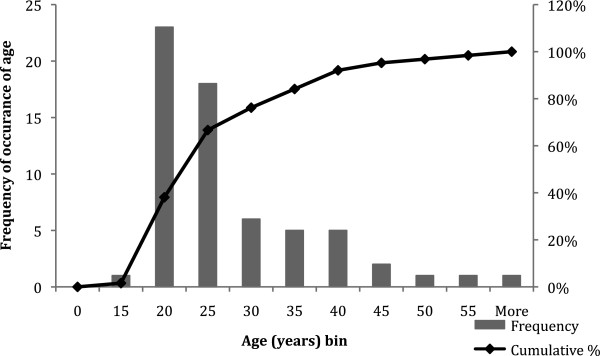
Histology confirmed the presence of nucleated cells within pulp and cementum, but not in dentine. Nuclear DNA yields from cementum varied substantially between individuals but all samples gave sufficient DNA (from as little as 20 mg of tissue) to produce full short tandem repeat (STR) profiles. Variation in yield between individuals was not influenced by chronological age or sex of the donor. Bleach treatment with solutions as dilute as 2.5% for as little as 1 min damaged the visible nuclear material and reduced DNA yields from cementum by an order of magnitude.
Cementum is a valuable, and easily accessible, source of nuclear DNA from teeth, and may be a preferred source where large numbers of individuals need to be sampled quickly (for example, mass disaster victim identification) without the need for specialist equipment or from diseased and degraded teeth, where pulp is absent. Indiscriminant sampling and decontamination protocols applied to the outer surface of teeth can destroy this DNA, reducing the likelihood of successful STR typing results.
牙齿是用于鉴定碎片化和降解人类遗骸的宝贵DNA来源。虽然牙髓作为DNA来源的价值已得到充分证实,但硬牙组织中DNA的数量和呈现方式尚未得到广泛研究。缺乏这方面的知识,常见的去污、采样和DNA提取技术可能并非最佳选择。对特定牙齿组织进行靶向采样可以最大限度地提高DNA分型成功率,同时尽量减少繁琐的采样方案和DNA提取技术的需求,从而改善工作流程和效率。我们旨在确定未降解人类牙齿中细胞DNA的位置,以量化从牙骨质(最易获取且易于采样的牙齿组织)中获得的核DNA产量,并研究一种常见去污方法——用次氯酸钠(漂白剂)处理的效果。我们对牙齿进行了组织学检查,随后量化了66颗人类第三磨牙牙骨质中的核DNA产量。我们还使用组织学和定量PCR方法,探讨了漂白剂(在不同浓度和暴露时间下)对牙齿内核DNA的影响。
组织学证实牙髓和牙骨质中存在有核细胞,但牙本质中没有。牙骨质的核DNA产量在个体之间差异很大,但所有样本都能提供足够的DNA(低至20毫克组织)以产生完整的短串联重复序列(STR)图谱。个体间产量的差异不受供体年龄或性别的影响。用低至2.5%的溶液处理漂白剂仅1分钟就会破坏可见的核物质,并使牙骨质的DNA产量降低一个数量级。
牙骨质是牙齿中宝贵且易于获取的核DNA来源,对于需要快速对大量个体进行采样(例如大规模灾难遇难者身份鉴定)且无需专业设备的情况,或者对于没有牙髓的患病和降解牙齿,牙骨质可能是首选来源。应用于牙齿外表面的不加区分的采样和去污方案可能会破坏这种DNA,降低STR分型成功的可能性。