Gómez-Puerta Jose A, Peris Pilar, Reverter Joan Carles, Espinosa Gerard, Martinez-Ferrer Angeles, Monegal Ana, Monteagudo Juan, Tàssies Dolors, Guañabens Nuria
From the Department of Rheumatology (JAG-P, PP, AM-F, AM, NG), CIBERehd; and Hemotherapy and Haemostasis Service (JCR, JM, DT), Hospital Clínic, Barcelona; Department of Autoimmune Diseases (GE), Hospital Clínic, University of Barcelona, Barcelona, Spain; and Division of Rheumatology, Immunology and Allergy (JAG-P), Brigham and Women's Hospital, Boston, Massachusetts, United States.
Medicine (Baltimore). 2013 Nov;92(6):295-304. doi: 10.1097/MD.0000000000000007.
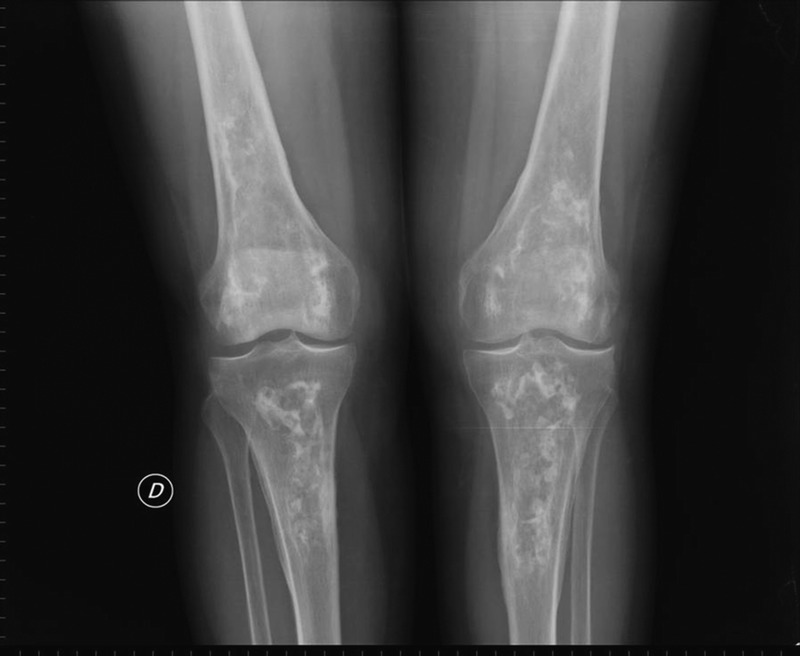
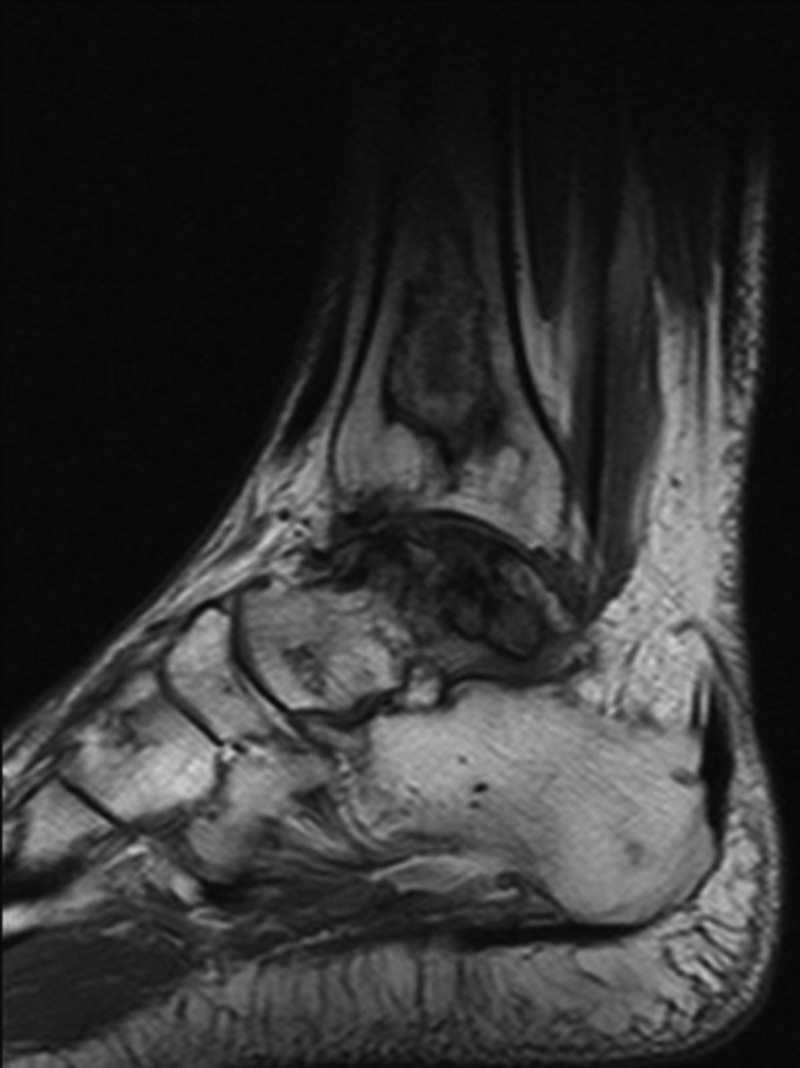
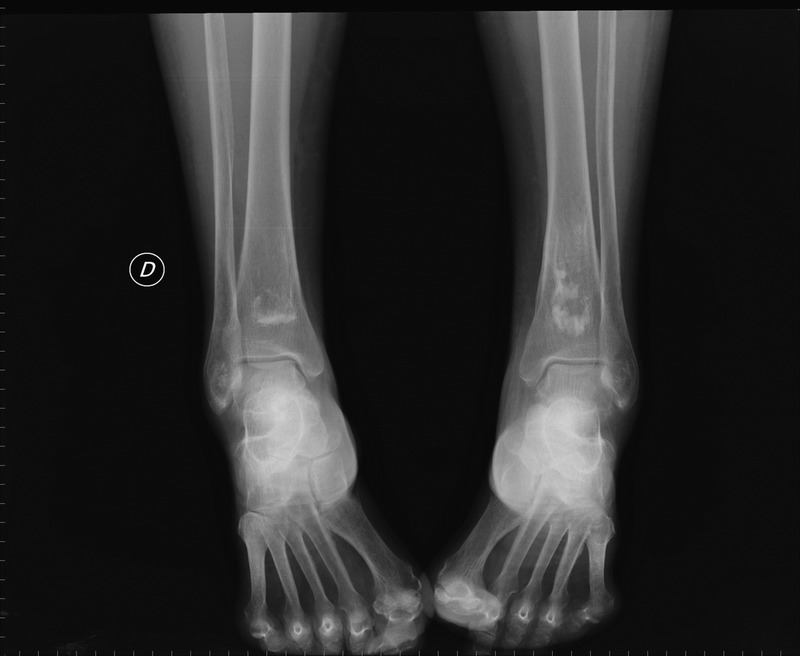
Multifocal or multiple osteonecrosis (ON), defined by the involvement of 3 or more anatomic sites, is unusual, being observed in only 3%-10% of patients diagnosed with ON. We report the clinical characteristics of a cohort of 29 patients with multifocal ON from a single center and evaluate the prevalence of associated prothrombotic abnormalities in 26 of these patients. We conducted a retrospective study of all patients diagnosed with multifocal ON evaluated in our institution during the last 20 years. We recorded clinical manifestations and underlying diagnoses. A wide thrombophilic profile was performed, including antithrombin, protein C, protein S, lupus anticoagulant, anticardiolipin antibodies, activated protein C resistance, factor V Leiden, mutation G-20210-A of the prothrombin gene, and factor VIII. Coagulation test results were compared with those in a healthy control group and a group of patients with history of lower-extremity deep venous thrombosis. The mean age of the patients was 49.2 ± 15 years (range, 28-81 yr). The mean number of ON localizations per patient was 5.2 ± 2.3 (range, 3-11). Hips were the most commonly affected joint (82%), followed by knees (58%), shoulders (37%), and ankles (13%). Most patients had an underlying disease process, and 12 of 25 (48%) patients had coagulation test abnormalities. The most common alterations were high factor VIII levels and antiphospholipid antibody (aPL) positivity in 24% and 20% of cases, respectively. These abnormalities were more prevalent in patients with multifocal ON compared with patients in the control groups. Sixty-one percent of patients had a history of corticosteroid treatment. Patients with coagulation abnormalities had a higher number of ON localizations per patient (6.5 ± 2.7 vs. 3.88 ± 0.8; p = 0.002) and a higher prevalence of atypical ON localizations (25% vs. 0%; p = 0.05). In conclusion, in the present cohort of patients with multifocal ON, 48% of the patients had at least 1 prothrombotic factor, especially high levels of factor VIII and aPL. These findings have major implications for the diagnosis and treatment of multifocal ON and clearly indicate the need to perform a thrombophilic profile in these patients.
多灶性或多发性骨坏死(ON)定义为累及3个或更多解剖部位,这种情况并不常见,仅在3% - 10%被诊断为ON的患者中观察到。我们报告了来自单一中心的29例多灶性ON患者队列的临床特征,并评估了其中26例患者相关血栓前状态异常的患病率。我们对过去20年在我们机构评估的所有诊断为多灶性ON的患者进行了回顾性研究。我们记录了临床表现和潜在诊断。进行了广泛的血栓形成倾向检测,包括抗凝血酶、蛋白C、蛋白S、狼疮抗凝物、抗心磷脂抗体、活化蛋白C抵抗、因子V Leiden、凝血酶原基因G - 20210 - A突变以及因子VIII。将凝血检测结果与健康对照组和有下肢深静脉血栓形成病史的患者组进行比较。患者的平均年龄为49.2±15岁(范围28 - 81岁)。每位患者ON定位的平均数量为5.2±2.3(范围3 - 11)。髋关节是最常受累的关节(82%),其次是膝关节(58%)、肩关节(37%)和踝关节(13%)。大多数患者有潜在疾病过程,25例患者中有12例(48%)凝血检测异常。最常见的改变分别是24%的病例中因子VIII水平升高和20%的病例中抗磷脂抗体(aPL)阳性。与对照组患者相比,这些异常在多灶性ON患者中更普遍。61%的患者有皮质类固醇治疗史。有凝血异常的患者每位患者的ON定位数量更多(6.5±2.7对3.88±0.8;p = 0.002),非典型ON定位的患病率更高(25%对0%;p = 0.05)。总之,在本多灶性ON患者队列中,48%的患者至少有1种血栓前因子,尤其是因子VIII和aPL水平升高。这些发现对多灶性ON的诊断和治疗具有重要意义,并明确表明有必要对这些患者进行血栓形成倾向检测。